A wagging tail does not mean a happy dog. It means an aroused one. That single correction would prevent a fair number of nips at Indian gates and lift-lobbies, because the dog wagging hard at a stranger is often the one working itself up to bark.
Dogs talk constantly, mostly without sound. Learning the vocabulary is the fastest way to understand a desi dog, especially one who came off the street and learned early that people can’t always be trusted.
Read the whole dog, not one part
Every guide agrees on one rule: no single signal means much alone. The AKC says the signals work as an integrated package, and ASPCA Pro tells readers to assess the whole animal and the situation, not isolated cues.
So when you’re unsure, count. One lip lick is a footnote. A lip lick plus turned-away head plus stiff shoulders plus you leaning over the dog is a sentence.
Ears
Relaxed ears rest slightly back or out to the sides. As a dog gets more interested, they swing forward toward whatever it is. Ears pinned tight against the skull, combined with body tension, point to stress or fear, per ASPCA Pro.
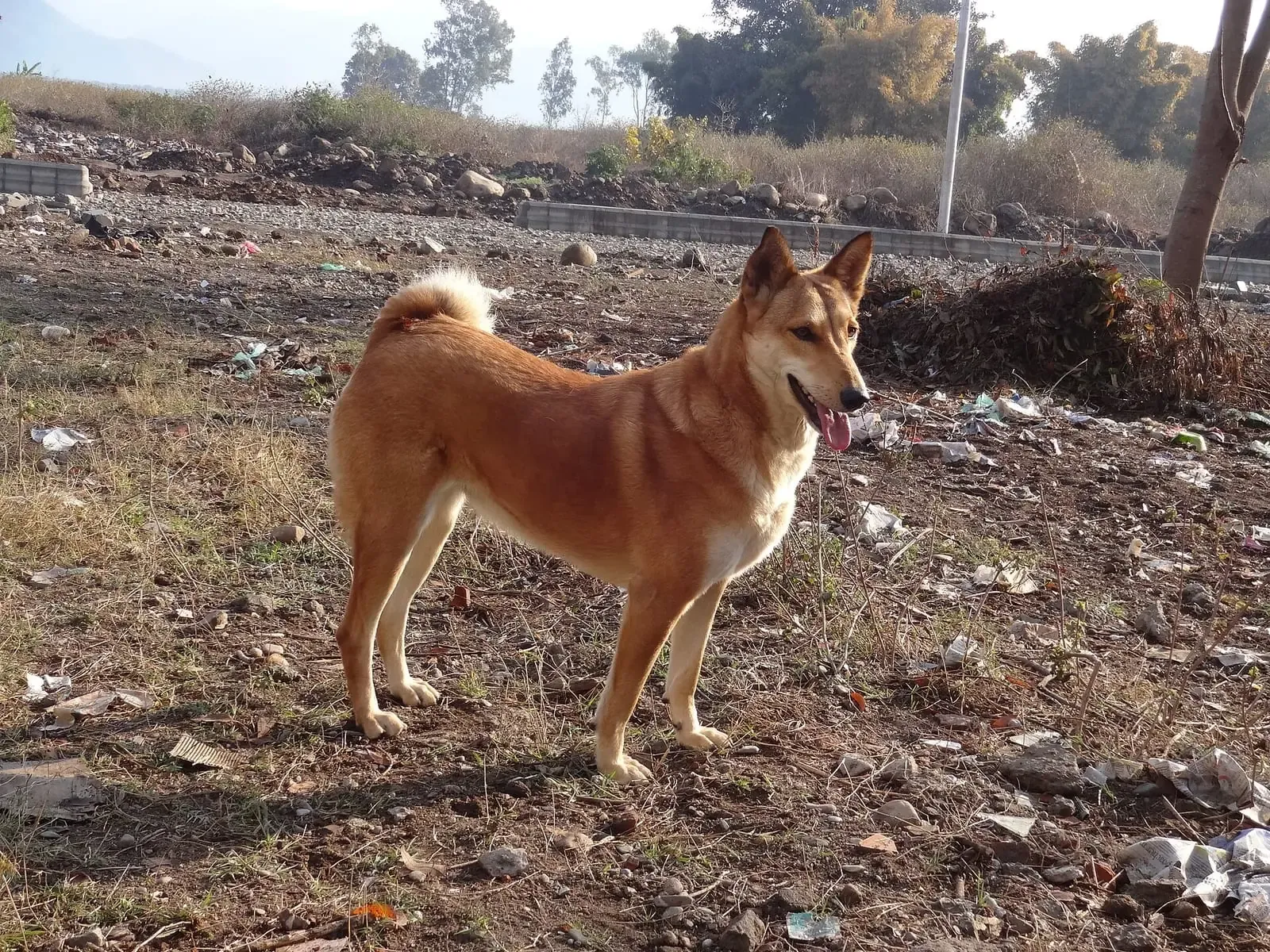
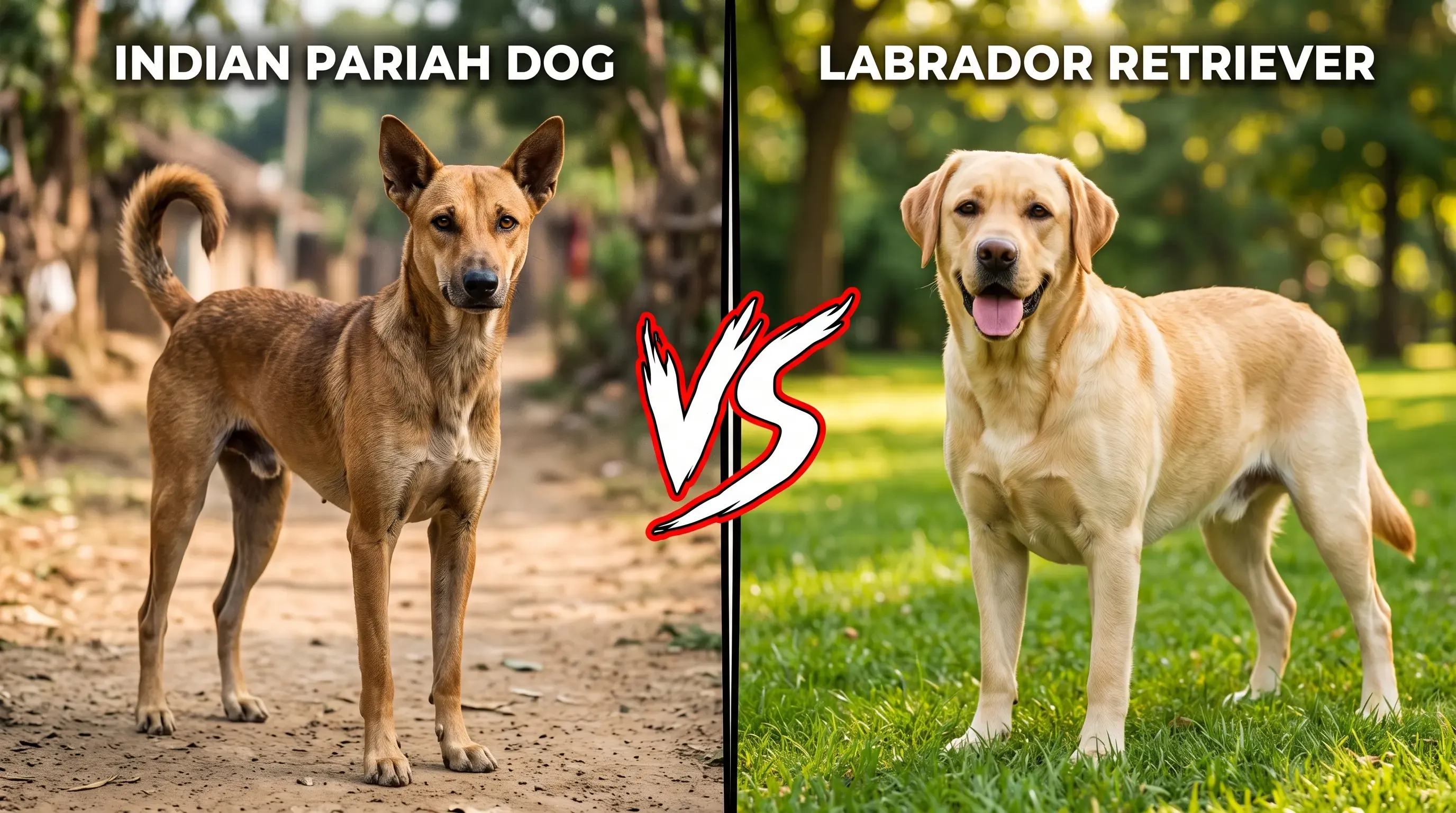
Here’s the INDog wrinkle: those erect, mobile ears make the forward-and-back movement easy to see, which is a gift. But the ears are also the most common thing people misread. Upright ears on a desi dog are just the default setting. Watch for change from your dog’s own baseline, not for the ears themselves.
The tail
ASPCA Pro describes a relaxed dog as carrying the tail at spine level or slightly below, and reminds us that baseline carriage varies by breed. A loose, wide wag with a loose body is a relaxed dog. A high, stiff, fast tail signals tension. A tucked tail signals fear.
The AKC puts speed plainly: the faster the wag, the more aroused the dog. Arousal can be joy or it can be a dog winding up for a fight. Both look energetic.
There is also a direction effect, and it’s a good bit of science. In a 2013 study in Current Biology, a team led by Giorgio Vallortigara at the University of Trento found that dogs watching video of other dogs became anxious, with faster heart rates, when they saw left-biased wagging, and stayed relaxed with right-biased wagging, as summarised by ScienceDaily. Cute, but I wouldn’t use it on a live dog. You’d be squinting at a tail while ignoring the rest of the animal.
Face, mouth and eyes
Soft eyes, a loose open mouth and smooth forehead read as comfortable. The stress list is longer.
Whale eye is when you can see a crescent of white around the eye, usually because the head is turned away while the eyes stay locked on you. The AKC links it to anxiety or stress, for example when a dog is touched on the head or is guarding something. ASPCA Pro pairs it with a frozen body, an intense stare and tight facial muscles.
Lip licking and yawning are the classic calming signals. A quick tongue flick with no food around signals discomfort with the situation, according to the AKC. The trainer Turid Rugaas, quoted there, says dogs use yawning “to calm themselves in tense situations and to calm others.” A dog that yawns after you lean in for a hug isn’t tired.
Context can flip these. Dogs also yawn when excited or content, so read them alongside everything else.
Posture
Loose, wiggly and bouncy is the good stuff. A play bow, chest to the ground and rump in the air, is an invitation, and the AKC notes it’s followed by loose, bouncy movement.
A fearful dog, per ASPCA Pro, may look away, lean back, tremble, lower the body or head to look smaller, or lift a paw. At the extreme it either freezes or bolts. Stiffness with weight shifted forward is the one to worry about: the AKC calls it an offensive posture, especially when paired with other aggressive signals.
PetMD’s list of ways a dog asks for space adds turning away, panting when it isn’t hot, and “kiss to dismiss” licking paired with a stiff body.
What’s different about desi dogs
Be careful here. There is no large body of published research on body language specific to Indian pariah dogs, so what follows is experience from Indian rescuers and owners, not settled science.
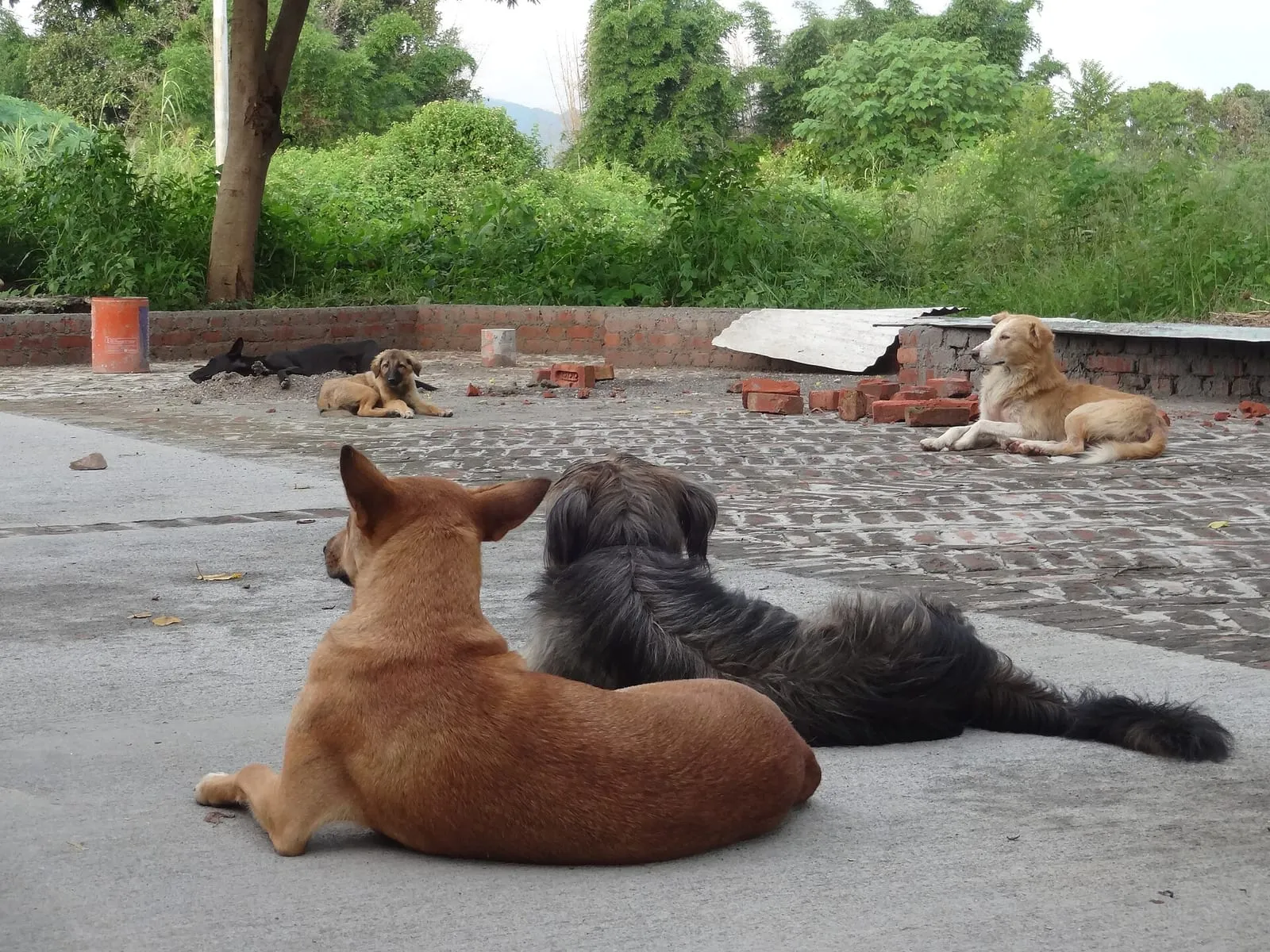
Wariness is the big one. Aarti Krishnakumar, who writes about her own indie dogs Floppy and Chewy, notes that indie dogs are often cautious around strangers and may bark, growl or lunge if they feel threatened, which she connects to hard lives on the street. The rescue group VOSD makes the same point from its side of things: “A dog’s behavior reflects its experiences, not its nature.”
My own read, and it’s an opinion: a street-raised dog often skips the polite early signals. Nobody responded to them out there, so why keep sending them? You may see a dog go from still to snapping fast. Which means the small early cues, a freeze, a hard stare, a turned head, deserve your attention more, not less.
Alertness matters too. INDogs tend to notice everything, so a lot of what looks like aggression at the gate is watchfulness. Barking at the courier with a loose body is a different dog from barking with a locked stare and forward weight.
Context is half the message
The same dog can be soft with the neighbour’s kid and rigid with a man carrying a stick. Where a dog is, what it’s guarding, whether it’s cornered, hungry, in pain or protecting puppies all change the meaning. VOSD’s approach guide tells people to check context first and avoid food areas, packs and after-dark encounters with unfamiliar dogs.
Pain deserves a mention. A normally friendly dog that suddenly snaps when touched may be hurting, and that’s a vet visit, not a training problem.
When to give space
Back off when you see whale eye, a freeze, stiffness, growling, pinned ears or a hard stare. PetMD’s advice is to stop the interaction, move away, let the dog retreat and not follow it.
For an unfamiliar street dog, VOSD suggests watching from 10 to 15 metres, moving sideways rather than head-on, avoiding direct eye contact, and stopping if the dog backs away, freezes or snarls. Krishnakumar likewise suggests crouching, looking away and letting the dog choose to come to you. Don’t reach over a dog’s head, don’t corner it, and if any dog bites or scratches you, see a doctor promptly.
Injured or visibly unwell dogs should be left to a rescue group or animal authority rather than handled by one well-meaning person.
Common questions
Does a wagging tail mean my desi dog is friendly?
Not necessarily. A wag shows arousal, and the AKC says the faster the wag, the more aroused the dog. Look at tail height, stiffness and the rest of the body. See The tail.
What is whale eye?
It’s when the whites of the eyes show, usually with the head turned away and the eyes still on you. The AKC links it to anxiety or stress. Give the dog room. See Face, mouth and eyes.
Why does my dog yawn or lick its lips when I’m not feeding it?
Both are commonly read as calming signals that show mild stress or discomfort, though dogs also yawn when excited. Check the rest of the body. See Face, mouth and eyes.
Do street-raised dogs show warning signs before they bite?
Many do, but Indian rescuers and owners report that street dogs may show fewer or quicker cues, and this isn’t well studied. Treat freezing and hard stares seriously. See What’s different about desi dogs.
How should I approach an unfamiliar street dog?
Observe from a distance, approach sideways, avoid direct eye contact and let the dog come to you. Stop if it retreats, freezes or snarls. See When to give space.
Sources
- Understanding Dog Body Language — American Kennel Club
- Canine Body Language Tips — ASPCApro
- Dogs know a left-sided wag from a right (Siniscalchi, Lusito, Vallortigara and Quaranta, Current Biology, 2013) — ScienceDaily
- 9 Ways Your Dog May Ask for Space — PetMD
- Indie Dogs: Decoding Their Behaviour and Building Trust — Aarti Krishnakumar
- How to Tell if a Stray Dog Is Safe to Approach — VOSD (Voice of Stray Dogs)