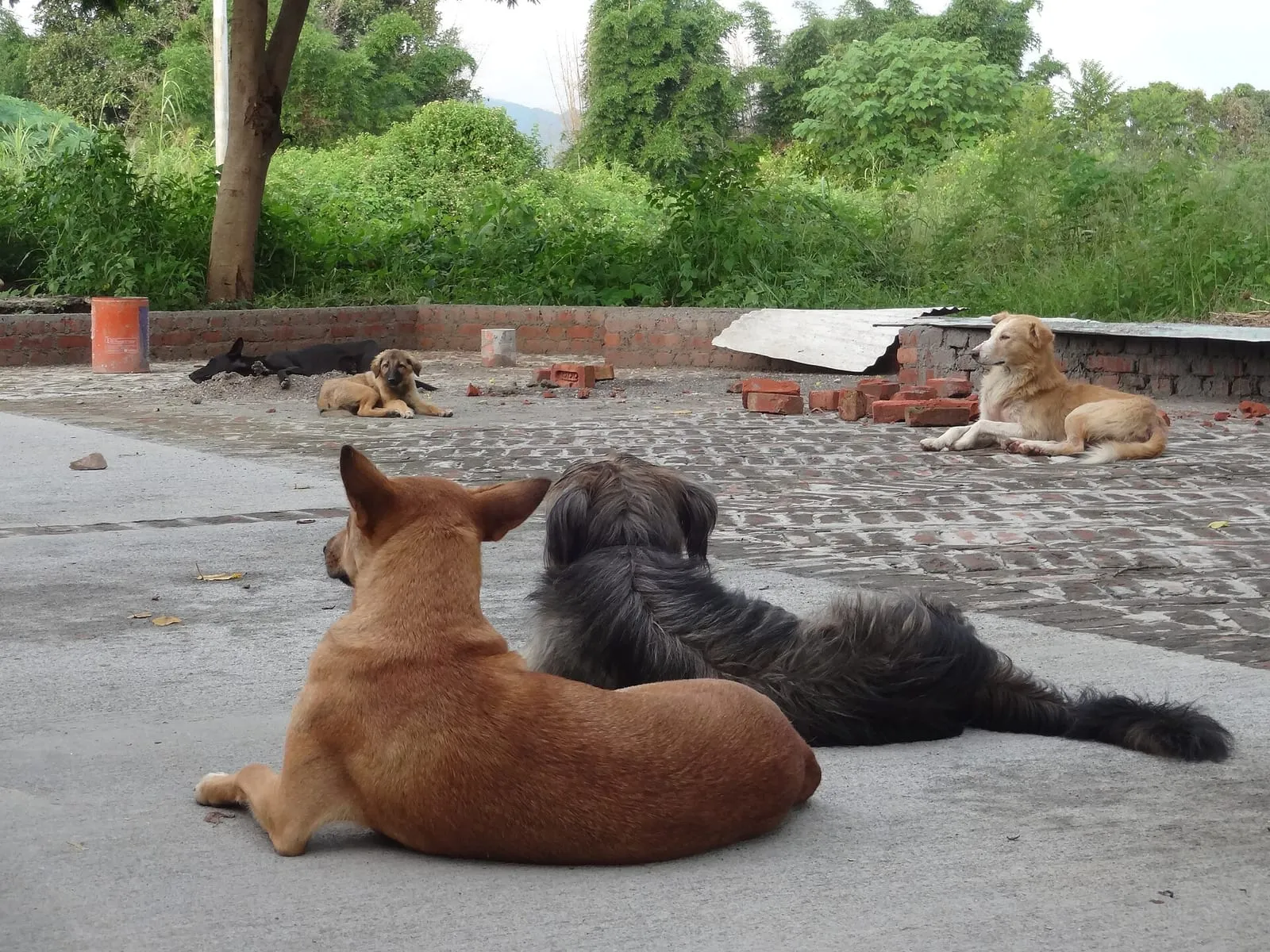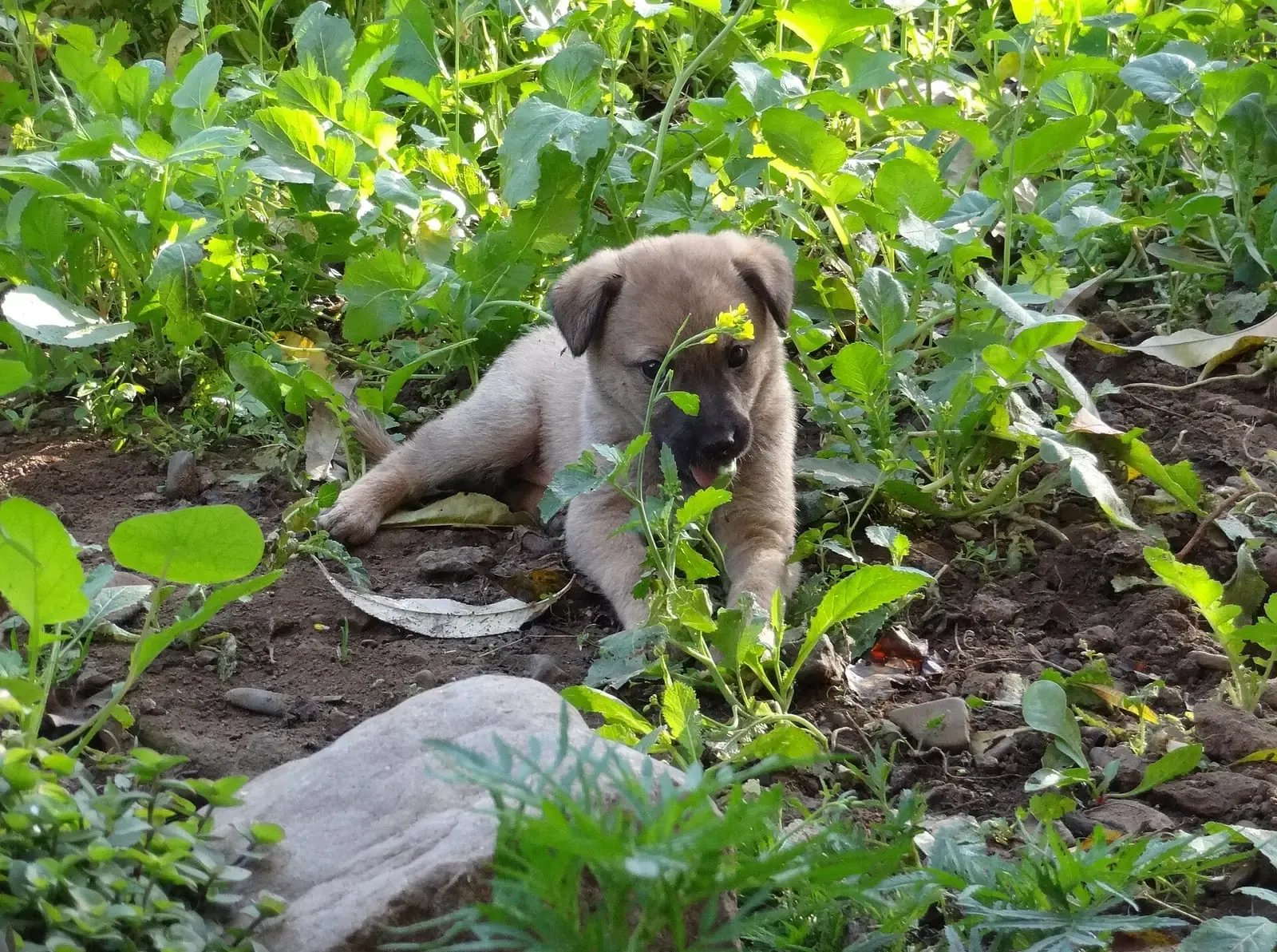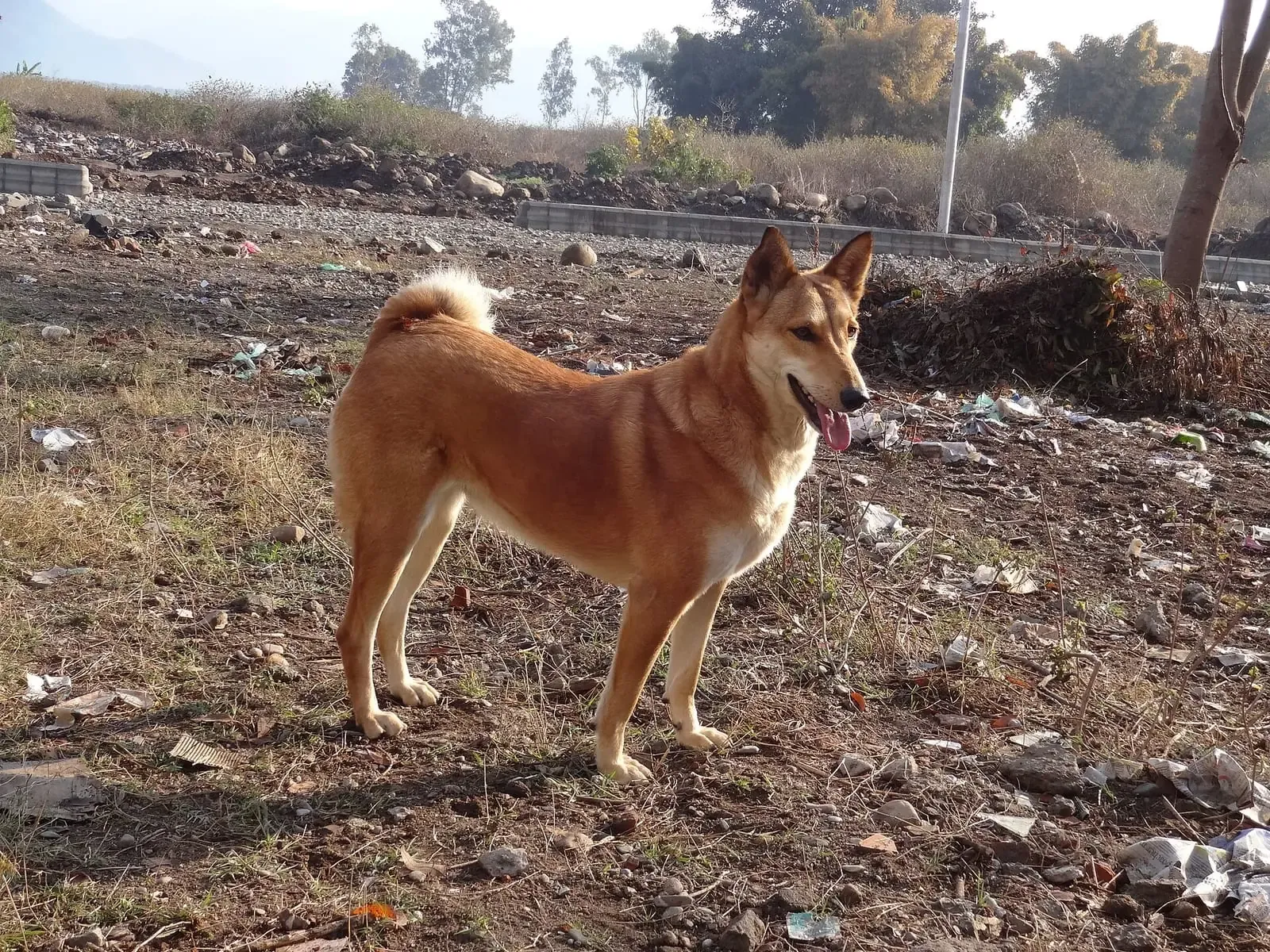
You’ve seen this dog a thousand times without knowing it had a name. Medium build, short reddish-brown coat, tail curled up over its back, ears that stand straight up and never fold. People call it a street dog, or a stray, or just “some dog,” as if it showed up randomly and doesn’t belong to any particular type. It does. It’s called the Indian Pariah Dog, or INDog, and it’s one of the oldest, least-interfered-with dog populations left on the planet.
This is the beginner’s version: what makes it a distinct type rather than a random mix, what it actually looks like under a breed standard, how it tends to behave, and whether it’s a sensible dog for your household.
An ancient landrace, not a mix
Here’s the distinction that matters most, and the one most people get wrong on first read: the INDog is not a mixed breed. A mixed breed has two or more known parent breeds. Nobody can point to the INDog’s parent breeds, because there aren’t any. It’s a landrace: a population that reached its current form through thousands of years of natural selection rather than a breeder’s plan. No kennel club sat down and decided what this dog should look like. The Indian subcontinent’s climate, food supply and disease pressure did that job instead, over a timescale no breeder could match.
Genetic testing backs this up. A study the INDog Project collaborated on, “Genetic structure in village dogs reveals a Central Asian domestication origin”, sequenced dogs across South Asia between 2009 and 2015 and placed them among the most genetically distinct populations of domestic dog anywhere. Physical evidence goes back further still: dog remains and depictions matching this exact body type show up in Indian archaeological sites dated to roughly 4,500 years ago, including a Mohenjo-daro skull that two zoologists, writing it up in the 1930s, described as barely different from “the domestic or semi-domestic dogs that are so common at the present day around every Indian village,” per Wikipedia.
Where all the names come from
You’ll see this dog called by half a dozen names, and they’re not interchangeable in tone even if they point at the same animal:
- Pariah dog is the old colonial-era label, and it’s a loaded one. The word traces to the Tamil paṟaiyar, meaning drummer, a caste-marked occupational name that, per Wiktionary, got flattened by the British into a generic slur for social outcasts, then borrowed again for the free-roaming dogs of Indian towns. It stuck in scientific literature, but the INDog Project now treats it as outdated for exactly that reason.
- Desi dog or desi kutta, “native dog” in Hindi-Urdu, is the everyday Indian term, and the one most rescues and adopters actually use.
- INDog, short for Indian Native Dog, is the name dog researcher Gautam Das coined specifically to sidestep the pariah baggage. It’s the term this site defaults to.
- Pye-dog is a fading Anglo-Indian variant, from Hindi pāhī, “outsider.”
None of these names describe a different dog. They describe the same landrace through different eras and different mouths.
Not every street dog is a pure INDog
One wrinkle worth flagging before you go further: “street dog” describes where a dog lives, not what it is. In cities that saw heavy European settlement, generations of crossbreeding mean plenty of street dogs carry Labrador, German Shepherd or other foreign ancestry mixed into the base landrace type. The INDog Project’s own glossary draws the line explicitly: a pure INDog is the indigenous village dog with little to no non-native admixture. An admixed descendant, still mostly INDog but crossed with imported breeds somewhere in its line, is more accurately called an “Indie dog.” Most urban street dogs fall into the second category. If you want a firm answer for a specific dog, a DNA test is the only way to get one; eyeballing coat colour won’t settle it.
What the breed standard actually says
The Kennel Club of India published a formal breed standard for the Indian Native Dog in its Indian Kennel Gazette in July 2015, and the Primitive and Aboriginal Dog Society recognises the same type internationally. Because it’s describing a landrace rather than prescribing one, the standard is written looser than a typical pedigree standard. It explicitly leaves room for regional variation in size and colour rather than penalising it.
Under that standard, a male stands 51–64 cm (20–25 in) at the withers and weighs 20–30 kg; a female runs 46–58 cm (18–23 in) and 15–25 kg. The build is square to slightly rectangular, never stocky. The coat is short and double-layered, a coarse outer coat over a soft undercoat, and sheds fairly little; an occasional brush is really all it needs. Fawn and reddish-brown, solid or pied with white, are the common colours. Solid black turns up but is rare. What you basically never see in an unmixed population, per the breed standard itself, are brindle coats, solid white, or dalmatian-style spotting. Any of those is a decent sign of foreign ancestry somewhere in the line.
Ears, tail and expression
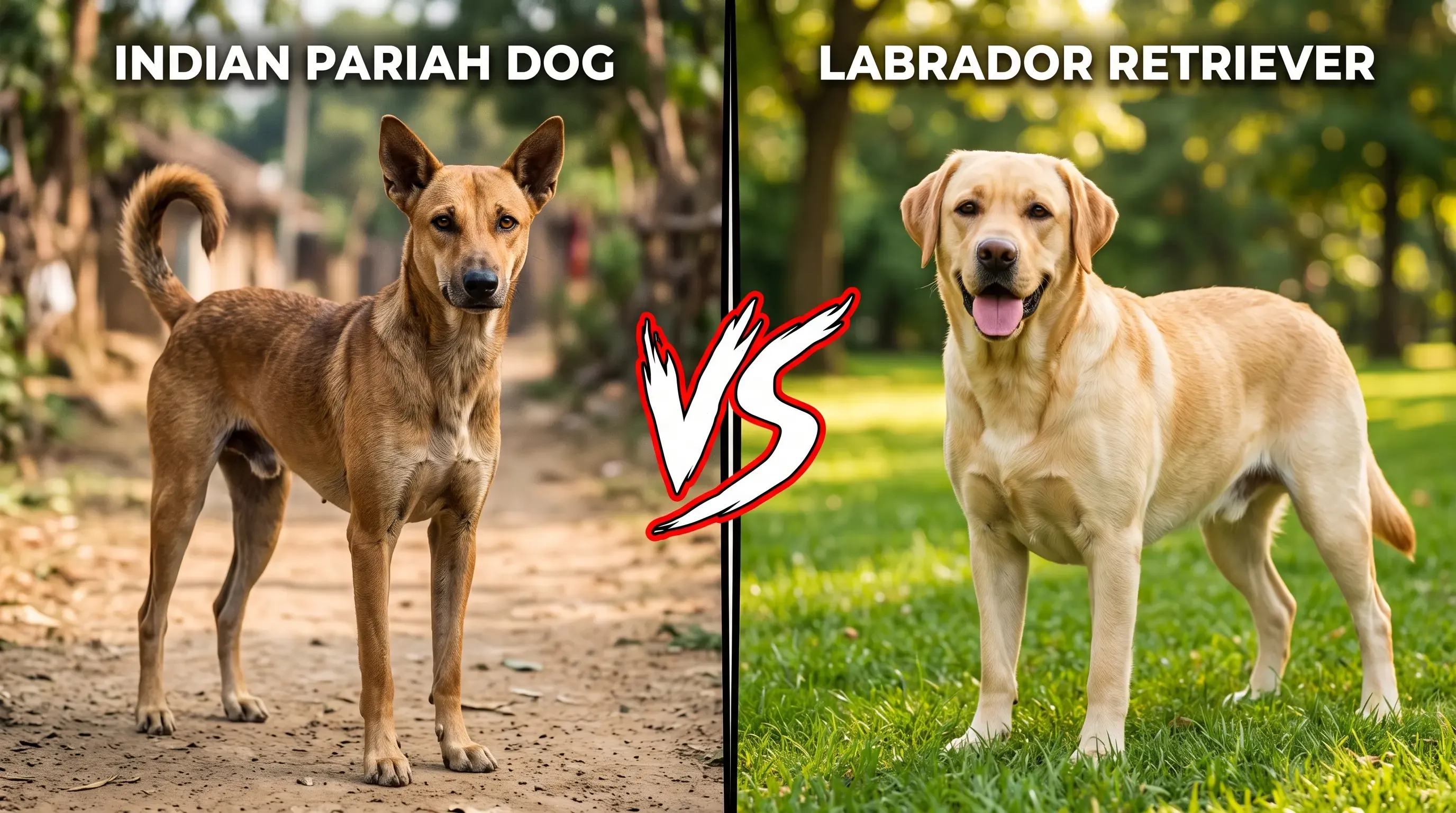
The head is medium-sized and wedge-shaped, with a pointed muzzle roughly the same length as the skull and almond-shaped dark brown eyes. The ears are erect and pointed, broad at the base, set low rather than high on the skull. That’s one of the more reliable tells at a glance: a folded or semi-pricked ear usually means a foreign breed somewhere upstream. The tail curls up and over the back, especially when the dog is alert or excited, rather than hanging straight.
Quick facts
| Indian Pariah Dog (INDog) | |
|---|---|
| Height | Male 51–64 cm (20–25 in); female 46–58 cm (18–23 in) |
| Weight | Male 20–30 kg; female 15–25 kg |
| Build | Square to slightly rectangular, medium frame |
| Coat | Short double coat, low shedding, minimal grooming |
| Common colours | Fawn to reddish-brown, solid or pied; solid black (rare) |
| Ears | Erect, pointed, broad base, set low |
| Tail | Curled, held high when alert |
| Litter size | 6–8 puppies, typically once a year |
| Typical lifespan | 13–15 years, sometimes longer |
| Temperament | Alert, intelligent, independent, watchful with strangers |
Figures drawn from the Kennel Club of India breed standard via the INDog Project, Wikipedia, Dogster’s breed profile and DawgieBowl for litter size.
Personality at a glance
The breed standard itself calls the INDog “extremely alert, very social,” and then, in the same breath, notes it’s territorial and will “bark at the slightest doubt.” Both are true. They’re not really in tension once you know why: this is a dog whose ancestors survived by reading a situation fast, not by being universally friendly on command.
Toward its own family, that reading skill shows up as warmth. The INDog Project describes the type as “not at all aggressive to humans” and “very keen to get human affection” once bonded. Toward strangers, the same dog is reserved by default and needs actual socialisation as a puppy to get comfortable with new people, rather than arriving friendly out of the box the way a Labrador does.
Intelligence is the other consistent thread across every source I checked, and it comes with a catch: these are dogs that solve problems, not dogs that repeat a trick because you asked twice. The breed standard notes they’re “highly intelligent and easily trainable” but “may refuse repetitive games and attempt escape.” Which tracks. A dog whose ancestors fed themselves for four millennia isn’t going to sit through fifteen rounds of the same recall drill just to make you happy. Reward-based, varied training works. Drilling doesn’t.
Is an INDog right for your household?
Good news first: an INDog can live in an apartment. The catch, and it’s a real one, is exercise. Most sources converge on roughly 60 to 90 minutes of real activity a day, split across walks and off-leash time where that’s safe, not a five-minute lap around the block. Skip that and you get a bored, restless dog, not a calm one. If your household genuinely can’t offer that much daily movement, this isn’t the low-maintenance option it looks like on the surface.
For first-time owners, the honest answer is “yes, with a caveat.” These aren’t difficult dogs in the obedience-class sense, and they’re quick learners, but they’re also not a dog that defers to you by instinct. You’ll get better results treating training as a negotiation than as a command chain, and that’s a different skill than handling a Labrador or Golden Retriever, breeds that were shaped specifically to want your approval. First-time owners who go in expecting a biddable dog sometimes come away frustrated; first-time owners who go in expecting a smart, independent one tend to do fine.
With children, the pattern that shows up across rescue guidance is: generally good, better with older kids who understand dog body language than with toddlers who don’t, and much better after early socialisation than without it. A puppy that only ever meets its own household will grow up wary of everyone else’s kids too.
On health, this is where the landrace history actually pays off. Nobody selectively bred the INDog for a look, so nobody accidentally bred a bad hip or a flat face into it along the way. Inherited conditions common in pedigree breeds are rare here. That’s a real advantage over the average purebred, and it’s reflected in the lifespan: 13 to 15 years is typical, with some living longer, against averages closer to a decade for several popular pedigree breeds.
Common questions
Is an Indian Pariah Dog the same as a street dog?
Not exactly. “Street dog” just means a dog living free-roaming in an urban area; it says nothing about ancestry. A street dog can be a pure INDog, or it can carry Labrador, Shepherd or other foreign breed ancestry mixed into the base landrace type, especially in cities with a history of European settlement. See Not every street dog is a pure INDog.
Is INDog the same thing as a mixed breed or mutt?
No. A mixed breed has two or more identifiable parent breeds. The INDog is a landrace: a population shaped by thousands of years of natural selection with no deliberate crossbreeding behind it. See An ancient landrace, not a mix.
How big does an INDog get?
Males stand about 51–64 cm (20–25 in) at the shoulder and weigh 20–30 kg. Females run smaller, about 46–58 cm (18–23 in) and 15–25 kg. See What the breed standard actually says.
Are INDogs good with strangers?
Not by default. They’re watchful and will bark at anything unfamiliar, which makes them decent natural watchdogs but means new people need an introduction rather than an instant welcome. Early socialisation makes a big difference. See Personality at a glance.
Can an INDog live in an apartment?
Yes, provided it gets roughly 60 to 90 minutes of real daily exercise. Without that, expect restlessness and destructive habits rather than a calm apartment dog. See Is an INDog right for your household?.
How long do INDogs typically live?
Commonly 13 to 15 years, and sometimes longer, thanks in large part to the absence of the inherited health problems that selective breeding tends to introduce in pedigree breeds. See Quick facts.
Sources
- Indian pariah dog — Wikipedia
- Breed Standard of the Indian Native Dog — INDog Project
- The Indian Native Dog (INDog) by Gautam Das — INDog Project
- Glossary — INDog Project
- INDog — Primitive and Aboriginal Dogs Society
- Indian Pariah Dog: Info, Pictures, Care Guide & More — Dogster
- Desi Dogs: Everything About the Indian Pariah Dog Breed — DawgieBowl
- pariah — Wiktionary