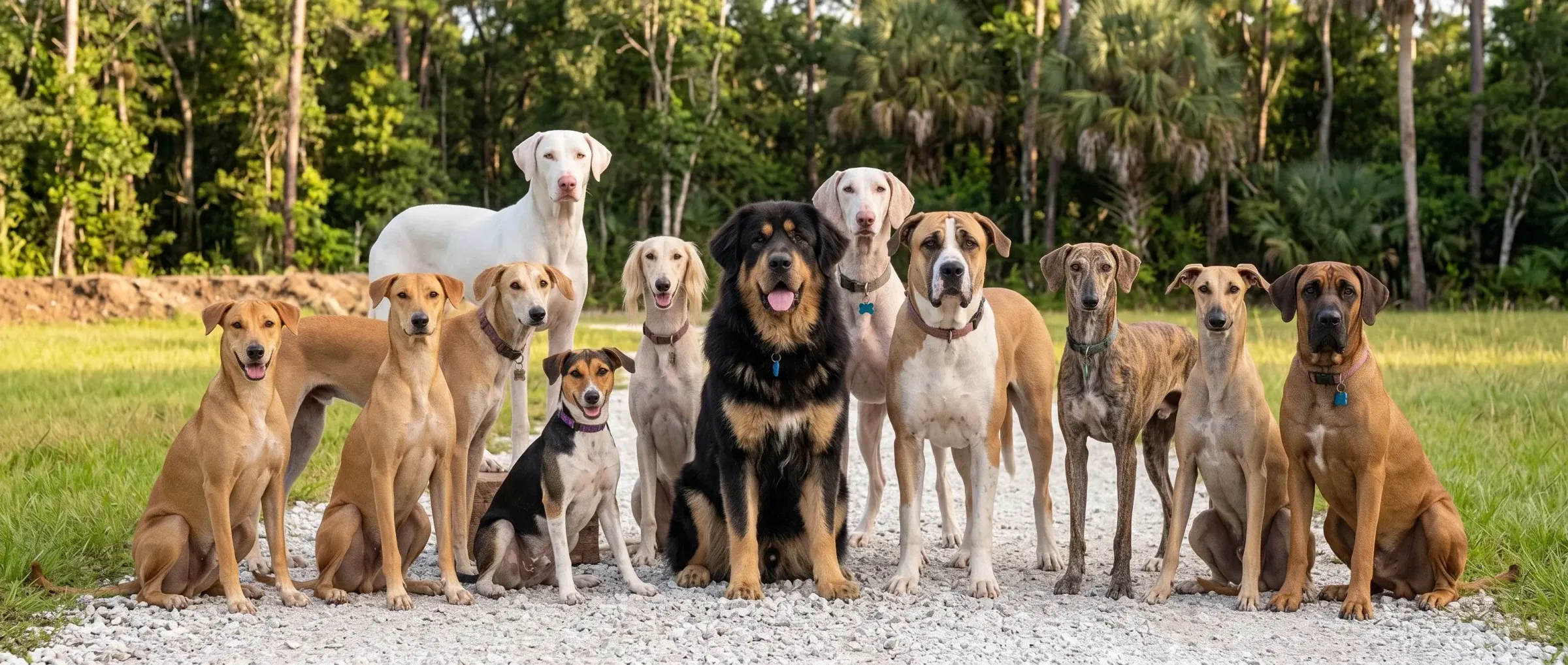
India has one of the richest, least-celebrated dog gene pools on earth, and most of us have only met one branch of the family tree: the Indian Pariah Dog. But that’s just the start. Tucked into the hills, deserts and river deltas of the subcontinent are sighthounds bred to run down jackal and wild boar, mastiff-type guardians that hold their ground against snow leopards at 4,000 metres, a duck-herder from a lake in Andhra Pradesh, and a hound once sent along with a bride’s dowry to guard her new home. Few were ever bred to a written standard; they were shaped by their work, their terrain, and centuries left alone to get it right, which is a big part of why they tend to be remarkably hardy. This guide introduces all of them.
How many breeds come from India
There’s no single clean number. The KCI and INKC register native breeds under sometimes-different names (the KCI’s Caravan Hound is the INKC’s Mudhol Hound), and ICAR-NBAGR, the government’s livestock genetics body, only began registering dog breeds in December 2020, per The Tribune. Almost none has FCI recognition yet. This guide covers 15 native breeds and landraces, from recognised breeds to a couple kept alive mostly by oral history and a handful of surviving dogs.
Indian Pariah Dog (INDog)
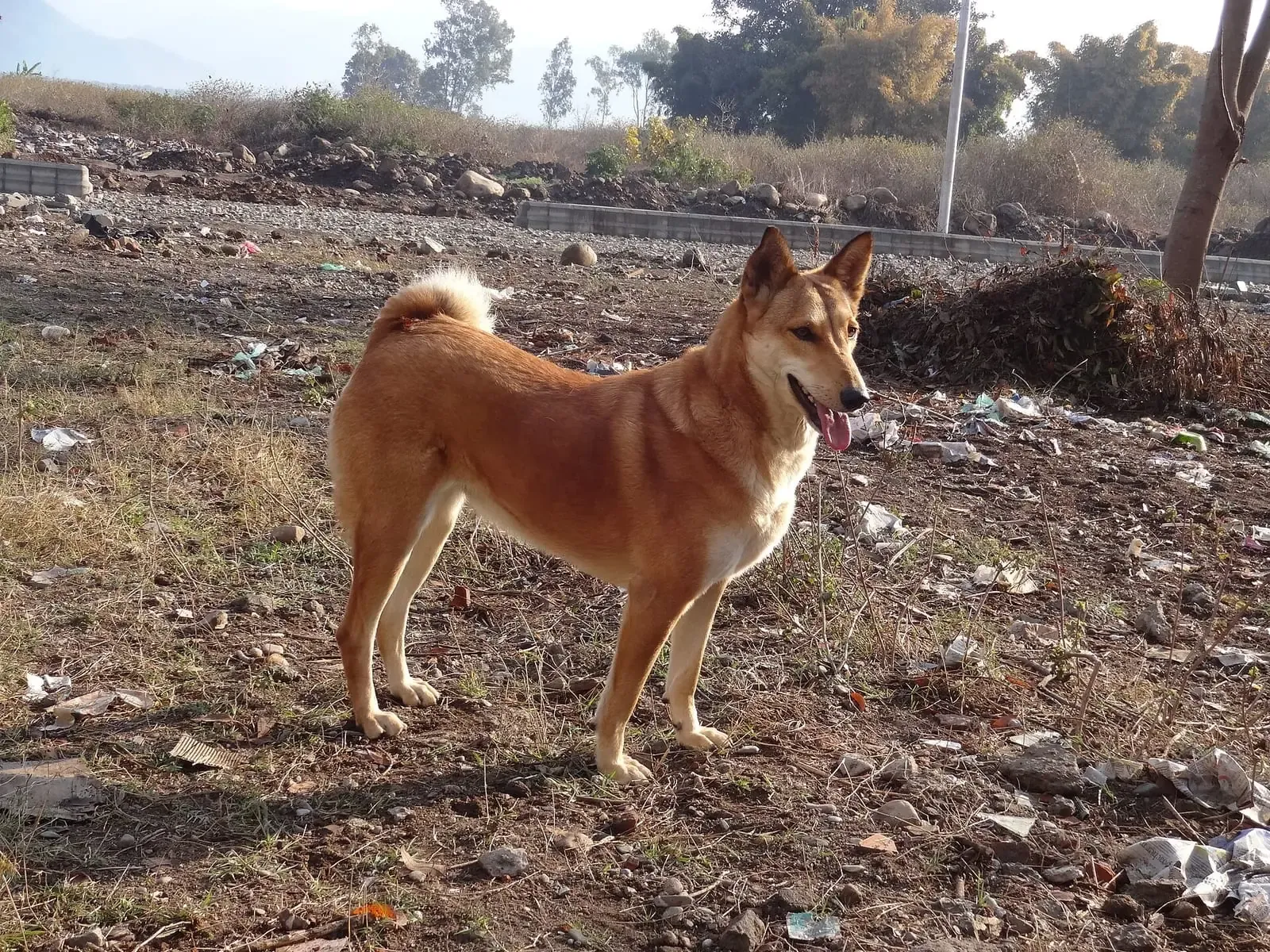
The Indian Pariah Dog is the baseline every other breed on this list gets measured against, and the one most often mistaken for an ordinary mixed-breed street dog. It isn’t one: the INDog is a landrace, shaped by natural selection over thousands of years rather than a breeder’s eye, with a recognisable type — wedge-shaped head, erect ears, curled tail, short double coat in fawn, black or brindle — that archaeological and genetic evidence suggests has stayed largely unchanged for millennia. The KCI only published a formal standard for it in 2015, per Wikipedia and the INDog Project.
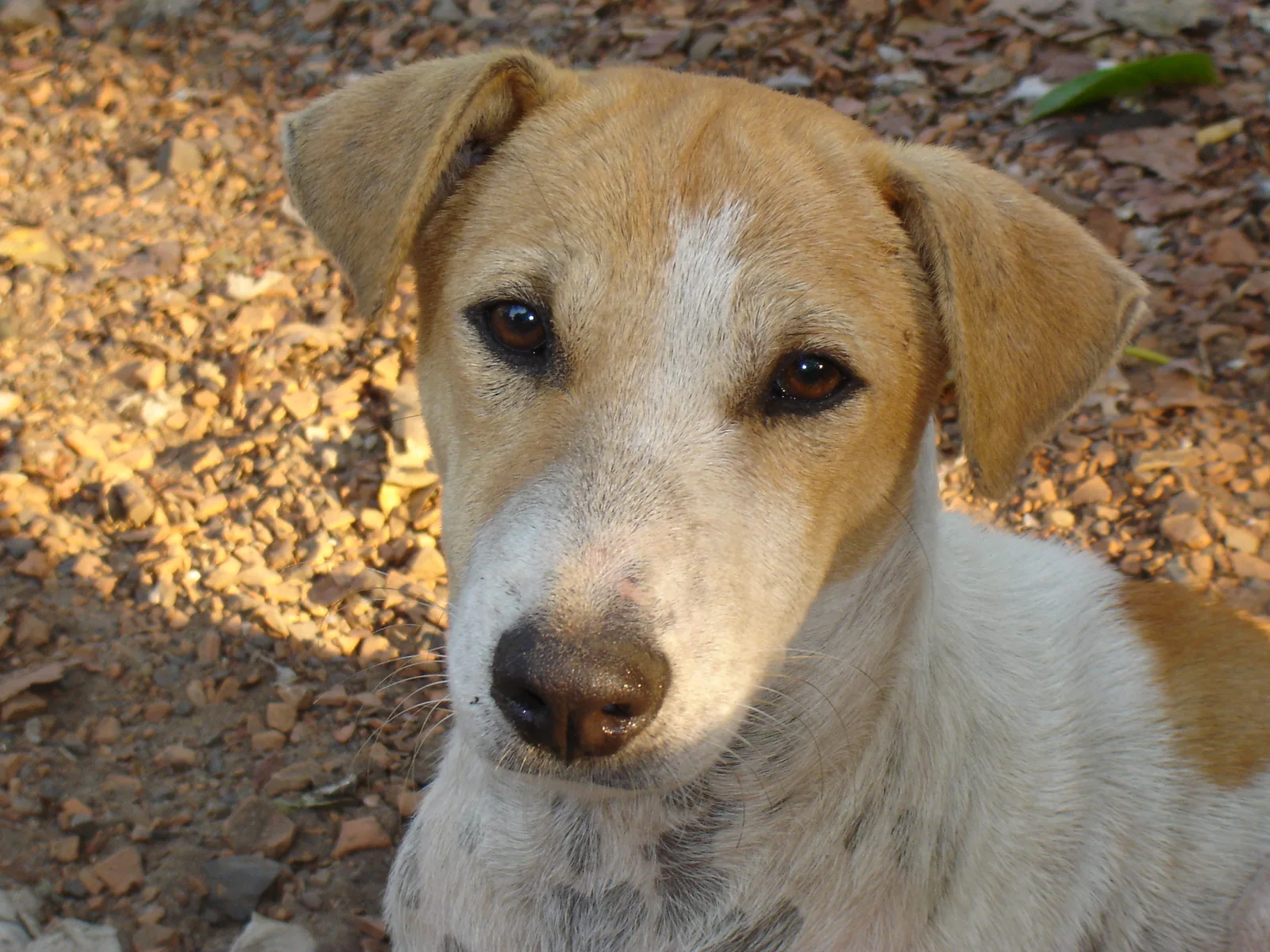
INDogs are alert, intelligent and independent-minded, closer in instinct to a wild canid than most pedigree breeds, which makes them excellent watchdogs but less naturally biddable than, say, a Labrador. They’re generalists rather than specialists: equally capable as a guard, a companion, or left to their own devices on a street corner.
Mudhol Hound (Caravan Hound)
The Mudhol Hound comes from around Mudhol in Karnataka; its ancestors reportedly arrived with trading caravans moving sighthound-type dogs across the Deccan Plateau from Central Asia and Arabia. Nearly extinct by the late 1800s, it was revived by Shrimant Rajesaheb Malojirao Ghorpade (1884–1937), who later gifted a pair to King George V, per Wikipedia. The KCI recognised it in 2005; the AKC followed in 2016.
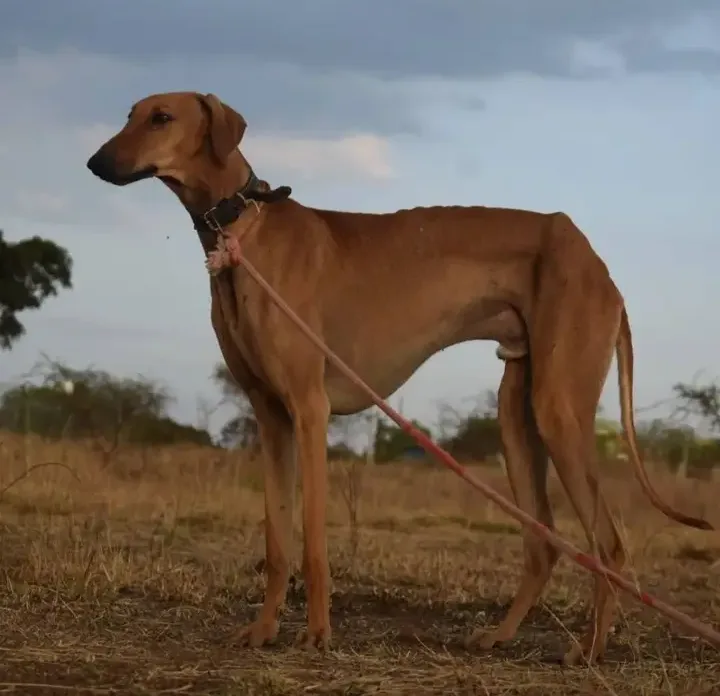
It’s a classic sighthound build: deep chest, tucked waist, long legs, smooth-coated (a feathered variant called the Pashmi also exists), weighing roughly 9 to 14 kg. Mudhol Hounds are intelligent, reserved with strangers and intensely loyal to their own people. Bred to run down antelope, hare and wild boar, some are now trained by the Indian Army for surveillance and border work.
Rajapalayam
Named after the town of Rajapalayam in Tamil Nadu, this all-white sighthound was bred by regional nobility to hunt wild boar and guard estates, and earned a harder reputation in the Carnatic and Polygar Wars, used against enemy cavalry to bite and cripple horses, per Wikipedia. Its population crashed to around 200 dogs by the 1980s, prompting a dedicated KCI breeding programme; India Post honoured it on commemorative stamps in 2005, per iStampGallery.
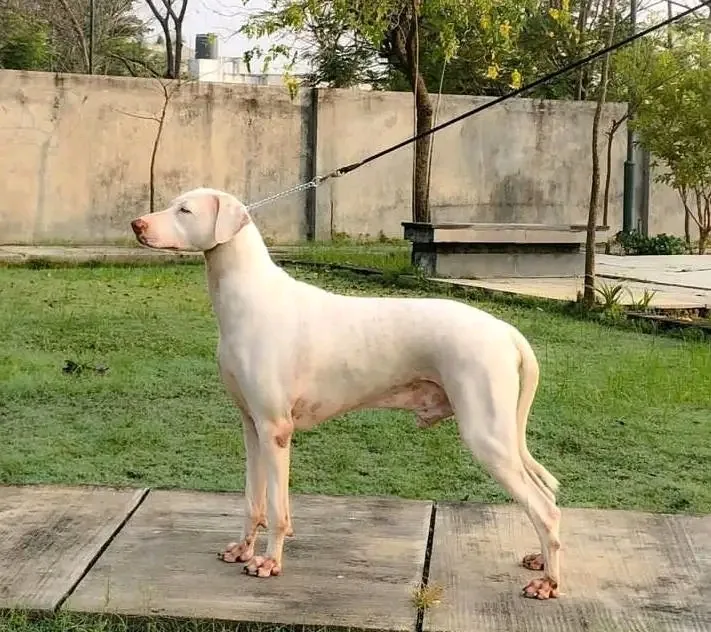
It stands up to 71 cm, males reaching 40 kg, with a short milky-white coat and distinctive pink skin, nose and eye rims. Rajapalayams are courageous, fiercely protective and famously standoffish with strangers, rarely tolerating touch from anyone outside the family — capable guard dogs, but a poor choice for a first-time owner.
Chippiparai
A sighthound thought to descend from Salukis brought in along old trade routes, the Chippiparai takes its name from the village of Sippiparai and was kept by southern Indian royal households to hunt hare and small game by sight, clocked chasing game at 54 to 61 km/h, per Wikipedia.
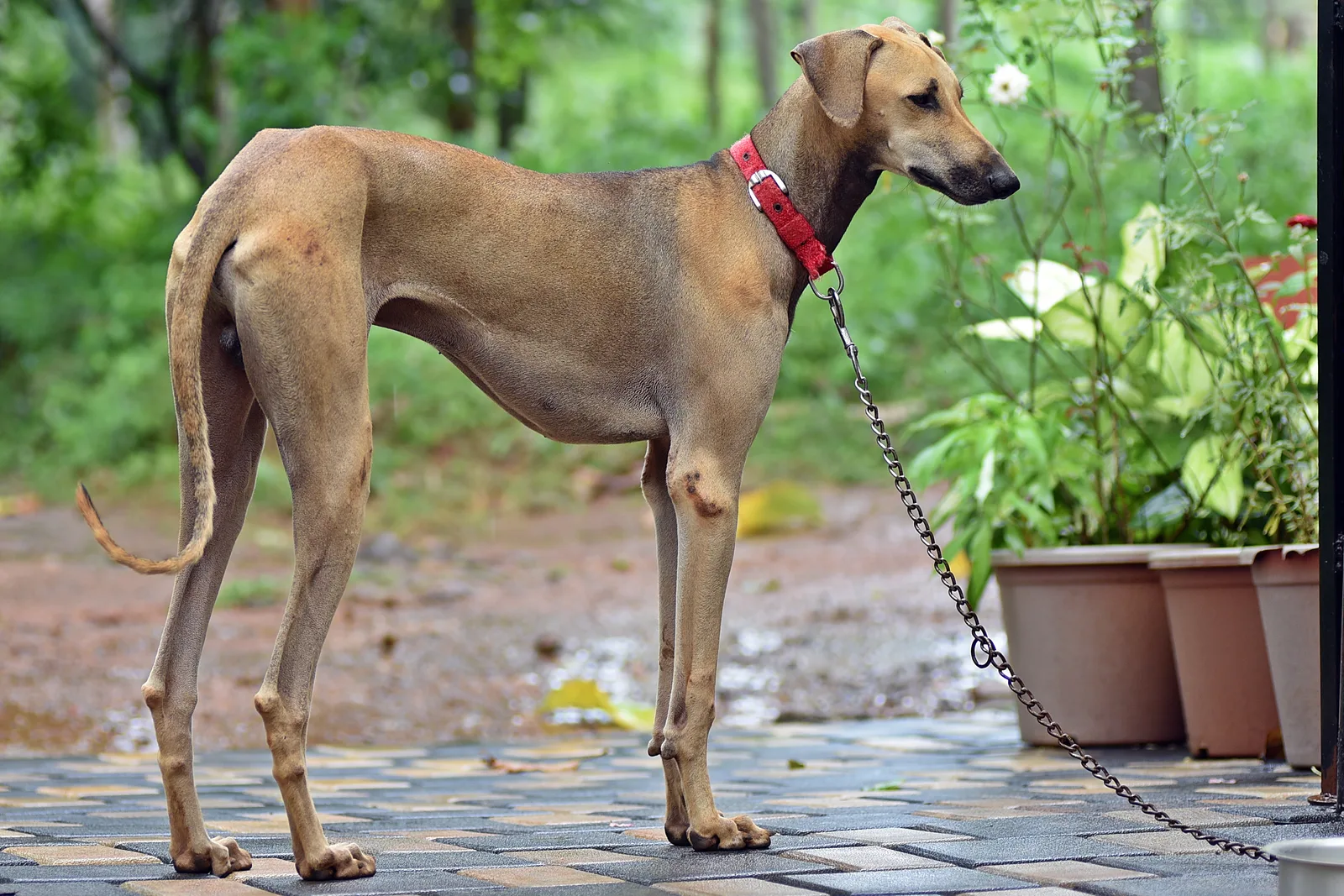
Males stand around 63 cm, females about 56 cm, in a short coat in fawn, brindle, grey brindle, red, or fawn-and-white. It’s widely considered the most trainable of India’s native breeds, biddable enough that some work with police, but it bonds hard to a single handler — gentle with its own family, reserved with everyone else.
Kombai
The Kombai takes its name from the town of Kombai in Tamil Nadu; local tradition traces its origins to the Maravar warrior community as far back as the 9th century. Bred to hunt wild boar through the southern forests, it also has a military past: presented to Hyder Ali and Tipu Sultan and trained to hamstring enemy cavalry horses, per Wikipedia.
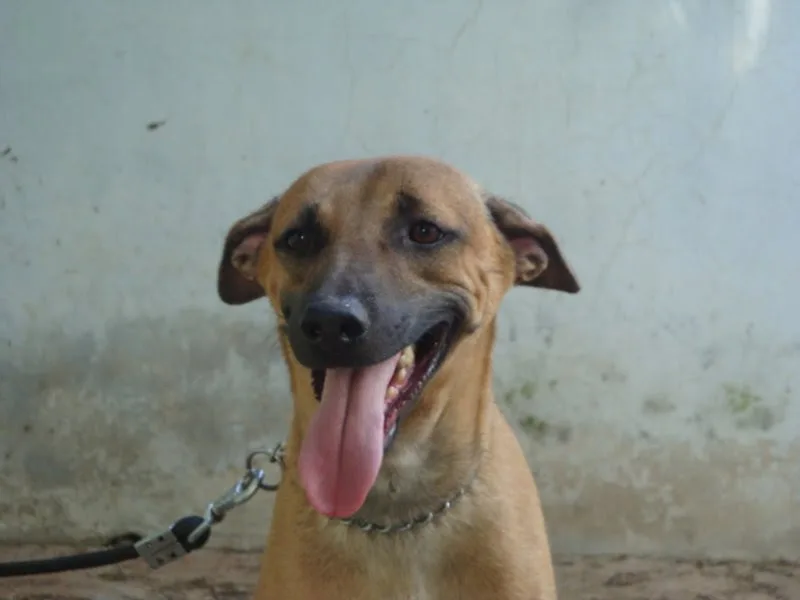
It’s a stocky, muscular dog, males 56 to 62 cm and 25 to 35 kg, with a short double coat in dark red and tan and a black facial mask. Kombais are gentle with their own family but become fast and intimidating toward strangers. In 2026, Assam Rifles began inducting Kombais, alongside the Tangkhul Hui, into its sniffer units, per Deccan Herald.
Kanni
In the Tirunelveli, Thoothukudi, Sivakasi, Madurai and Virudhunagar belt of Tamil Nadu, the Kanni was traditionally part of a bride’s dowry among the Kambalathu Naicker community, sent to guard her new household. The name means “pure,” and the breed’s reputation matched it: a Kanni was said to take food or affection from no one but its own family, per dogwithblog.in.
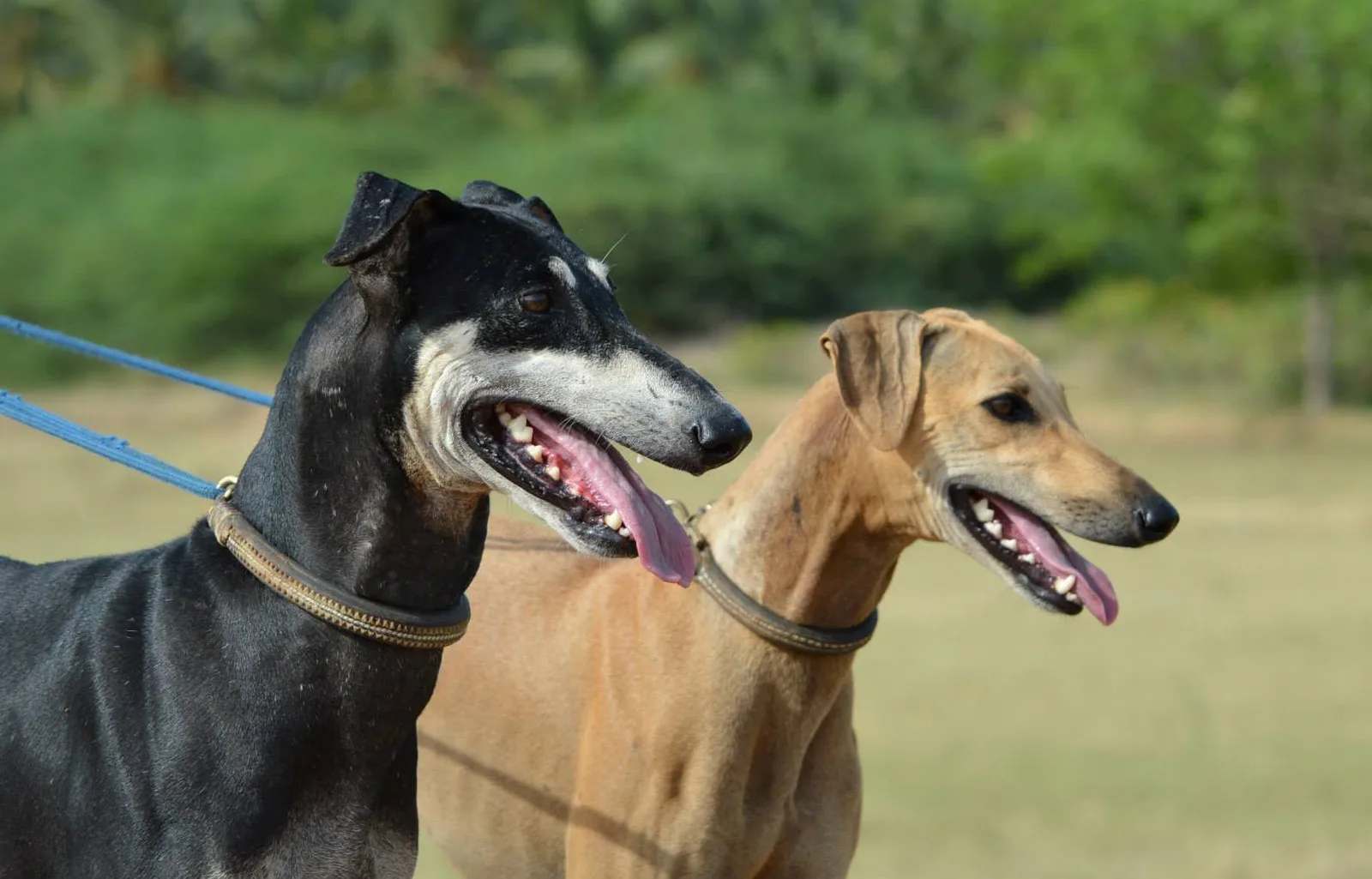
Males stand roughly 62 to 67 cm and weigh 16 to 22 kg, with a short black-and-tan coat, tan marking the legs, chest and face. Built for coursing hare and small game, it’s quiet, sensitive and slow to trust outsiders — the same one-family devotion runs through most of Tamil Nadu’s native hounds, but the Kanni has the most extreme version of it.
Rampur Greyhound
Unlike the landraces above, the Rampur Greyhound has a known creator: Nawab Ahmad Ali Khan Bahadur, 19th-century ruler of Rampur State, deliberately crossed the Central Asian Tazi with the English Greyhound for a dog fast enough to course jackal and wild boar, and steady enough to run down leopards and tigers for the court’s hunts. Independence in 1947 ended royal shikar and the demand for it; it’s now close to extinction in pure form, per Wikipedia.
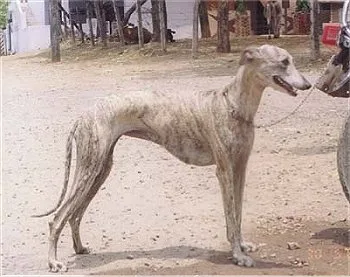
It stands 56 to 76 cm and weighs 23 to 32 kg, with a short coat in brindle, black, grey, fawn, brown or white, and a build closer to the North African Sloughi than a European Greyhound. Loyal, intelligent and trainable, it’s still kept mostly as a working coursing dog rather than a companion, and remains genuinely rare outside its home region.
Bakharwal Dog
Named for the nomadic Bakarwal and Gujjar herding communities of Jammu and Kashmir, the Bakharwal is a livestock guardian shaped over centuries in the Pir Panjal range to fend off wolves, bears and snow leopards — possibly a cross between Tibetan Mastiffs and local pariah-type dogs, per Wikipedia. Unrecognised by any major kennel club, insurgency-related killings since the 1990s have pushed it toward critically endangered status.
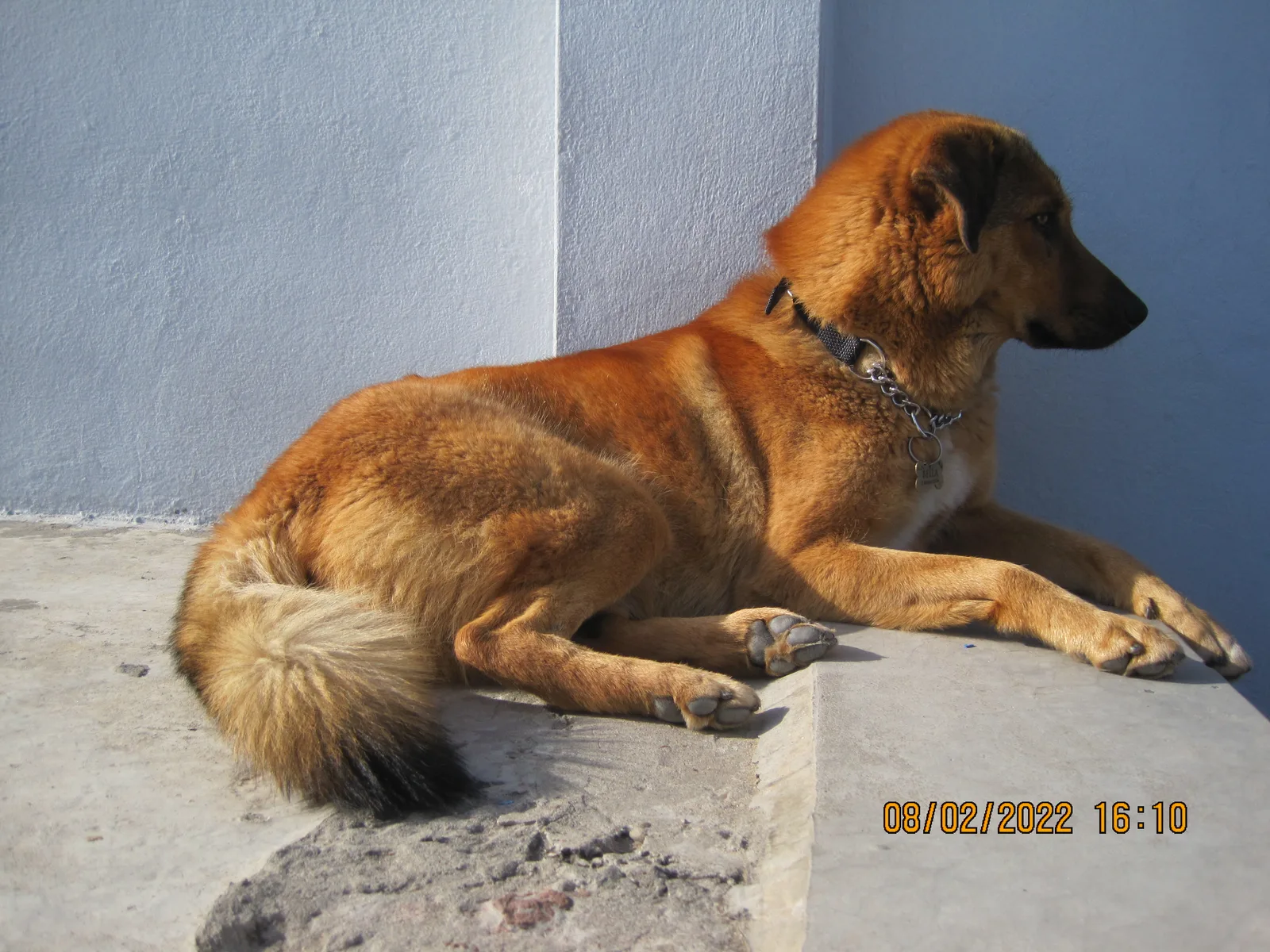
It’s a genuinely large dog, 61 to 76 cm and 70 to 90 kg, with a thick double coat in black and tan, piebald or tri-colour. Bakharwals are loyal and devoted to their family but wary of outsiders, willing to confront anything they read as a threat to the flock or camp — standard for a livestock guardian breed anywhere, not a flaw specific to this one.
Gaddi Kutta (Himalayan Sheepdog)
The Gaddi Kutta is the working dog of the Gaddi shepherd community of Himachal Pradesh, bred to hold off snow leopards, wolves and bears on high pastures. Its exact ancestry is lost; local tradition describes a cross between Himalayan wild dogs and Tibetan Mastiffs. In January 2025, ICAR-NBAGR registered the Gaddi as an indigenous breed, the Himalayan region’s first, with a national population then estimated under 1,000 dogs, per Down To Earth.
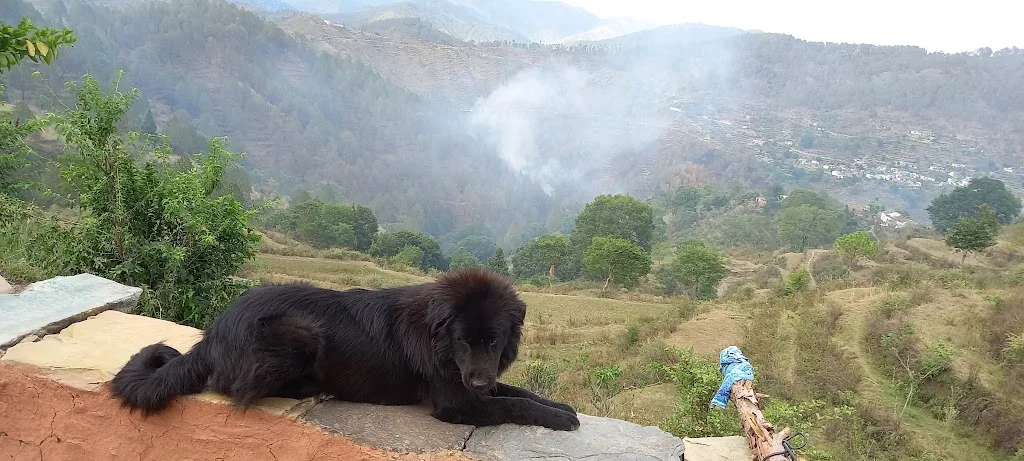
It’s a powerful mastiff type, males around 39 kg, with a thick weatherproof black coat, sometimes marked white on the chest or feet, and a thick, arched neck that makes it hard for a big cat to land a killing bite. Calm but alert, deeply territorial and reserved with strangers, it needs an experienced, confident handler — not an apartment dog, and not a first dog.
Himalayan Mastiff (Bhotia)
Closely related to the Gaddi Kutta, the Bhotia, also called the Bhote Kukur, Bhutia or Himalayan Mastiff, is named for the Bhotia communities of the higher Himalaya. It’s frequently mistaken for a small Tibetan Mastiff, which it resembles closely enough that the names are sometimes used interchangeably, per dogwithblog.in.
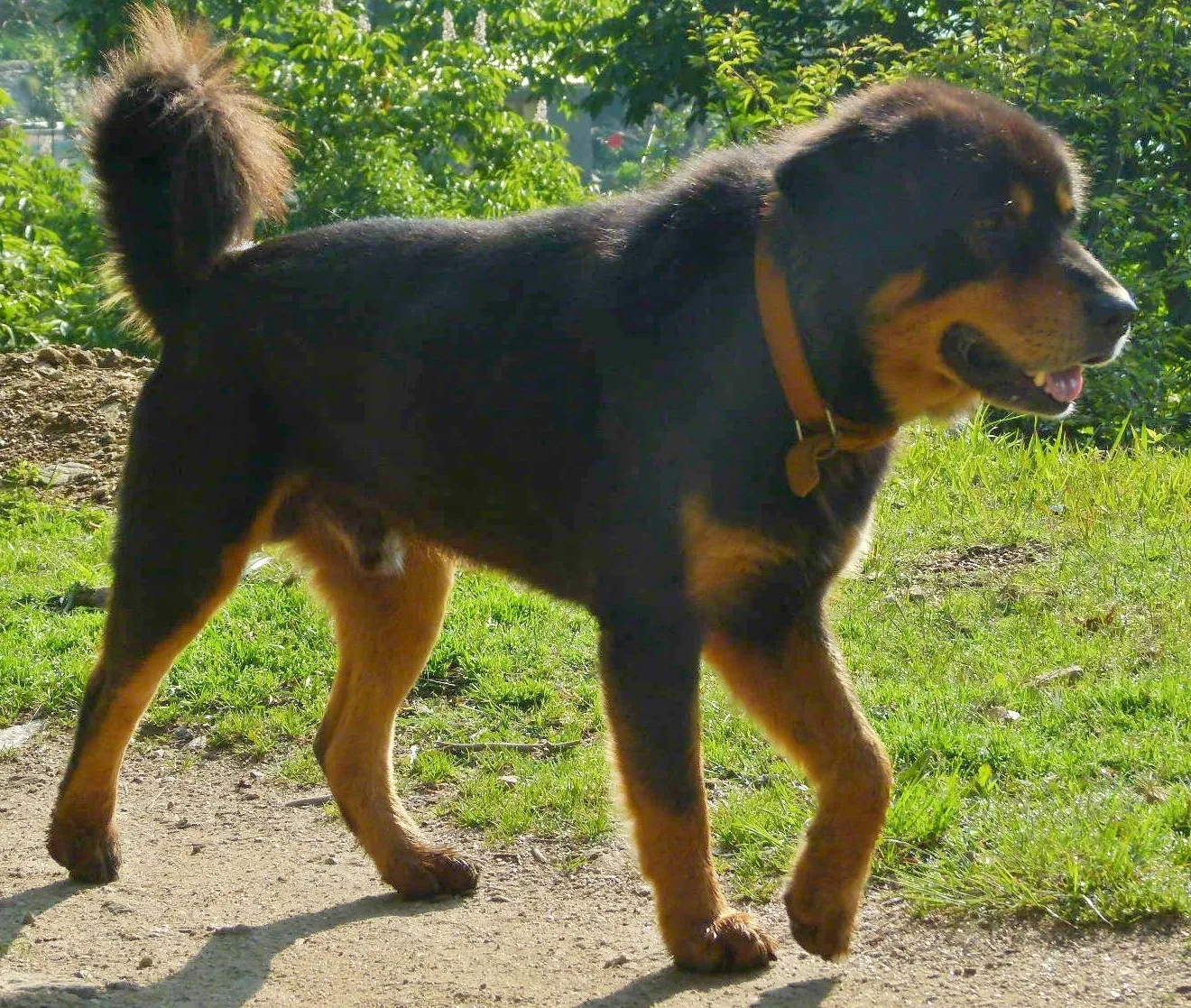
Males run 51 to 76 cm and 23 to 41 kg, with a long, thick double coat, usually black and tan or solid black with white on the extremities, small drooping ears and a plumed tail curled over the back. It guards yak and sheep at altitude, and is described as even more protective toward unfamiliar people than its larger Tibetan Mastiff relative.
Vikhan
The Vikhan is a livestock guardian breed from Himachal Pradesh, with a related population in Pakistan’s Chitral region. Its name likely comes from the Sanskrit “vikh” (broken, noseless or hermit), perhaps a nod to its harsh terrain or the solitary life of a dog that lives with a flock, per Wikipedia. No major kennel club recognises it, and no verified photograph is publicly available at the time of writing.
Lighter-framed than most livestock guardians and built for speed over mass, it has a long, soft coat in black, brown or white, drooping ears and a bushy tail, resembling a Rough Collie. It’s prized for being fast enough to run down a leopard, and handlers traditionally fit it with a spiked iron collar to protect its throat in that confrontation.
Pandikona
The Pandikona comes from Pattikonda taluk in Andhra Pradesh’s Kurnool district, with roots local tradition traces to the Vijayanagar Empire: an estimated 300 to 400 years of development as a boar-hunting and livestock-guarding dog for the region’s shepherd and farming families, per dogwithblog.in.
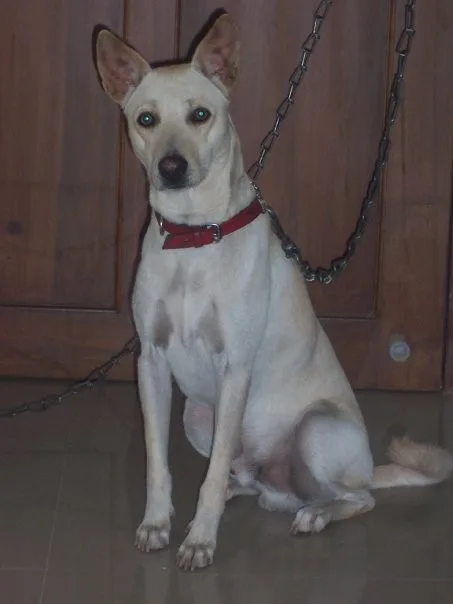
It’s a medium-sized, multi-purpose hound adapted to the region’s harsh, dry climate. Pandikonas are brave, territorial and sharp-tempered toward trespassing dogs, but affectionate and good with children in their own household, and are traditionally left unchained to patrol the village on their own terms — not far off from how an unowned INDog works the same village, honestly.
Tangkhul Hui (Haofa)
Raised for generations by the Tangkhul people of Ukhrul district in Manipur, the Tangkhul Hui, also called the Haofa, is one of India’s least-documented breeds, with local accounts suggesting an age running to hundreds of years and some mixing with dog populations across the Indo-Myanmar border, per Wikipedia. Like the Vikhan, no verified photograph is publicly available.
It’s a large, powerful dog, around 61 cm and reportedly 70 to 90 kg in its bigger form, with a short black-and-white coat and wide jaws earning comparisons to a bear rather than a typical hound. Traditionally a hunter valued for stamina over raw speed, it was estimated at only around 1,000 purebred individuals in 2022. The Indian Army and Assam Rifles have since begun inducting Tangkhul Huis for narcotics detection and sniffer work, per Deccan Herald.
Jonangi
The Jonangi, also called the Indian Duck Herding Dog, comes from the Kolleru Lake region of Andhra Pradesh, where duck breeders once used it to herd flocks of waterfowl between Kolleru and Pulicat Lake, keeping them safe from predators, per Wikipedia. When aquaculture replaced duck farming, the dogs lost their job, went semi-feral, learned to catch crabs and fish to survive, and were killed on sight by the same farmers who now saw them as pests — a near-extinction driven by an economic shift, not anything about the dog itself.
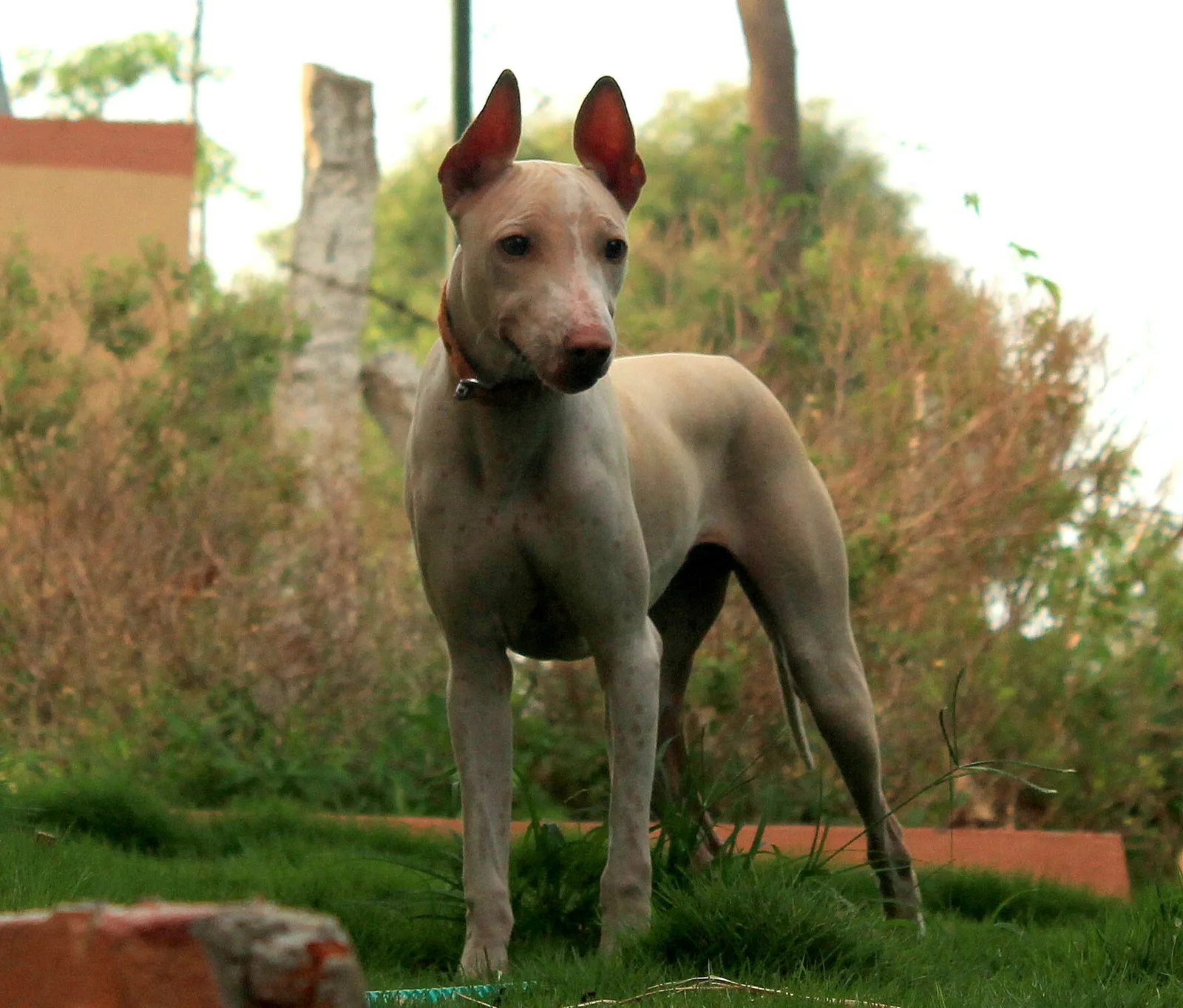
It stands 46 to 56 cm and weighs 20 to 39 kg depending on sex, with a short dense coat in white, white-and-black, black, grey or brindle. Jonangis bond tightly to one family, move efficiently over long distances, and get along with farm animals rather than chasing them — herding instinct still intact generations after the job disappeared. Renewed interest from livestock and poultry farmers has helped keep a small population going.
Gull Terrier
The outlier on this list. The Gull Terrier isn’t an ancient landrace but a 19th- and early 20th-century creation from Punjab, built by crossing Bull Terriers brought over during the British Raj with local breeds including the Bully Kutta. Developed for blood sports, bull-baiting and dog fighting, it shifted to guard work only once those were outlawed across the Empire, per Wikipedia.
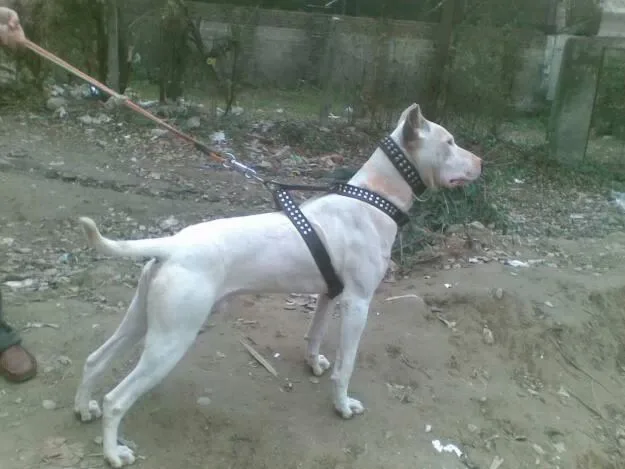
It stands 46 to 56 cm, males weighing 25 to 29 kg, in a short, dense, predominantly white coat sometimes marked with darker patches. Gull Terriers are intelligent and trainable but wary of strangers and fiercely territorial, carrying real behavioural baggage from what they were bred to do — needs an experienced owner, not a casual first dog, and it’s banned outright in some jurisdictions.
Dog breeds of India at a glance
| Breed | Region | Height | Weight | Primary traditional role |
|---|---|---|---|---|
| Indian Pariah Dog (INDog) | Pan-India | 46–64 cm | 15–30 kg | Companion, general-purpose guard |
| Mudhol Hound (Caravan Hound) | Karnataka | — | 9–14 kg | Hunting (sighthound) |
| Rajapalayam | Tamil Nadu | Up to 74 cm | 20–40 kg | Hunting, estate guarding |
| Chippiparai | Tamil Nadu | 56–63 cm | — | Hunting (sighthound) |
| Kombai | Tamil Nadu | 51–62 cm | 23–35 kg | Guarding, boar hunting |
| Kanni | Tamil Nadu | 62–67 cm | 16–22 kg | Hunting (sighthound), guarding |
| Rampur Greyhound | Uttar Pradesh | 56–76 cm | 23–32 kg | Coursing (big-game sighthound) |
| Bakharwal Dog | Jammu & Kashmir | 61–76 cm | 70–90 kg | Livestock guardian |
| Gaddi Kutta (Himalayan Sheepdog) | Himachal Pradesh | — | ~33–39 kg | Livestock guardian |
| Himalayan Mastiff (Bhotia) | Himachal Pradesh, Uttarakhand, Sikkim | 51–76 cm | 23–41 kg | Livestock guardian |
| Vikhan | Himachal Pradesh | — | — | Livestock guardian |
| Pandikona | Andhra Pradesh | — | — | Hunting, village guarding |
| Tangkhul Hui (Haofa) | Manipur | ~61 cm | 70–90 kg | Hunting, detection work |
| Jonangi | Andhra Pradesh | 46–56 cm | 20–39 kg | Duck herding, guarding |
| Gull Terrier | Punjab | 46–56 cm | 20–29 kg | Guarding (historically blood sports) |
Figures are drawn from each breed’s Wikipedia infobox, cross-checked against dogwithblog.in where Wikipedia is thin. Undocumented figures are left blank rather than guessed.
Common questions
How many dog breeds are native to India?
There’s no single agreed number. The KCI and INKC recognise a handful under sometimes-different names, and ICAR-NBAGR only began registering native dog breeds in December 2020. This article covers 15 of the better-documented breeds and landraces. See How many breeds come from India.
What’s the difference between the Indian Pariah Dog and an ordinary street dog?
The INDog is a landrace with a consistent, documented type: wedge head, erect ears, curled tail, short coat, with a KCI breed standard published in 2015. A “street dog” is any dog living on the street, which may or may not show that type. See Indian Pariah Dog (INDog).
Which Indian dog breeds are best suited to hot climates and apartment living?
The Indian Pariah Dog is the clearest fit, having evolved in this exact climate. Most other breeds here were bred for specific outdoor jobs and need more space and a working role to stay settled. See Indian Pariah Dog (INDog).
Are any Indian dog breeds recognised internationally?
Very few. The Mudhol Hound reached the AKC’s Miscellaneous Class in 2016; most others have no FCI recognition and are documented only through India’s own kennel clubs or ICAR-NBAGR. See Mudhol Hound (Caravan Hound).
Which Indian dog breeds are endangered?
Several are down to small, fragile populations: the Rampur Greyhound is close to extinction in pure form, the Bakharwal, Gaddi Kutta and Tangkhul Hui are each estimated under 1,000 dogs, and the Jonangi and Vikhan survive only in small regional pockets. See Rampur Greyhound and Bakharwal Dog.
Why do so many of these breeds bond to only one person or family?
It was often the point: dogs like the Chippiparai, Kanni and Rajapalayam were bred for single-household guarding in village and estate settings, not for working with strangers. See Chippiparai and Kanni.
Sources
- Indian pariah dog — Wikipedia
- INDog Project breed standard
- Mudhol Hound — Wikipedia
- Rajapalayam dog — Wikipedia
- Chippiparai — Wikipedia
- Kombai dog — Wikipedia
- Kanni dog — dogwithblog.in
- Rampur Greyhound — Wikipedia
- Bakharwal dog — Wikipedia
- Gaddi recognised by ICAR-NBAGR — Down To Earth
- Himalayan Sheepdog — Wikipedia
- Bhutia Dog (Bhotia) — dogwithblog.in
- Vikhan — Wikipedia
- Pandikona — dogwithblog.in
- Haofa Tangkhul Hui — Wikipedia
- Tangkhul Hui, Kombai join Assam Rifles — Deccan Herald
- Jonangi — Wikipedia
- Gull Terrier — Wikipedia
- ICAR-NBAGR registers 3 dog breeds — The Tribune
- India: Breeds of Dogs — iStampGallery
- Rajapalayam 2005 stamp — TouchStamps