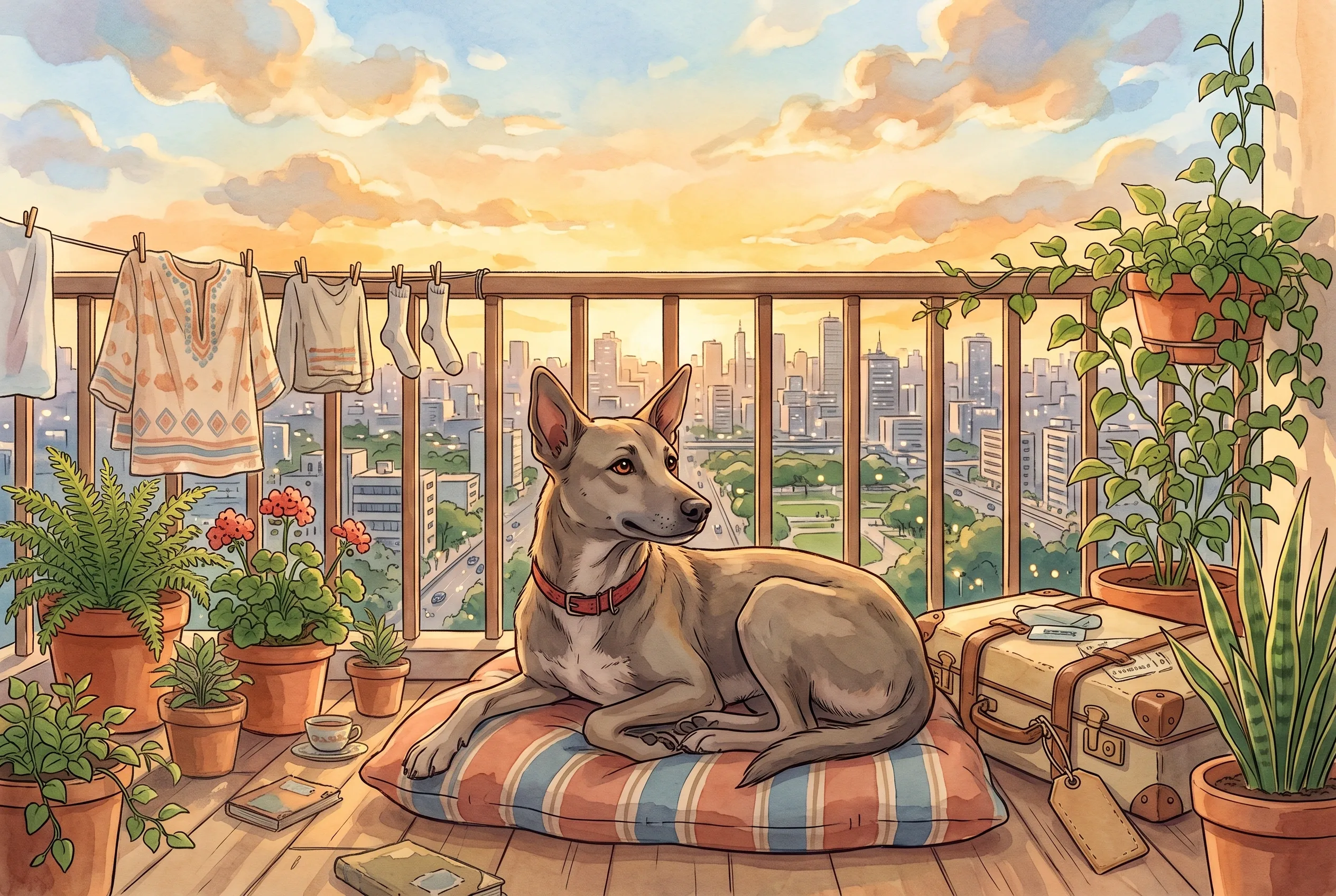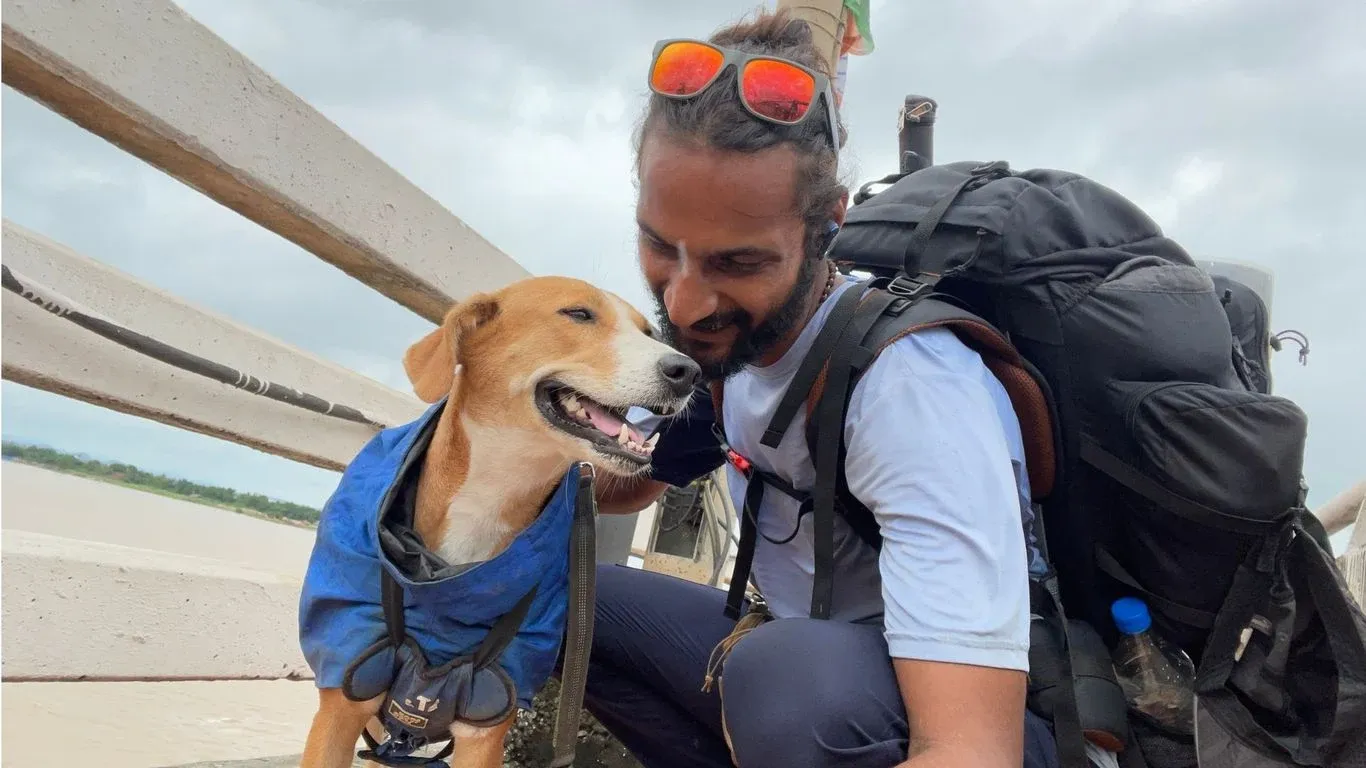
Somewhere on a dirt road in Rajasthan in 2021, a month-old puppy who’d lost her mother wandered up to a man walking alone with a backpack. He fed her. She didn’t leave. Four years and more than 15,000 kilometres later, that puppy, now known online as Butter Madame, stood at 4,130 metres above sea level at Annapurna Base Camp in Nepal, having walked there on her own four paws.
Nobody trained Butter for altitude. Nobody strapped her into a harness built for glacier travel or flew her up in a helicopter for a photo at the top. She got to Annapurna Base Camp the same way she got everywhere else with owner Yati Gaur: by putting one paw in front of the other, for years, across most of India.
Who is Butter Madame
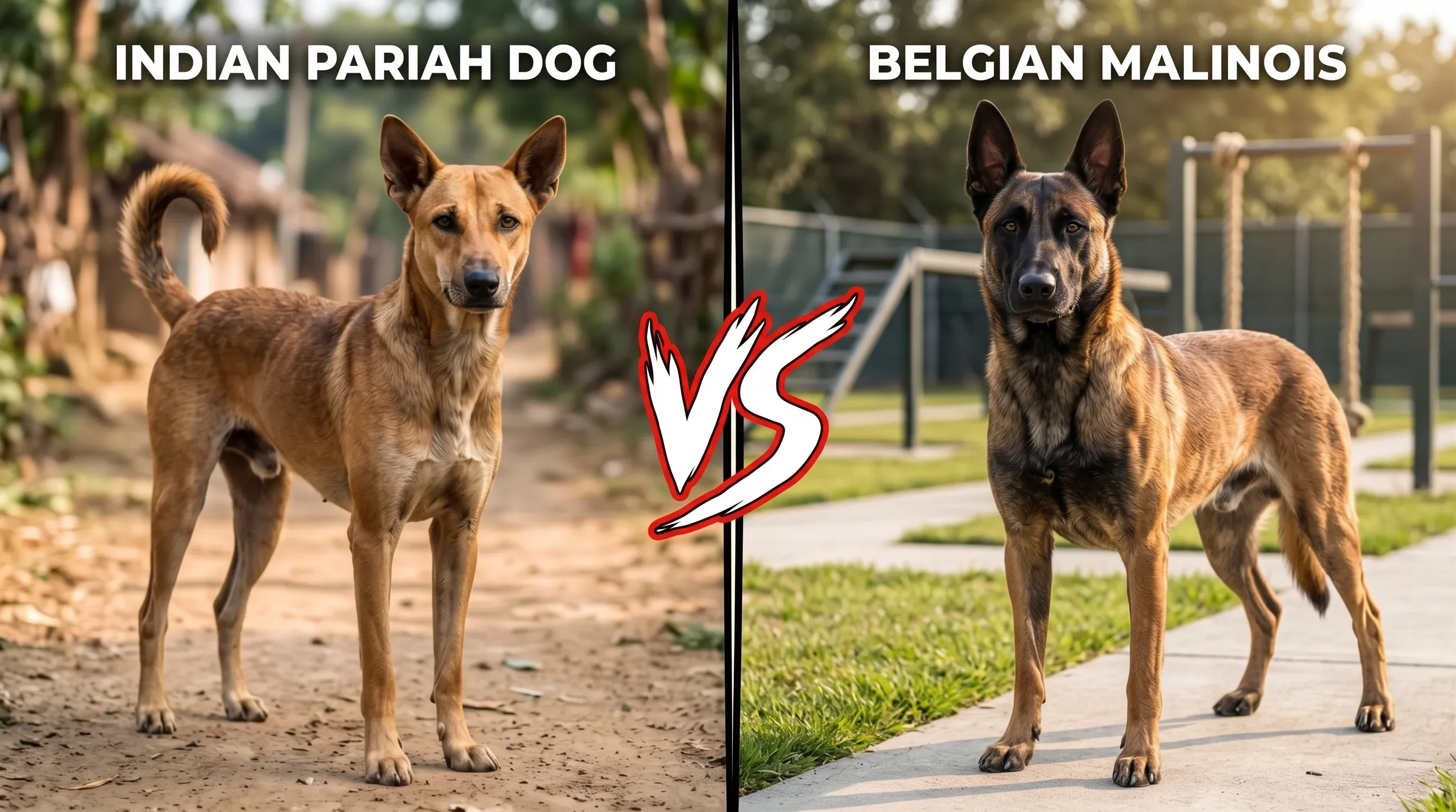
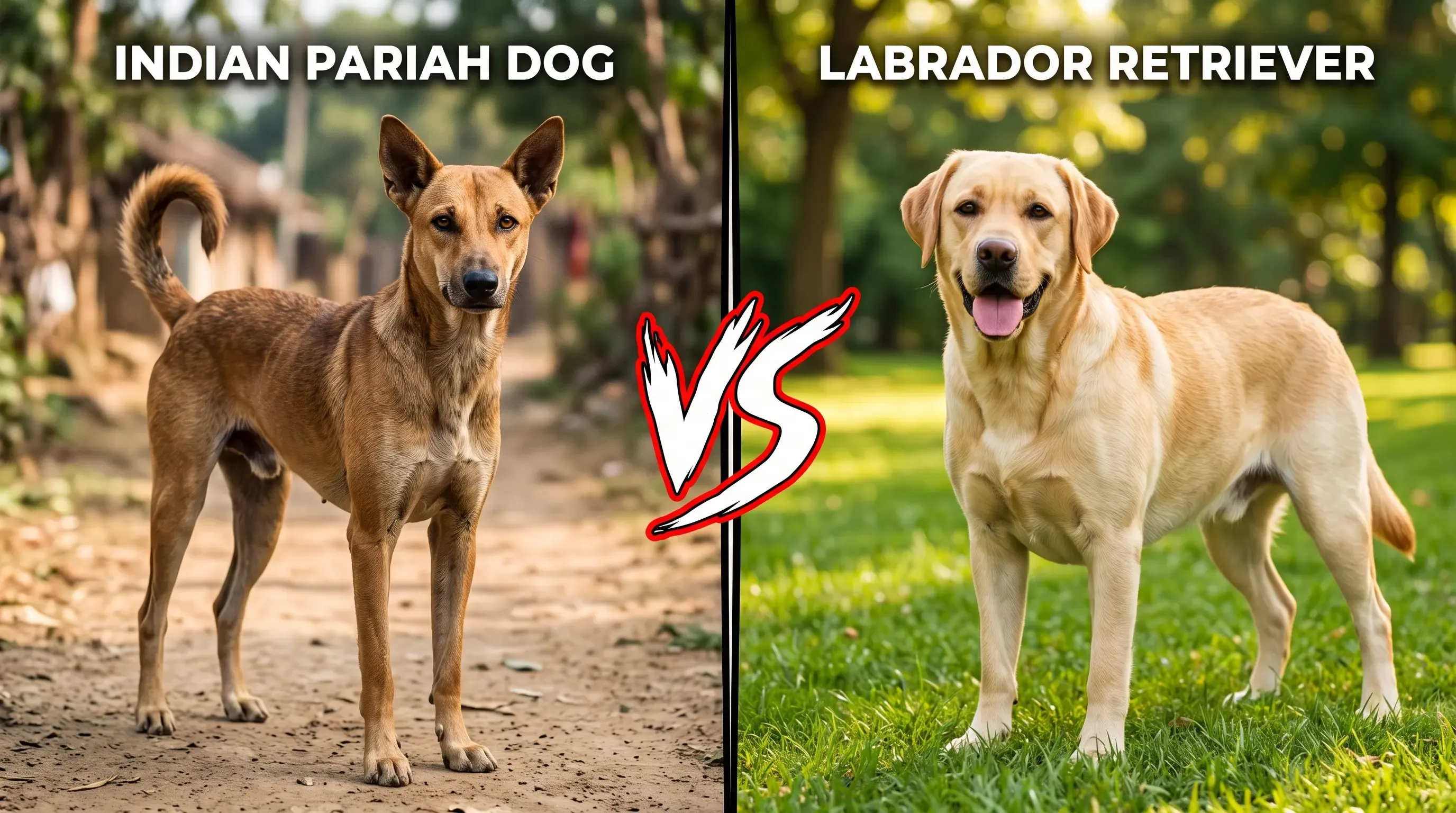
Butter is an Indian pariah dog, an Indie in the shorthand her own fans use, found as an orphaned puppy during one of Yati Gaur’s early walks through Rajasthan. Gaur is a Noida-based former cinematography student who left a hostel-chain job during the pandemic to walk across India on foot, in stages, documenting the trip on his YouTube channel and Instagram account, both called The Unfolding Play. Butter wasn’t planned. She turned up, and he didn’t have it in him to leave her on the road.
He didn’t rush her into 25-kilometre days either. By his own account, he spent roughly a year and a half just raising her — building her strength, her trust, her tolerance for strange dogs, cars, crowds and new terrain — before she joined him as a working trekking partner rather than a puppy tagging along, according to Homegrown. That patience is arguably the least glamorous and most important part of this whole story. Nobody posts reels of eighteen months of basic obedience work, but it’s the part that made the rest of it survivable for a dog who never asked to be an internet phenomenon.
The road so far
The walk that eventually produced Butter started before her. Gaur’s first solo leg ran 520 km from Rishikesh through Kedarnath, Tungnath and Badrinath, over about six weeks. Later stretches took him roughly 800 km across Rajasthan — Jaipur, Ajmer, Pushkar, Chittorgarh, Udaipur, Jodhpur, Jaisalmer — then 1,550 km from Rishikesh into Himachal Pradesh, then 780 km through Sikkim’s Gangtok, Chungthang, Yangang and Pelling, per Homegrown and NewsMeter. A separate leg of the “longest walk” carried him from Uttarakhand down through Odisha, Andhra Pradesh, Telangana, Tamil Nadu, Kerala, Karnataka and Maharashtra, stringing together Char Dham and Jyotirlinga sites along the way, according to NewsMeter.
Butter picked up most of that ground with him. Gaur and Butter typically start walking around 5 a.m., break through the hottest hours, and stop by sunset, covering 20 to 25 km on an average day, per Homegrown and NewsMeter. By the time they reached Nepal, the pair had covered more than 15,000 km — some accounts put the figure closer to 15,200 — across what Gaur describes as 13 Indian states, according to MediaFX and a podcast interview on The Kuch Bhi Show. That state count is Gaur’s own tally rather than something independently audited leg by leg, but the individual routes reported across Rajasthan, Uttarakhand, Himachal Pradesh, Sikkim, Delhi-NCR, Odisha, Andhra Pradesh, Telangana, Tamil Nadu, Kerala, Karnataka and Maharashtra alone already add up to most of it.
Butter’s kit has grown up alongside her. She now walks in a harness, boots for hot tarmac and loose sharp-edged mountain rock, a raincoat, and a heat-resistant jacket for altitude, per Homegrown. Her diet shifts with the terrain too: lighter meals in the Delhi heat, calorie-dense chicken and mutton in the mountains, where she’s burning far more than a day on flat ground would cost her, according to MediaFX.
Getting a street dog into Nepal, legally
Crossing an international border with a dog is its own expedition, and the run-up to Annapurna is where that shows. Nepal treats India as a high-risk country for rabies, which means a rabies vaccination at least 30 days ahead of travel, a microchip implanted before that vaccination (so the certificate and the chip actually match), and a health certificate issued within ten days of departure, according to a Nepal trekking operator’s pet-travel guide. Reporting on Butter’s crossing specifically describes health checks every three months in the run-up to the trip, completed vaccinations, PCR testing, and a medical certificate produced within 72 hours of the border crossing, per MediaFX — tighter than the general baseline, which tracks with a working dog whose owner had every reason not to risk a rejection at the border.
None of that guaranteed the trek itself would go smoothly. It just meant Butter was legally allowed to try.
What it actually takes to reach Annapurna Base Camp
Annapurna Base Camp sits at 4,130 metres — about 13,550 feet — and getting there on foot typically takes 8 to 14 days round-trip from Pokhara, depending on the route and how much time is built in for acclimatisation, according to a Nepal trekking guide that also tracks dog-friendly Himalayan routes by altitude. It’s not a technical climb — no ropes, no crampons — but it isn’t a stroll either. The trail runs through stone-step ascents that punish knees for hours at a stretch, narrow suspension bridges strung over river gorges, sections prone to landslides in the wrong season, and, above a certain elevation, snow and thin air that slow down even trekkers who’ve trained for months. Altitude sickness is a real risk above 4,000 metres for humans in good shape wearing proper boots and carrying trekking poles. Butter did it on four paws, with no ice axe, no oxygen, and no one to carry her if she got tired.
That’s the detail worth sitting with. This wasn’t a lapdog on a leash for an afternoon hike. It was a street-born dog handling multi-day cold, altitude and terrain that plenty of fit adult humans train for months to attempt, and by the accounts available, she finished it upright and on her own legs.
Reports describe her as the first Indie dog to complete the trek to Annapurna Base Camp, a claim that’s been repeated across coverage of the trip but isn’t independently verifiable. Nobody keeps an official registry of which street dogs have summited which Himalayan trails. What’s better documented is Gaur’s own framing of why he did it. He’s said the point was never a record. It was “challenging perceptions around Indian indie dogs,” proving that dogs written off as street mutts are, in his words, adaptable, strong, and capable of handling both freezing mountain conditions and brutal Indian summers, according to MediaFX.
Not every stretch of the road has been easy
The picture that circulates online, dog and human, backpacks on, silhouetted against a mountain road, leaves out the parts that don’t photograph as well. Gaur has spoken about at least one accident involving Butter serious enough that he described it publicly as frightening and emotionally difficult, according to The Reelstars, which doesn’t detail the injury itself but notes his followers rallied around Butter once word got out. It’s a reminder that a dog with tens of thousands of people following her recovery is still, underneath the account, a dog who can get hurt on a road far from a regular vet.
Gaur has also pushed back on treating the whole thing as an aesthetic. In a profile on the journey published this year, he described his documentation of the trip as deliberately unpolished — no overproduction, no chasing virality — closer to “pages from a lived diary” than a travel brand. “Indie dogs are not just capable,” he said, “they are extraordinary.”
Why this matters beyond one dog
India has millions of Indies living on its streets, and the default assumption most people carry about them is that they’re scrappy survivors at best, not dogs capable of the kind of sustained physical performance pedigree breeds get bred and trained for. Butter didn’t have generations of selective breeding behind her for mountain work, a professional conditioning programme, or specialist gear built to her measurements. She had a year and a half of patient groundwork, thousands of kilometres of accumulated fitness built the slow way, and a person who kept choosing to bring her along instead of leaving her behind at the next town.
That’s not nothing, and it’s not really replicable as a stunt, either. Walking 20 km a day for four years is its own kind of training regime, one most pet dogs and most humans never get near. But it does put a hard number on something this site keeps coming back to: Indies are not a downgrade from a “real” breed. Given the conditioning, the food and the patience, one of them just went to 4,130 metres and came back down again.
And she’s still going. Somewhere in India right now, an orphaned street puppy nobody planned for is walking the next stretch of road with the one person who decided she was worth keeping.
Common questions
Who is Butter Madame?
Butter is an Indian pariah dog (Indie) found as an orphaned puppy in Rajasthan by trekker Yati Gaur around 2021. She has since walked with him across more than 15,000 km of India and reached Annapurna Base Camp in Nepal. See Who is Butter Madame.
How far has Butter walked with Yati Gaur?
More than 15,000 km by the time they reached Nepal, some accounts put it at roughly 15,200 km, across a route Gaur describes as spanning 13 Indian states. That state count is self-reported rather than independently verified. See The road so far.
How high is Annapurna Base Camp, and is it dangerous for a dog?
Annapurna Base Camp sits at 4,130 metres (about 13,550 feet). The trek involves stone-step climbs, narrow suspension bridges, landslide-prone sections and, near the top, snow and thin air — demanding even for fit, well-equipped humans, and a serious undertaking for any dog without careful conditioning and gear. See What it actually takes to reach Annapurna Base Camp.
Was Butter really the first Indie dog to reach Annapurna Base Camp?
That claim has circulated in coverage of her trek, but there’s no official registry of dogs completing Himalayan routes, so it can’t be independently confirmed. What is documented is that she completed the trek on foot after years of accumulated trekking fitness. See What it actually takes to reach Annapurna Base Camp.
What paperwork does a dog need to trek in Nepal?
Nepal requires a rabies vaccination at least 30 days before travel, a microchip implanted before that vaccination, and a health certificate issued within 10 days of departure, since Nepal is classified as high-risk for rabies. Coverage of Butter’s crossing describes additional steps, including regular health checks, PCR testing and a medical certificate within 72 hours of the border. See Getting a street dog into Nepal, legally.
Can any street dog train to trek at altitude like Butter did?
Not overnight. Gaur spent about a year and a half building Butter’s fitness and trust before she started serious multi-week treks, and she’d already done Himalayan routes in Uttarakhand, Himachal Pradesh and Sikkim before Nepal. Altitude trekking with any dog should be built up gradually, with a vet involved for fitness and vaccination checks. See Who is Butter Madame.
Sources
- Meet Yati Who Travels India On Foot With His Dog, Butter — Homegrown
- Meet 26-year-old Yati Gaur who’s on the ‘longest walk’ of India with his dog Butter — NewsMeter
- Indian Indie Dog Climbs Annapurna Base Camp! — MediaFX
- 15,000 KM Across India With His Dog: Yati Gaur & Butter’s Viral Travel Journey — The Reelstars
- What Happened To Butter? Yati Shares His Side Of The Story In An Exclusive Reelstars Interview — The Reelstars
- Walked 15,200 KM Across India with Butter (My Dog) — The Kuch Bhi Show, ft. Yati Gaur (podcast)
- Can You Bring Your Dog to Nepal? Trekking with Pets in the Himalaya — Nepal Treks and Tour
- @theunfoldingplay — Instagram
- Annapurna Base Camp Trek 2026: Cost, Itinerary & Safety Tips — Trek The Himalayas