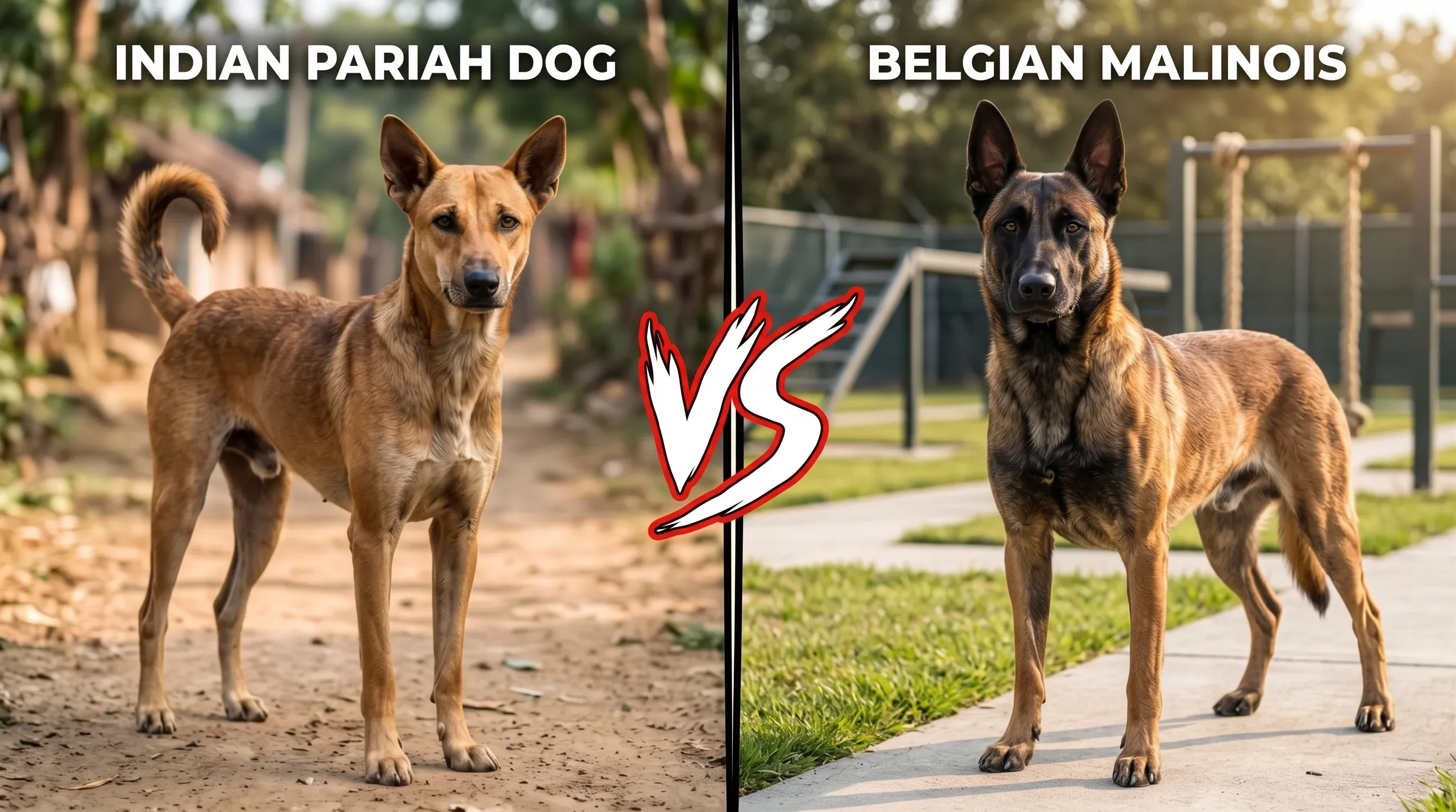
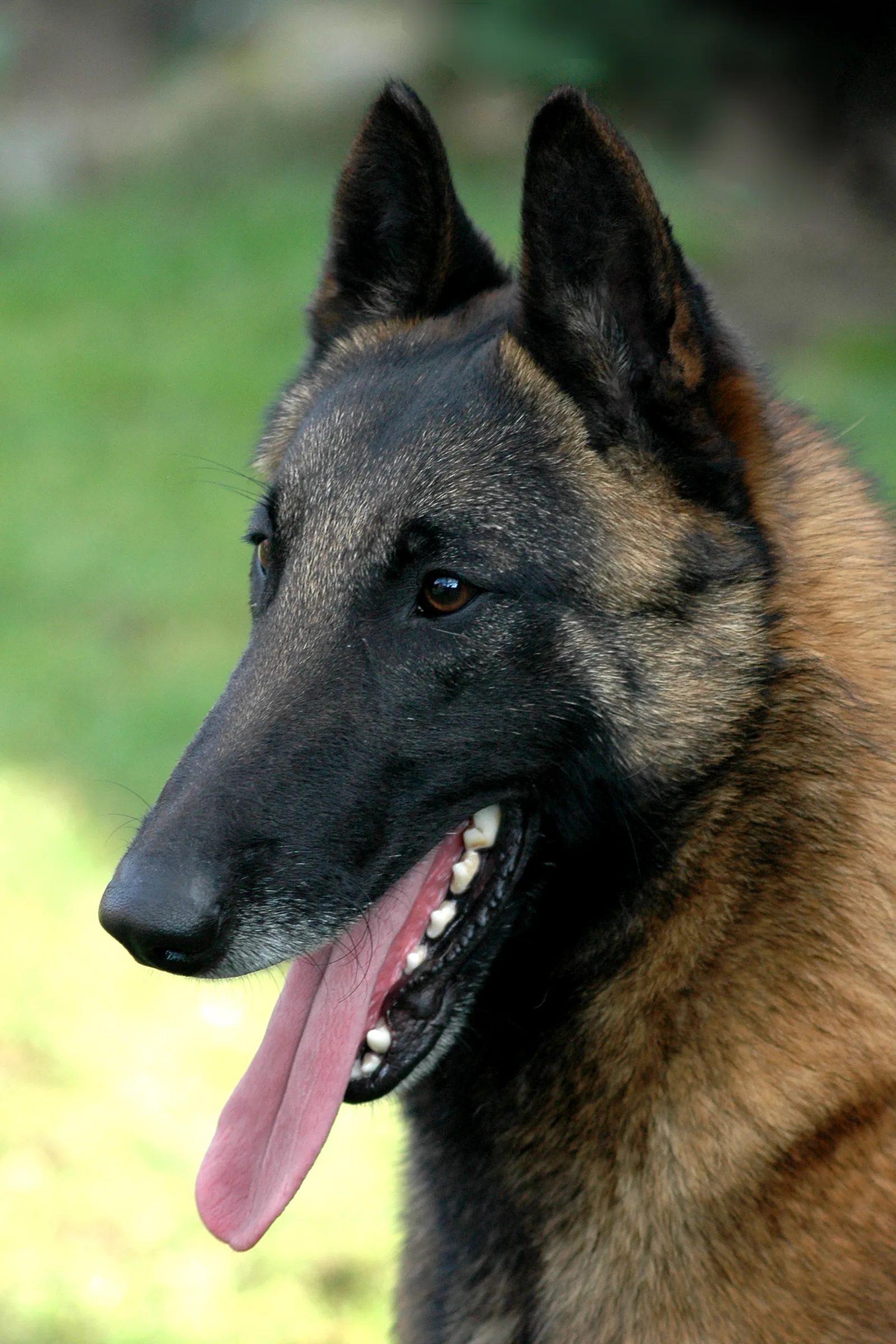
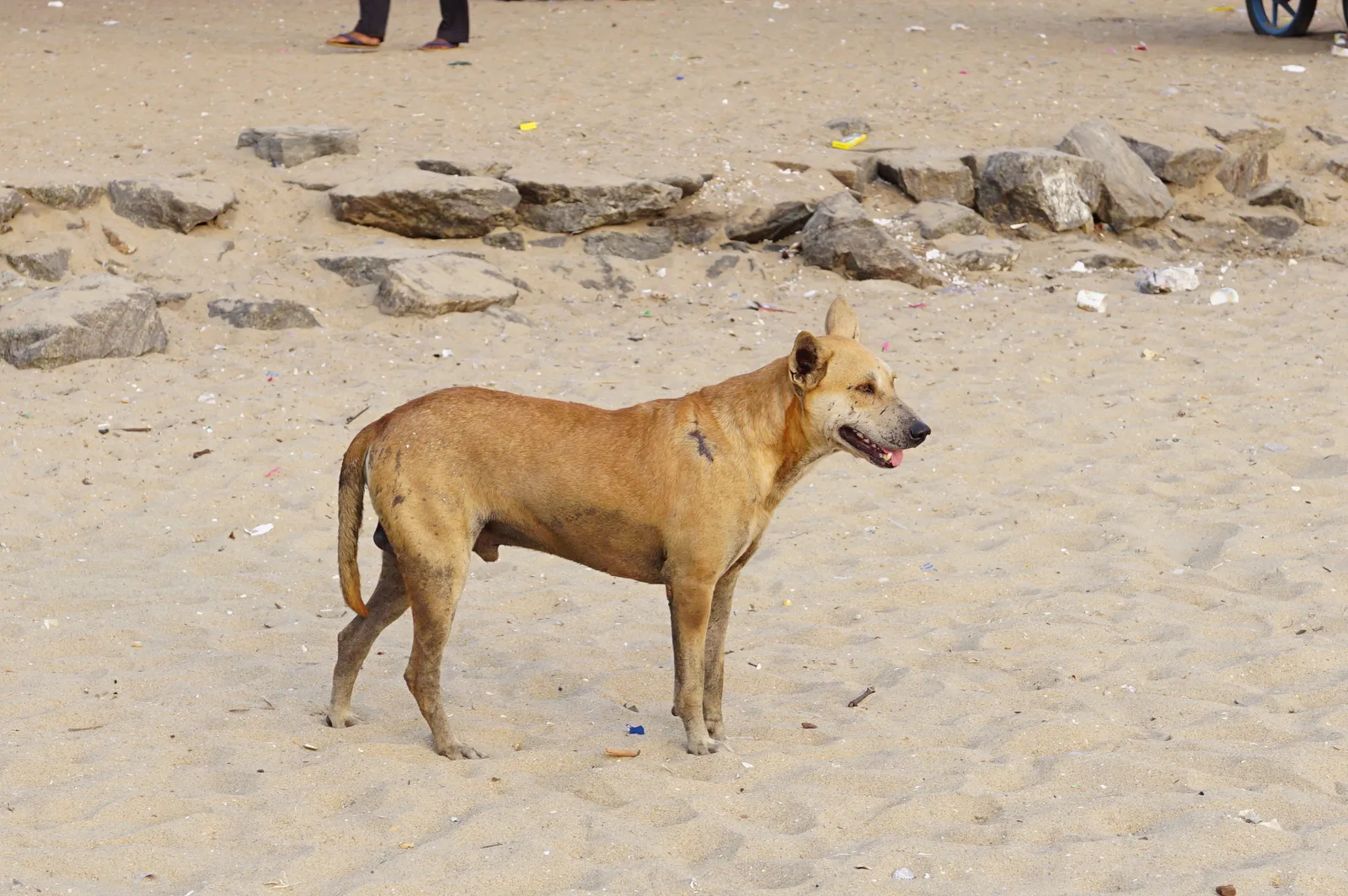
One of these dogs was shaped by a Belgian veterinarian with a clipboard in 1891. The other was shaped by several thousand years of Indian streets, with nobody taking notes at all. Put them side by side and you’d be forgiven for seeing similarities — both are medium-sized, short-coated, upright-eared, alert to the point of suspicion. Look closer and they’re answering completely different briefs.
The Belgian Malinois is the dog SEAL Team Six brought on the bin Laden raid. The INDog is the dog asleep outside your building that barks once at 2 a.m. and means it. Neither is “better.” They were built for different jobs, and which one makes sense for your house depends entirely on which job you actually need done.
Where each one comes from
The INDog is a landrace, not a breed in the engineered sense — no founder, no studbook, just natural selection running for thousands of years on Indian streets. The dogs that survived summers without shelter, found their own food, and read human behaviour accurately were the ones that bred. The Kennel Club of India didn’t get around to writing a formal standard for the type until 2015, describing a dog that archaeological and genetic evidence suggests had barely changed in the meantime, according to Wikipedia and the INDog Project.
The Malinois has a paper trail by comparison. It’s one of four varieties of Belgian Shepherd that Professor Adolphe Reul of the Cureghem Veterinary School pulled together into a standard starting in 1891, working from roughly 117 dogs and sorting them by coat and colour. The variety took its name from Mechelen — Malines in French — where it was the common local type, and it was apparently the first of the four to breed consistently true, per Wikipedia. It started as a sheep-herder. Police and military work came later, and the AKC only recognised it as a separate breed in 1959, per AKC.
What each one was actually built to do
This is really the whole comparison, and everything else follows from it. The Malinois was bred to work constantly, under direction, at a high level of intensity, for a handler. Today that means police narcotics and explosives units, military working-dog programmes, and the small end of elite special-operations work — a Malinois named Cairo went in with SEAL Team Six on the 2011 raid that killed Osama bin Laden, tasked with tracking anyone who tried to escape and alerting the team to any Pakistani security response, per Wikipedia. That’s an extreme example, but it’s representative of the type: a dog that wants a job and gets anxious without one.
The INDog was never bred to take direction from anyone. It was bred, in the loosest sense, to survive — to find food, avoid cars and larger animals, raise puppies with no support, and figure out which humans were safe. That history shows up as watchfulness rather than drive. An INDog left alone in a yard tends to settle in and keep an eye on the gate. A Malinois left alone in a yard tends to find something to destroy, because its brain was built around having a task and it will manufacture one if nobody gives it one.
India’s own security forces illustrate the split well. The National Security Guard, Border Security Force and Central Reserve Police Force use Belgian Malinois for personal protection and scent-tracking work, prized for the breed’s endurance over long distances in rough conditions. The Indo-Tibetan Border Police has also brought Malinois pups into its canine squad. At the same time, the Indian Army inducted the Mudhol Hound — a native sighthound, not the INDog, but a landrace from the same broad pool of hardy Indian dogs — specifically because it proved sharp, tough and far cheaper to keep in Indian conditions than imported breeds, per reporting on the programme. Different units are explicitly trading off specialised drive against cost and climate resilience, which is more or less the choice you’re making too.
Temperament
Malinois temperament runs hot by design: intensely loyal to one handler or family, highly observant, and what trainers call “velcro” — they want to be near their person and doing something with them, constantly. Properly socialised, they’re described as friendly and protective rather than aggressive; poorly managed, that same intensity turns into reactivity, guarding behaviour, or what some owners call rage-like episodes in working lines, per Wikipedia. This is not a dog that tolerates being ignored.
The INDog runs cooler and more independent. It’s affectionate with its own people, often strikingly so, but it doesn’t need constant engagement to stay settled — centuries of getting by without a handler saw to that. It’s also territorial and will bark at anything unfamiliar entering its space, which makes it a genuinely useful watchdog without any training at all, per Hepper’s breed profile. Less velcro, more free agent who happens to like you.
Trainability
Both breeds are smart. That’s not really in question — the INDog’s problem-solving has been compared to a wolf’s or a fox’s, and the Malinois is routinely ranked among the most trainable breeds anywhere, learning new commands in a handful of repetitions, per AKC. The difference is what each one is intelligent for.
A Malinois is bred to want a job and a handler badly enough that training becomes mutual: you give direction, it gives focus, and the whole relationship runs on repetition and drive. That’s exactly why it’s the breed police and military programmes reach for first. It’s also why trainers warn Malinois off first-time owners — the same drive that makes it exceptional under a skilled handler turns into a genuinely difficult, possibly destructive animal under an inexperienced one.
An INDog is just as capable of learning, but training has to be earned rather than assumed. It gets bored fast with repetition and needs variety, and it responds far better to patient, respect-based methods than to the kind of structured drill a Malinois thrives on. Neither dog suits someone who wants obedience without putting in the work; they just fail differently when that work doesn’t happen.
Energy and exercise
Here the Malinois is in a different league. Owners commonly report needing something like 60 to 90 minutes of genuinely high-intensity work a day — running, structured training drills, bite work, agility — plus another 30 to 60 minutes of mental stimulation on top. Skip that and the dog doesn’t just get restless; it starts pacing, chewing furniture, barking excessively or trying to escape, per Petful’s exercise guide. This is not a 20-minute-walk dog, and treating it like one is how Malinois end up surrendered to rescues.
INDogs need real exercise too — 60 to 90 minutes most days keeps one in good shape — but the ceiling is much lower and more forgiving. A couple of solid walks plus some free time to patrol and sniff covers most individuals, and an under-exercised INDog tends to express it through more barking rather than the property damage a bored Malinois can do.
Health and longevity
The INDog’s trump card is genetics. Nobody bred it for a look or a specialised task, so none of the inherited structural disease that comes with closed gene pools got dragged along. Breed profiles don’t list documented hereditary conditions for the type, and INDogs commonly live 13 to 14 years, with most deaths tracing to accidents or infection rather than disease, per Hepper.
The Malinois is comparatively healthy for a purpose-bred working dog, but it isn’t exempt. OFA data puts hip dysplasia at roughly 5 to 7 percent of evaluated dogs — genuinely low for a breed this size, and well below many large working and herding breeds — while elbow dysplasia, cataracts, progressive retinal atrophy, hypothyroidism, epilepsy and hemangiosarcoma all show up often enough to be considered breed concerns, per vetlessons’ review of OFA figures and a veterinarian-reviewed health rundown from Hepper. Hemangiosarcoma is the grim one on that list — only around 10 percent of diagnosed dogs survive a year. Typical Malinois lifespan runs 12 to 14 years, per PetMD and Hepper, close to the INDog’s range but carrying a heavier risk of getting there via surgery or medication rather than old age alone.
Coat and grooming
Neither dog is a grooming project, which is unusual for anything with “working dog” in its résumé. The Malinois has a short, dense, weatherproof double coat that needs only occasional brushing most of the year — except during the twice-yearly “blowout” shed, which can run two to three weeks and genuinely does cover a house in hair, per PetMD. The INDog sheds too, more or less year-round at a low level, but lacks a proper undercoat and has fewer oil glands, so it carries less visible hair and noticeably less odour between baths. Advantage INDog here, but it’s a narrow one.
Family pet or working dog — which fits your house
If what you actually want is a dog that watches the gate, settles down when there’s nothing to do, and doesn’t require two hours of structured work every single day of its life, the INDog is the easier, more forgiving animal for an ordinary household — first-time owners included.
If what you want is a dog to do serious work alongside you — real protection training, competitive sport, scent work, something that gives the dog’s drive somewhere to go — and you have the time, experience and budget to meet that, the Malinois is genuinely exceptional at it. It is not, by its own breed community’s frequent admission, a dog for someone who wants a pet to lie around the living room. Left under-stimulated, the same traits that make it a world-class working dog make it a difficult, sometimes destructive housemate, per multiple breed guides including Sniffspot’s owner survey, where the large majority of owners surveyed said the breed isn’t right for first-time dog owners.
What each one costs to own in India
A Belgian Malinois puppy from a basic-lineage breeder in India runs roughly ₹20,000 to ₹50,000; KCI-registered puppies with health-tested parents climb to around ₹40,000–₹75,000, and show-quality or champion-bloodline pups can reach ₹1,00,000–₹1,50,000 or more, per whatsthecost.in and Tailsbuddy — both pet-sale sites, so treat the figures as market indicators rather than a fixed price list. Monthly upkeep (food, grooming, routine vet care) typically runs ₹5,000 to ₹12,000, and that’s before any orthopaedic or oncological bills later in life.
Adopting an INDog is typically free through a shelter or street rescue, and many come already vaccinated and neutered. Monthly costs run lower too — home-cooked meals, minimal grooming, and a genetic profile that tends not to generate surprise surgery bills. The INDog isn’t just cheaper to bring home; it’s cheaper to keep, year over year, for its entire life.
INDog vs Belgian Malinois: The Numbers
| INDog | Belgian Malinois | |
|---|---|---|
| Height | 46–64 cm (18–25 in) | 56–66 cm (22–26 in) |
| Weight | 15–30 kg (33–66 lb) | 18–36 kg (40–80 lb) |
| Coat | Short double coat, low-shedding, no undercoat | Short, dense, weatherproof double coat; heavy seasonal “blowout” shed twice a year |
| Daily exercise | 60–90 minutes | 90+ minutes high-intensity, plus 30–60 minutes mental work |
| Trainability | Intelligent but independent; needs patient, respect-based training | Extremely high; learns new commands in a handful of repetitions |
| Known health concerns | None well-documented; longest-lived of the two | Hip/elbow dysplasia (~5–7%), cataracts, PRA, hypothyroidism, epilepsy, hemangiosarcoma |
| Typical lifespan | 13–14 years | 12–14 years |
| Suited to first-time owners | Generally yes, with basic commitment | Generally no |
Figures for the INDog come from the INDog Project’s breed standard and Hepper’s breed profile; Malinois figures from the AKC official breed standard, PetMD, Petful’s exercise guide and the health sources cited above.
So which one should you get
Neither dog is wrong to want. If you’re drawn to the Malinois because you’ve watched too many police-dog videos, be honest about whether you can actually give it two structured hours a day for the next twelve years — because an under-worked Malinois is a genuinely unhappy, often destructive animal, not a quirky one. If what you actually want is an alert, loyal, low-maintenance companion that’s already adapted to Indian heat, Indian food and Indian streets, the INDog does that job without the two-hour daily training regimen, and there’s one waiting at a shelter near you right now.
Common questions
Is a Belgian Malinois a good family pet?
It can be, in an experienced, active household that meets its exercise and training needs. Most breed guides and owner surveys say it’s a poor fit for first-time owners, since an under-stimulated Malinois tends toward anxiety and destructive behaviour. See Family pet or working dog.
Which breed is easier to train, the INDog or the Malinois?
The Malinois is generally easier for a structured, repetition-based training programme, which is why police and military units favour it. The INDog is just as intelligent but needs patient, respect-based training rather than drills, and gets bored with repetition. See Trainability.
Does a Belgian Malinois handle Indian heat well?
Reasonably well — its short coat copes better than many heavy-coated imported breeds — but it still needs shade, water and exercise scheduled around the cooler parts of the day. The INDog, shaped by this exact climate, needs less active management to stay safe in summer. See Where each one comes from.
Is an INDog or a Belgian Malinois cheaper to own in India?
The INDog, by a wide margin. Adoption is typically free, and monthly costs are lower. A Malinois puppy runs roughly ₹20,000 to ₹1,50,000 depending on lineage, plus ₹5,000–₹12,000 a month in upkeep. See What each one costs to own in India.
Which dog is better for guarding a home?
Both guard effectively, in different registers. The INDog is naturally territorial and alert without any training, making it a reliable low-effort watchdog. A trained Malinois is capable of far more — real protection and apprehension work — but needs professional-level training to get there safely. See Temperament.
Which breed has fewer health problems?
The INDog. As an unselected landrace, it carries little documented inherited disease and commonly lives 13 to 14 years. The Malinois is comparatively healthy for a working breed but still carries measurable rates of hip/elbow dysplasia and other inherited conditions. See Health and longevity.
Sources
- Indian pariah dog — Wikipedia
- Breed Standard of the Indian Native Dog — INDog Project
- Indian Pariah Dog: Info, Pictures, Facts & Traits — Hepper
- Belgian Shepherd — Wikipedia
- 7 Facts About The Belgian Malinois — AKC
- Official Standard of the Belgian Malinois — AKC
- Cairo (dog) — Wikipedia
- Belgian Malinois Dog Breed Health and Care — PetMD
- 7 Belgian Malinois Health Issues (Vet Answer) — Hepper
- Lameness in Belgian Shepherd dogs (Malinois) — VetLessons
- Belgian Malinois Training and Exercise: The Complete Guide — Petful
- Belgian Malinois: Facts & Tips from 9K+ Owners — Sniffspot
- Mudhol Hound (Indian Military Dog) Breed Information — HubPages
- Belgian Malinois Price in India 2026 — whatsthecost.in
- Belgian Malinois Dog and Puppy Price in India & For Sale — Tailsbuddy