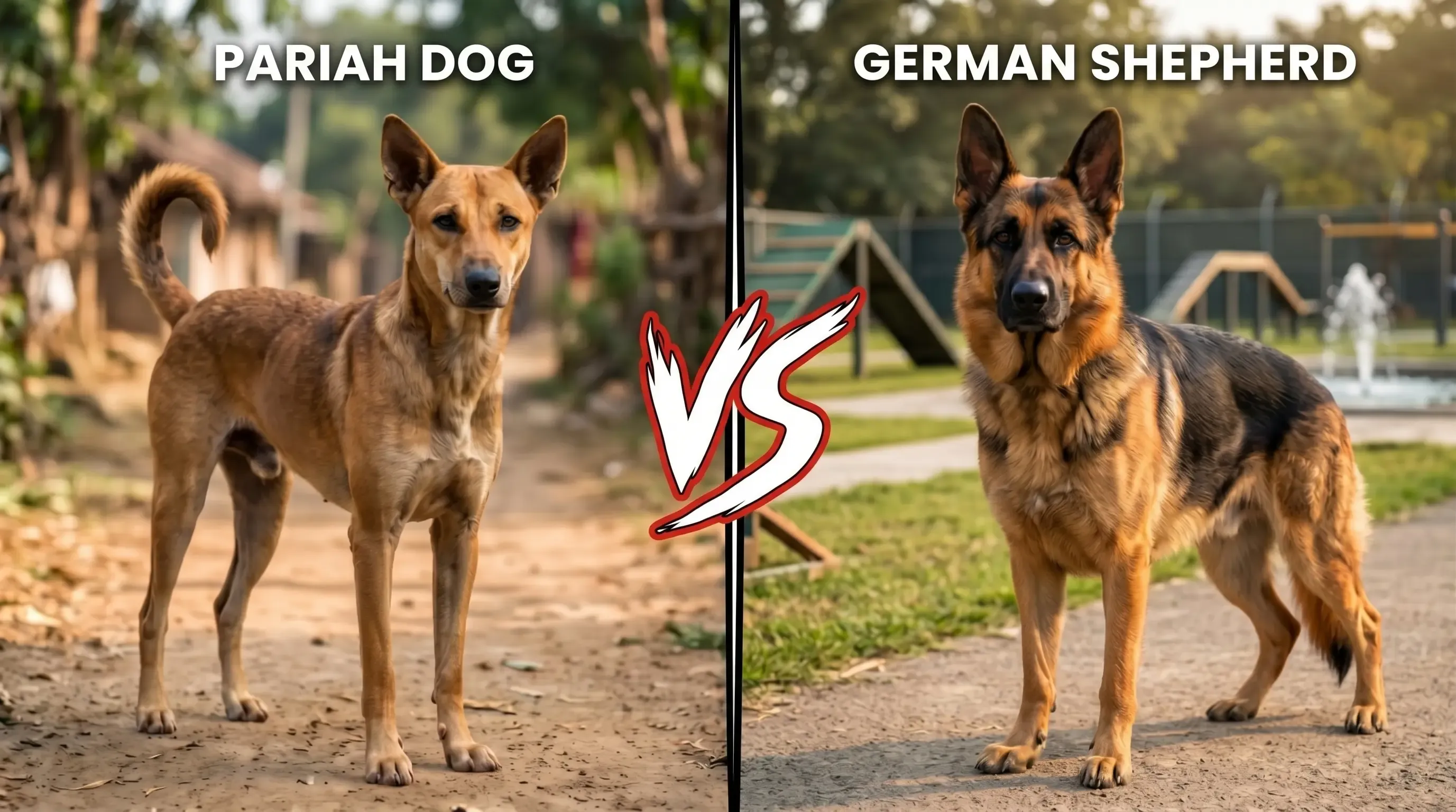
Ask ten housing societies in North India what dog they want at the gate and most will say the same two words: German Shepherd. It’s the default answer, the way Labrador is the default family dog. Meanwhile the dog actually built for that gate, and for that climate, is probably already sitting outside it.
Both dogs guard. Both are smart. They get there in almost opposite ways, and which one makes sense for your house depends on things most buyers never ask about until they’ve already paid for a puppy.
Where each dog comes from
The German Shepherd has an exact birthday. In 1899, a German cavalry officer named Max von Stephanitz bought a wolfish-looking dog called Hektor Linksrhein at a show in Karlsruhe, renamed him Horand von Grafrath, and declared him the first German Shepherd Dog on record. Stephanitz founded the Verein für Deutsche Schäferhunde that same year and spent the next few decades consolidating Germany’s scattered herding dogs into one standardised, deliberately engineered breed built around his own motto: utility and intelligence, nothing else, per Wikipedia and the GSDCA’s breed history.
The INDog has no founder and no studbook. It’s a landrace, which means nobody designed it. Thousands of years of Indian streets did the selecting instead, favouring whichever dogs handled heat, scavenged well, and read people accurately enough to survive among them. The Kennel Club of India didn’t bother writing a formal standard until 2015, and even that document was mostly describing a type that had already been stable for a very long time, according to Wikipedia and the INDog Project. For the full story of how that landrace came to be, see what actually makes a dog an Indian pariah dog and the breed’s ancient history.
Guarding instinct
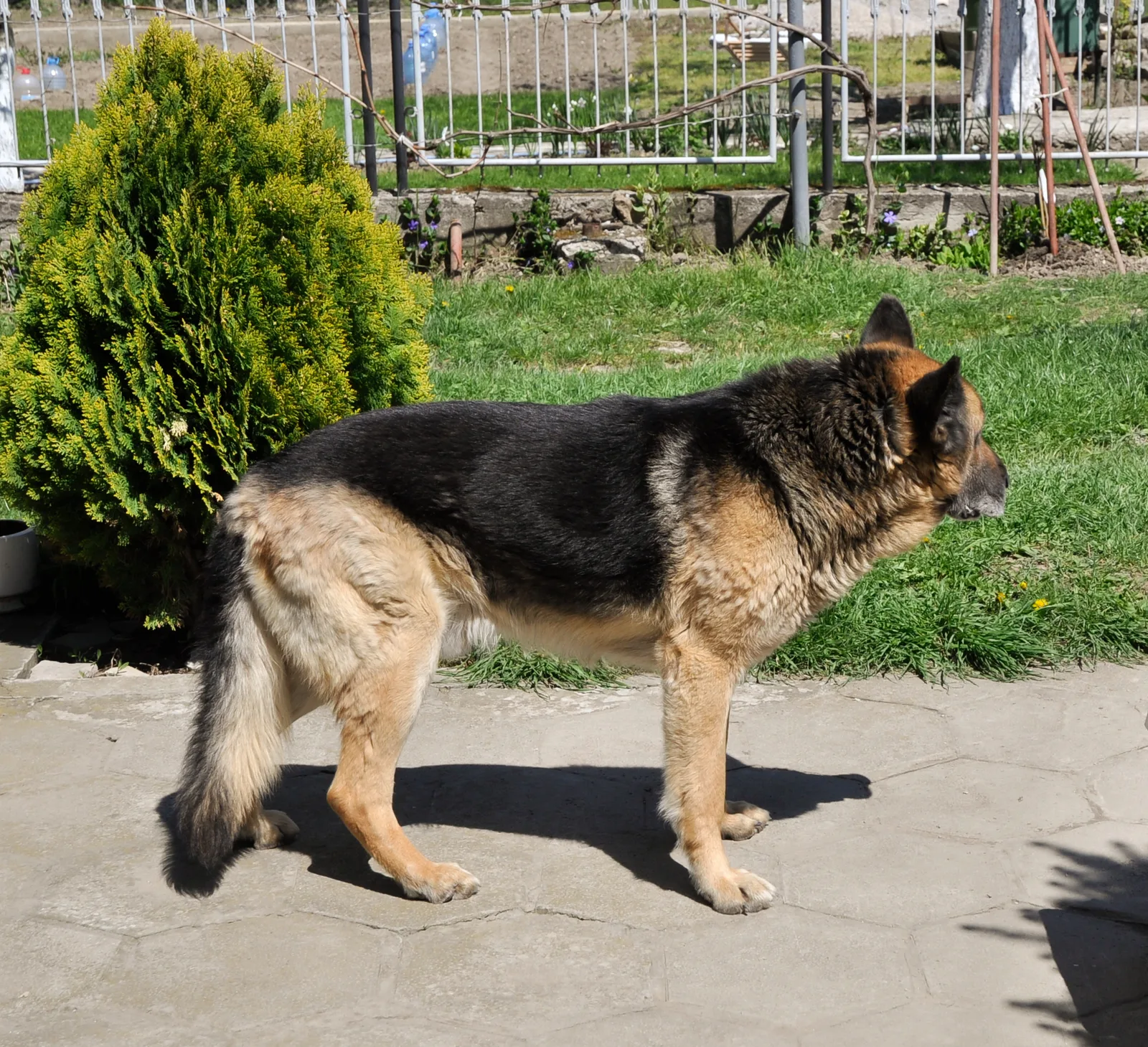
This is the category German Shepherds are famous for, and the reputation is earned. Von Stephanitz bred for a dog that was confident, watchful and physically capable of backing up a threat, and that temperament has carried straight through into the breed’s modern work: police forces, the military, and private security firms the world over still reach for a GSD first. It’s why a German Shepherd is the default answer whenever Indian households go looking for a home guard dog. A well-bred, well-socialised Shepherd reads a situation calmly before reacting rather than barking at everything, which is part of why professional handlers rate the breed so highly.
The INDog guards differently, and arguably more constantly. It never had a trainer standing behind it. Guarding its own territory and its own people was simply how it stayed alive, so the instinct runs deep without anyone teaching it. INDogs are territorial toward unfamiliar dogs and people entering their space, and owners consistently describe them as dogs that “never make friends with strangers whatever the bait,” per the INDog Project. They bark with purpose rather than at every passing leaf, which is exactly what you want from a watchdog and exactly what makes them useful without a single training session.
“For every one hoop that a Labrador or a German Shepherd jumps through, Thenga glides through three.”
That’s Ram Dutt Pandey, the handler of Thenga, a street-born Indian pariah dog recruited by the Uttarakhand Police’s State Disaster Response Force in 2019 for tracking and search work. Thenga learned basic tracking in 20 days, a process that typically takes other police dogs months, and his tall, thin frame let him clear five-foot obstacles against the four feet managed by conventional police breeds. His department chief put the financial case bluntly: imported working breeds run ₹30,000 to ₹1,00,000, and “a dog like Thenga was free,” per reporting in The Print. Bengaluru Police ran a similar programme, recruiting dozens of Indian pariah dogs for night patrol and to guard stations, finding them just as trainable as any pedigree breed, according to coverage of the initiative. Both dogs guard. The Shepherd does it as a trained professional. The INDog shows up already knowing the job.
Trainability
Stanley Coren’s widely cited intelligence rankings put the German Shepherd third out of 138 breeds for “working and obedience intelligence”: a dog that can learn a brand-new command in under five repetitions and execute a known one correctly on the first try better than 95% of the time. That’s not marketing copy; it’s the actual basis for why German Shepherds dominate police, military, search-and-rescue and guide-dog work worldwide. If you want structured obedience, agility, or scent work and you’re willing to put in consistent training time, a Shepherd rewards the effort quickly.
An INDog is just as intelligent, by most trainers’ accounts, but it’s a different kind of smart. Nobody bred it to want a handler’s approval, so it doesn’t offer one for free. It learns fast once it decides a human is worth listening to, and that decision tends to come from patient, respect-based handling rather than repetition drills or treat chains. Push too hard too fast and an INDog goes quietly stubborn rather than anxious. It’s not a harder dog to train, exactly — it’s a dog that needs a reason, where a Shepherd mostly just needs a command.
Health and lifespan
Here the gap is wide. German Shepherds were bred from a narrow founding population for a specific look and build, and the usual cost of that kind of selection shows up on an X-ray. OFA data spanning 1974–2015 puts hip dysplasia at roughly 20% of the 115,933 Shepherds screened; even the more recent 2011–2015 cohort, after decades of breeders screening against it, still came in at 18%, per the Science for Animal Welfare database. Independent surveys in Sweden and Italy have found the condition in anywhere from roughly a quarter to nearly half of dogs screened, depending on the population and method, so even “20%” undersells the real spread, per the same database. Bloat (gastric dilatation-volvulus) is the other big one: German Shepherds rank just behind Great Danes for lifetime GDV risk because of their deep, narrow chests, and an untwisted stomach can kill a dog in six to twelve hours without emergency surgery, per Rex Vet’s breed-conditions overview. Degenerative myelopathy, a progressive spinal disease tied to a specific gene mutation, is also disproportionately a German Shepherd problem, affecting a meaningful share of the breed as carriers even when they never show symptoms, per Wikipedia.
The INDog mostly avoided this fate simply by never being bred for anything in particular. No closed gene pool, no selection for a silhouette, no inherited structural disease riding along for the trip. The INDog Project doesn’t list any well-documented hereditary conditions for the type, and the practical result shows up in years lived: INDogs commonly reach 13 to 15, where German Shepherds typically land at 9 to 13, with a large 2024 study of over 580,000 dogs putting the breed’s median lifespan at about 10.2 years, per search aggregation of veterinary longevity data. A Shepherd can absolutely live a long, healthy life with the right breeder and the right vet care. It’s just working against its own genetics to get there, and the INDog isn’t.
Can a German Shepherd handle Indian heat?
Not comfortably, no. Not without real help. The German Shepherd’s double coat was built for Central European winters, and it’s not equipped to shed heat the way a dog built for this exact climate is. Moderate heat tolerance is the generous way to describe it; above roughly 24°C with any humidity, a Shepherd’s cooling system (panting, plus sweat glands only on the paw pads) starts to lose the fight, and heatstroke, dehydration and burned paw pads are the three risks vets flag most often for the breed in hot climates. Plenty of Shepherds live full lives in Delhi and Pune, but it takes active management: shade, air conditioning during peak hours, exercise scheduled for dawn or dusk, and brushing two to three times a week just to help air move through that coat.
The INDog doesn’t need any of that, because Indian summers built it in the first place. Short coat, low body fat relative to its frame, and even its daily rhythm (resting through midday heat, moving at the cooler edges of the day) are survival habits baked in by the same climate a Shepherd owner has to actively fight. Leave an INDog in afternoon sun the way you’d need to actively shield a Shepherd from it, and the INDog barely notices.
Exercise and daily energy
A German Shepherd is a genuine working dog in temperament even when it’s just a house pet, and it shows if you treat it like a decorative one. Most need 60 to 90 minutes of real activity a day: not a stroll, but something with actual purpose, like structured walks, fetch, or obedience work, plus mental engagement on top. Skip that consistently and a bored Shepherd finds its own outlet, usually destructive: chewed furniture, excessive barking, or digging.
INDogs need a comparable amount of movement, roughly 60 to 90 minutes most days, but they’re more forgiving about how it’s delivered. A couple of solid walks and some free time to patrol the yard covers most individuals, and an under-exercised INDog tends to express it through barking rather than property damage. Neither dog is a couch-only breed. The Shepherd just has a shorter fuse about it.
What each one costs in India
A German Shepherd puppy from an Indian breeder runs from around ₹18,000 for a pet-quality dog up to ₹1,00,000 or more for a KCI-registered, champion-bloodline pup, with most buyers landing somewhere in the ₹25,000–₹70,000 range depending on city and bloodline, per Supertails’ pricing breakdown and a separate cost guide from JustDogsStore. Monthly upkeep (food, grooming, routine vet visits) typically lands between ₹6,000 and ₹12,000, before anything related to hips, bloat or spinal issues, which is where the real money tends to go later in life.
Adopting an INDog is typically free through a shelter or street rescue, and many already come vaccinated and neutered. Monthly costs run lower too: home-cooked meals, minimal grooming, no professional coat maintenance, and a genetic profile that doesn’t tend to generate the kind of surprise orthopaedic or emergency-surgery bills a Shepherd owner should budget for. The INDog isn’t just the cheaper dog to bring home. It stays the cheaper dog for its entire life.
INDog vs German Shepherd: The Numbers
| INDog | German Shepherd | |
|---|---|---|
| Height | 46–64 cm (18–25 in) | 55–65 cm (22–26 in) |
| Weight | 15–30 kg (33–66 lb) | 22–40 kg (49–88 lb) |
| Coat | Short double coat, low-shedding, no true undercoat | Dense double coat, heavy seasonal shedding |
| Guarding style | Territorial and alert by instinct, no training required | Trained protection and patrol work, widely used by police and military |
| Trainability | Intelligent but independent; needs patient, respect-based methods | Very high; ranked 3rd of 138 breeds by Coren for working intelligence |
| Known health concerns | None well-documented; longest-lived of the two | Hip/elbow dysplasia (~18–20%), bloat (GDV), degenerative myelopathy |
| Typical lifespan | 13–15 years | 9–13 years (median ~10.2 years) |
| Heat tolerance | Built for Indian climate; minimal management needed | Moderate at best; needs active cooling and shaded exercise scheduling |
Figures for the INDog come from the INDog Project’s breed standard; German Shepherd figures from the AKC breed standard, Science for Animal Welfare’s hip dysplasia review and RealPetAge’s longevity data.
So which one should you get
Good news either way: you can’t really go wrong here. If you want a calm, constant watchdog that’s already built for Indian heat and ready to guard your home without a single training session, the INDog is a wonderful choice, and a very good one is probably waiting at a shelter near you right now, tail wagging, ready to come home. If you’re drawn to serious structured work, like protection training, competitive obedience, or search and rescue, and you can give a Shepherd the time, care and cool spaces it needs to thrive here, you’ll have one of the most capable, loyal working partners any dog breed has to offer. Either path leads to a loyal dog who will guard your family with everything it has. You really just can’t lose.
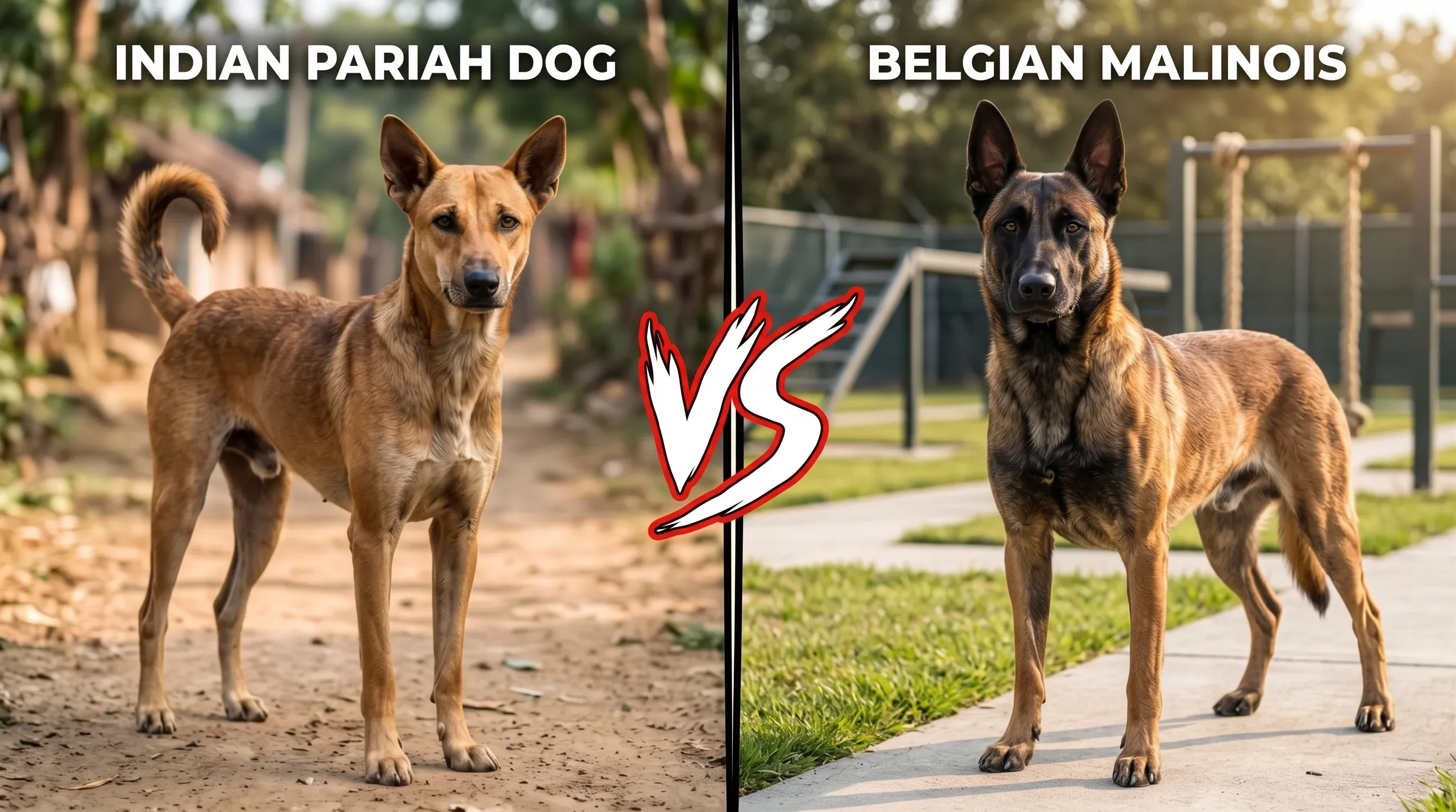
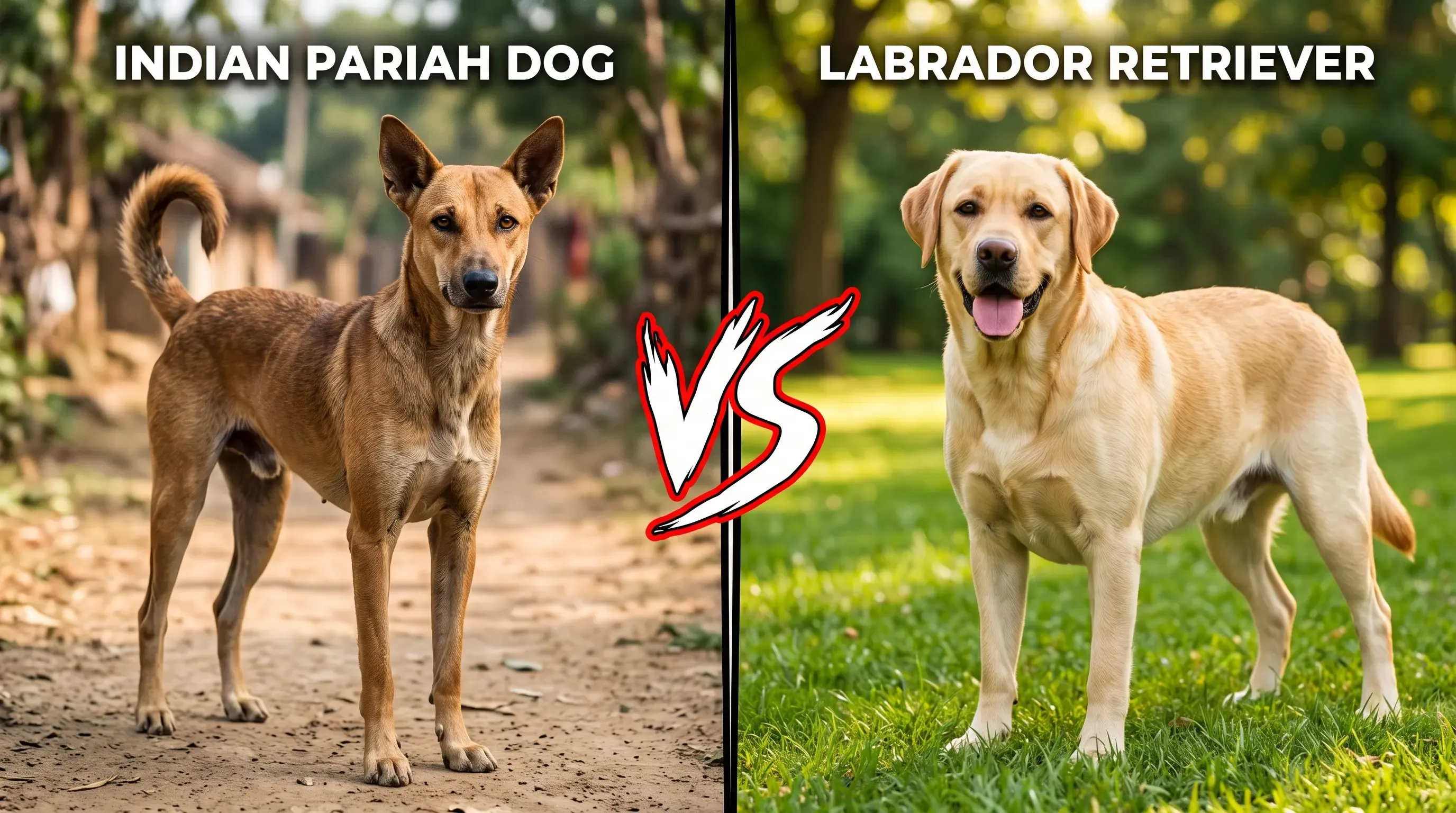
Curious how the INDog stacks up against other popular breeds? See how it compares to a Labrador and a Belgian Malinois.
Common questions
Is a German Shepherd or an INDog better at guarding a home?
Both guard well, in different ways. The INDog is naturally territorial and alert without any training, making it a dependable low-effort watchdog from day one. A trained German Shepherd is capable of far more structured protection work, but needs real training investment to get there. See Guarding instinct.
Which is easier to train, an INDog or a German Shepherd?
For structured, repetition-based obedience, the German Shepherd is generally easier and faster. It’s ranked third of 138 breeds by Stanley Coren for working intelligence. The INDog is just as intelligent but more independent, and responds better to patient, relationship-based training than to drills. See Trainability.
Do German Shepherds have more health problems than INDogs?
Yes, measurably. OFA data puts hip dysplasia at around 18–20% of screened German Shepherds, and the breed also carries elevated risk for bloat (GDV) and degenerative myelopathy. INDogs, as an unselected landrace, carry far less documented inherited disease. See Health and lifespan.
Can German Shepherds survive India’s climate?
Yes, but not without active management: shade, air conditioning during peak heat, exercise scheduled for cooler hours, and frequent brushing. The INDog evolved in this exact climate and needs little of that. See Can a German Shepherd handle Indian heat?.
Is it cheaper to own an INDog than a German Shepherd in India?
Yes, by a wide margin. A German Shepherd puppy costs ₹18,000 to ₹1,00,000-plus, plus ₹6,000–₹12,000 a month in upkeep. Adopting an INDog is typically free, with lower ongoing costs. See What each one costs in India.
Have Indian police actually used pariah dogs instead of German Shepherds?
Yes. Uttarakhand’s police recruited a street-born pariah dog named Thenga for tracking work in 2019, and his handler said he outperformed conventional police breeds in training speed. Bengaluru Police has run a similar programme recruiting indie dogs for night patrol. See Guarding instinct.
Sources
- German Shepherd — Wikipedia
- Breed History — German Shepherd Dog Club of America
- Indian pariah dog — Wikipedia
- Breed Standard of the Indian Native Dog — INDog Project
- INDog Project — temperament and guarding instinct
- Uttarakhand Police gets a mongrel, and he’s better than any Labrador or German Shepherd — The Print
- Bengaluru Police ‘Recruits’ Indie Dogs, Trains Them To Guard Stations & Identify Criminals — StoryPick
- German Shepherd Dog: Hip Dysplasia — Science for Animal Welfare
- Bloat (GDV) in German Shepherds — Causes, Treatment, Prognosis — Rex Vet
- German Shepherd Lifespan & Longevity Data — RealPetAge
- German Shepherd Dog — AKC Official Breed Page
- German Shepherd Price in India 2026 — Supertails
- German Shepherd Price in India 2026 — JustDogsStore