A dog that’s panted its way through every Indian summer without complaint can still get into trouble three hours up a mountain road. That surprises people. The same short coat and lean build that shrugs off 40°C in Delhi has nothing to do with how efficiently its lungs pull oxygen out of thin mountain air, and those are genuinely two different problems. One is heat. The other is altitude. Confusing them is how a dog ends up in trouble on day one of a trip to Manali or Leh.
Read this first. This article is general information, not veterinary advice. Whether a specific dog can handle a specific altitude depends on its age, breed, weight, heart and lung health, fitness and prior exposure, and no article can assess that for your dog. Confirm any high-altitude travel plan with a licensed veterinarian beforehand, and get emergency veterinary care immediately if a dog shows breathing difficulty, collapse, or pale or blue gums at altitude — don’t wait to see if it passes. Anything below is a discussion aid, not a prescription.
What altitude sickness actually is
Altitude sickness in dogs comes from the same root cause it does in people: hypoxia, too little oxygen reaching body tissue as the air thins out with elevation, according to PawPrintOxygen’s veterinary-reviewed guide (note: PawPrintOxygen sells canine oxygen equipment, a commercial interest worth flagging, though its description of the underlying physiology matches independent veterinary sources). Air pressure drops as you climb, so each lungful carries fewer oxygen molecules even though the percentage of oxygen in the air hasn’t changed. A body running short on oxygen compensates by breathing faster and harder and pushing the heart rate up. Past a certain point, compensation isn’t enough.
Mild cases look like general malaise: heavy panting beyond what the exertion explains, lethargy, reduced appetite, drooling, restlessness. Dr. John Tegzes, VMD, a veterinary toxicologist quoted by PetMD, describes early signs as “extreme thirst, light-headedness, or even nausea,” plus vomiting and a dull, headache-like discomfort that’s hard to read in a dog that can’t tell you where it hurts. Moderate cases add a dry cough, stumbling, and loss of coordination. The dangerous end of the spectrum is two specific complications: high-altitude pulmonary edema (HAPE), fluid leaking into the lungs, and high-altitude cerebral edema (HACE), fluid building up around the brain. Both are genuine emergencies. Pale or blue-tinged gums, collapse, or a dog that can’t stand are signs one of these is already underway, not signs to keep walking and see how it goes.
Where exactly the risk starts is inconsistently stated across sources, which is worth being honest about rather than picking whichever number sounds most authoritative. PetMD’s Dr. Tegzes and a veterinary clinic’s own patient guide from Lone Tree Veterinary Medical Center both put the threshold for problems at roughly 8,000 feet (about 2,400 m) — two sources that don’t cite each other, landing on the same number, which is about as close to a consensus as this topic gets. Other sources describe a broader “high altitude” band starting lower, around 5,000 feet (1,500 m), with symptoms becoming more common and more severe above 8,000 feet and worse again above about 11,500 feet (3,500 m), per Embark’s summary (Embark is a canine DNA testing company, another commercial source, cited here only for the elevation banding, not for any dosing or treatment claim). For the specific mechanism of non-cardiogenic pulmonary edema, proceedings from a WSAVA World Congress presentation hosted on VIN put the altitude at which this specific complication becomes a risk “in susceptible individuals” at around 3,000 m (about 9,800 ft), meaningfully higher than the point at which milder symptoms start showing up. Read together, this says: expect mild symptoms to become possible from around 2,400 m, and treat anything close to 3,000 m and up as genuine pulmonary/cerebral edema territory, not just “a bit of heavy breathing.”
None of this is the same as ordinary fatigue. A tired dog slows down, wants to rest, and perks back up with water and a break. A dog in early altitude distress often keeps trying to keep pace, pants harder than the terrain justifies, and doesn’t fully recover during a normal rest stop. The tell isn’t how hard your dog is breathing at the top of a climb — every dog does that. It’s whether the breathing settles once you’ve stopped moving.
How an INDog actually handles the mountains
This is the part worth getting precise about, because it’s tempting to reason from the breed’s famous heat tolerance straight to “so it must handle altitude fine too,” and that’s not how physiology works.
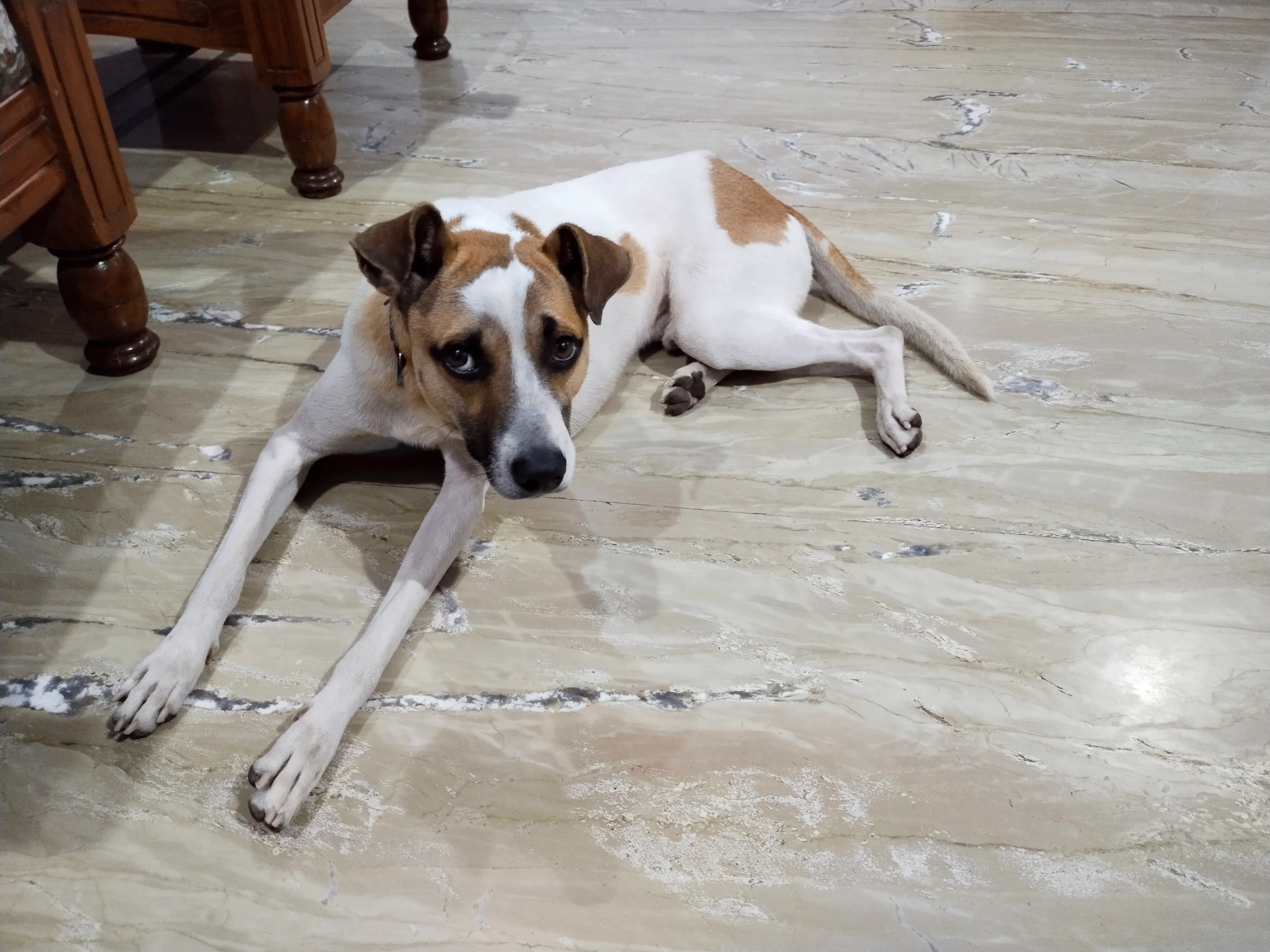
The Indian Pariah Dog is a landrace shaped by natural selection across the Indian subcontinent’s plains, towns and lower hill country — a short coat and lean, heat-shedding build built for surviving Indian summers, per Wikipedia’s breed entry and GoofyTails’ breed guide (GoofyTails sells pet products; its physical description is consistent with the Wikipedia entry, which is why both appear here). Nothing in either source claims the breed was specifically shaped for thin air at altitude, and no dedicated physiological study on INDog altitude tolerance turned up in researching this piece. That absence matters. Heat tolerance is about shedding metabolic heat efficiently. Altitude tolerance is about how efficiently the lungs and blood extract and transport oxygen at lower partial pressure. They’re unrelated systems, and a dog being brilliant at one says nothing reliable about the other.
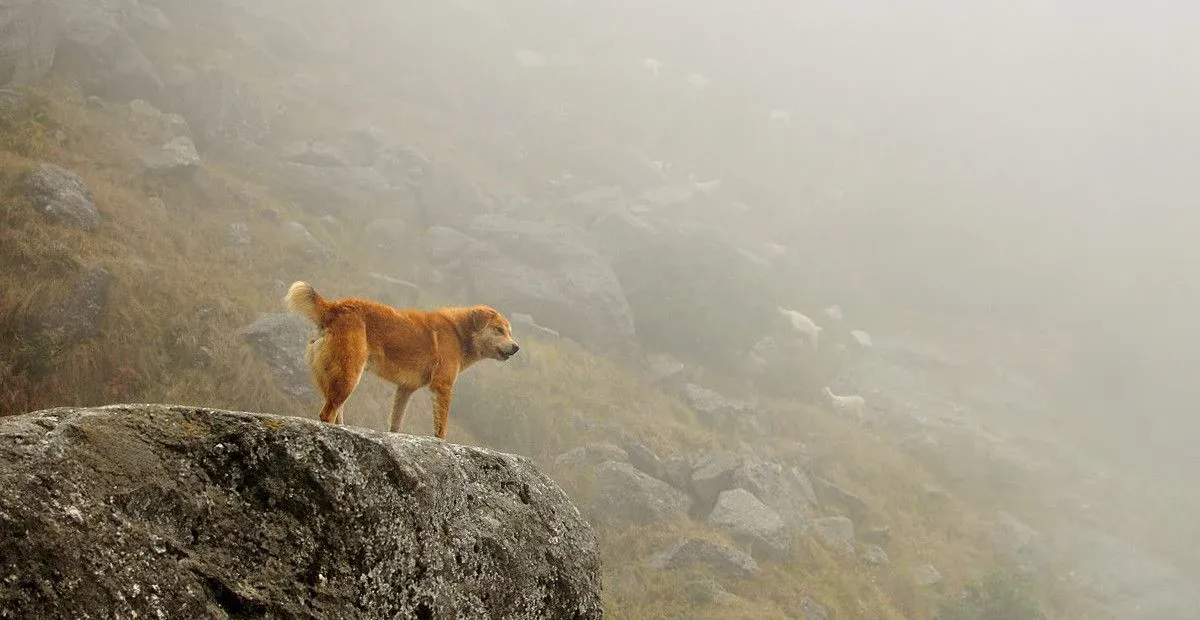
What is documented is that free-ranging dogs, a large share of them desi-type or pariah-type, live year-round at serious elevation across the Indian Himalaya and Trans-Himalaya. A 2025 ecological study of Spiti Valley, part of the Trans-Himalaya in Himachal Pradesh, describes village dog densities ranging from roughly 2–4 up to more than 30 dogs per square km, in a valley that spans elevations from about 3,600 m up toward 6,700 m, with the dogs themselves concentrated around villages and human food sources rather than the high peaks, per the study published via PMC. Leh, the largest town in Ladakh, sits around 3,500 m and has supported a resident free-ranging dog population through its winters for generations, with local vets describing the season as genuinely harsh, per reporting from The Better India. So dogs that look like INDogs clearly can live at 3,500 m-plus, long-term.
That’s a different claim from “your pet INDog can be driven from Delhi to Leh in a day and be fine.” Those Ladakh and Spiti dogs were mostly born at altitude, or have spent years there; their bodies acclimatized gradually, the way a person raised in Leh doesn’t get altitude sickness walking around their own town. A plains-raised pet dog making a rapid ascent is doing something different physiologically, regardless of how well its coat handled last June. The honest summary: the breed isn’t known to be unusually vulnerable at altitude, and there’s real evidence that dogs of this general type tolerate long-term residence at serious elevation. But there’s also no evidence it gets a free pass on acclimatization, and nothing published treats INDogs as altitude specialists the way, say, a Tibetan Mastiff type is bred to be. Plan for a plains dog the same way you’d plan for any other dog going up fast: gradually, with your eyes open.
Preventing it: pacing, water, and knowing when to stop
Acclimatization is the whole game. Multiple sources agree, independently, that the single biggest risk factor isn’t the altitude itself but the speed of the climb. The Dyrt’s outdoor-travel guide (not a veterinary source, cited here only for general trip-pacing advice, not medical claims) recommends a stop at an intermediate elevation, roughly 5,000–6,000 feet, before pushing a dog from sea level past 8,000 feet, and avoiding a hard hike on the arrival day regardless. That’s the same logic human trekkers use on the Manali–Leh highway, where operators routinely build in acclimatization nights at Jispa or Sarchu before the higher passes.
A few things help beyond pure pacing:
- Water, more than usual. Altitude and exertion dehydrate a dog faster than a lowland walk would, and dehydration compounds every other symptom on this list. Offer water often, not just when your dog seeks it out.
- A slower pace on day one or two, with real rest breaks, not just photo stops. Let the panting fully settle before moving again.
- A pre-trip vet check, specifically mentioning the altitude and route, not just a general wellness visit. Dogs with existing heart or respiratory disease, brachycephalic (flat-faced) breeds, puppies and seniors carry extra risk, per Embark and Lone Tree Veterinary Medical Center — none of that describes an INDog specifically, but it’s the same checklist any dog should clear first.
- Knowing the descent number in advance. If you see heavy panting that doesn’t settle, a dry cough, stumbling, or vomiting, stop, offer water, and descend. PawPrintOxygen’s guide gives a working figure of 1,000–2,000 feet (roughly 300–600 m) of descent to meaningfully improve the oxygen available, which lines up with the same range used for human altitude sickness in the Himalaya.
If you’re planning an actual multi-day trek rather than a drive to a hill station, our practical guide to trekking with your INDog in India covers route legality, permits and gear in more depth; this article is the deeper dive on the altitude physiology itself.
When it’s an emergency, and what happens next
Stopping and descending resolves most mild cases within hours. What doesn’t resolve on its own, or gets worse instead of better after you’ve dropped elevation, is the signal to get to a vet rather than wait it out.
The warning signs of HAPE and HACE specifically: pale, grey or blue gums (a sign of genuine oxygen deprivation, not just “tired dog” pink-to-pale), a dog that collapses or can’t stand, severe or labored breathing that doesn’t ease with rest, disorientation or stumbling that looks neurological rather than just clumsy, and in the most severe cases, bleeding from the nose. The Merck Veterinary Manual’s page on pulmonary edema in dogs describes the general presentation: labored, open-mouth breathing, a dog that won’t lie down normally and instead stands, sits, or rests only on its breastbone to keep its airway as open as possible. That posture alone, at altitude, is reason to move toward help rather than wait for a clearer picture.
Treatment for pulmonary edema, per Merck, centers on supplemental oxygen for short-term relief and, where a vet judges it necessary, diuretics to clear fluid from the lungs — but the manual is describing pulmonary edema generally, not an altitude-specific protocol, and dosing and drug choice is a vet’s decision, not something to read off a blog and act on. The practical sequence for a dog showing any of the emergency signs above: stop all activity immediately, begin descending as fast as is safe, and get to the nearest veterinary facility, calling ahead if you can. Don’t wait to see whether it passes once you’ve lost some elevation. A dog that’s already showing edema symptoms needs to be seen, not just rested.
Common questions
At what altitude can a dog get altitude sickness?
Sources vary, but several independent ones converge on roughly 8,000 feet (2,400 m) as the point where mild symptoms become likely, with a broader “at-risk” band starting as low as 5,000 feet (1,500 m) for sensitive dogs. Non-cardiogenic pulmonary edema specifically, the more dangerous complication, is described as a risk from around 3,000 m (9,800 ft) upward. See What altitude sickness actually is.
Are Indian Pariah Dogs (INDogs) better at handling altitude than other breeds?
There’s no dedicated study answering this directly, and the breed’s well-documented heat tolerance doesn’t transfer to altitude tolerance, since they’re different physiological systems. What is documented is that free-ranging dogs of this general type live long-term at 3,500 m or higher across Ladakh and Spiti, likely because they were born and gradually acclimatized there, not because the breed has some inherent edge. A plains-raised pet INDog making a fast ascent should be treated like any other dog: acclimatize it. See How an INDog actually handles the mountains.
What are the first signs of altitude sickness in a dog?
Heavy panting beyond what the exercise explains, lethargy, reduced appetite, drooling and restlessness, often appearing within hours of a fast ascent. This differs from normal tiredness mainly in that the panting doesn’t fully settle once the dog stops moving and rests. See What altitude sickness actually is.
How much should I descend if my dog shows signs of altitude sickness?
A commonly cited working figure is 1,000 to 2,000 feet (roughly 300 to 600 m), enough to meaningfully increase the oxygen available. Stop activity, offer water, and begin descending as soon as you notice symptoms rather than waiting for them to worsen. See Preventing it: pacing, water, and knowing when to stop.
What does an altitude sickness emergency look like in a dog?
Pale, grey or blue gums, collapse or inability to stand, breathing difficulty that doesn’t improve with rest, and disorientation are signs of high-altitude pulmonary or cerebral edema, both genuine emergencies. Get to a vet rather than waiting to see if descent alone resolves it. See When it’s an emergency, and what happens next.
Can altitude sickness in dogs be prevented?
Mostly, yes, through gradual acclimatization: an intermediate elevation stop before a big ascent, no hard exertion on arrival day, frequent water, and a pre-trip vet check that specifically accounts for the altitude and route rather than a routine wellness visit. See Preventing it: pacing, water, and knowing when to stop.
Reminder. This article is general information, not veterinary advice. The right plan for a specific dog depends on its age, weight, health, breed and history, and on the actual route and pace of ascent. Confirm with a licensed veterinarian before any high-altitude trip, and seek emergency veterinary care immediately for breathing difficulty, collapse, or pale or blue gums at altitude.
Sources
- Can Pets Get Altitude Sickness? — PetMD
- What Is Altitude Sickness in Dogs and How to Avoid It — PawPrintOxygen (commercial source, sells canine oxygen equipment)
- Pulmonary Edema in Dogs — Merck Veterinary Manual
- Cardiogenic and Non-Cardiogenic Pulmonary Edema — Pathomechanisms and Causes, WSAVA World Congress proceedings via VIN
- The Effects of High Altitude on Your Dog — Embark (commercial source, canine DNA testing company)
- How to Prevent Altitude Sickness in Dogs, and When to Seek Help — The Dyrt (general outdoor-travel publication, not a veterinary source)
- Can Pets Get Altitude Sickness? — Lone Tree Veterinary Medical Center
- Balancing act: persistence of the red fox in the dog-dominated landscapes of the Trans-Himalaya — PMC
- Indian pariah dog — Wikipedia
- Indian Pariah Dog — GoofyTails
- How Leh Is Tackling Feral Dogs Humanely — The Better India
- Trekking With Your INDog: A Practical Guide to India’s Dog-Friendly Trails — iLovePariahDogs.com