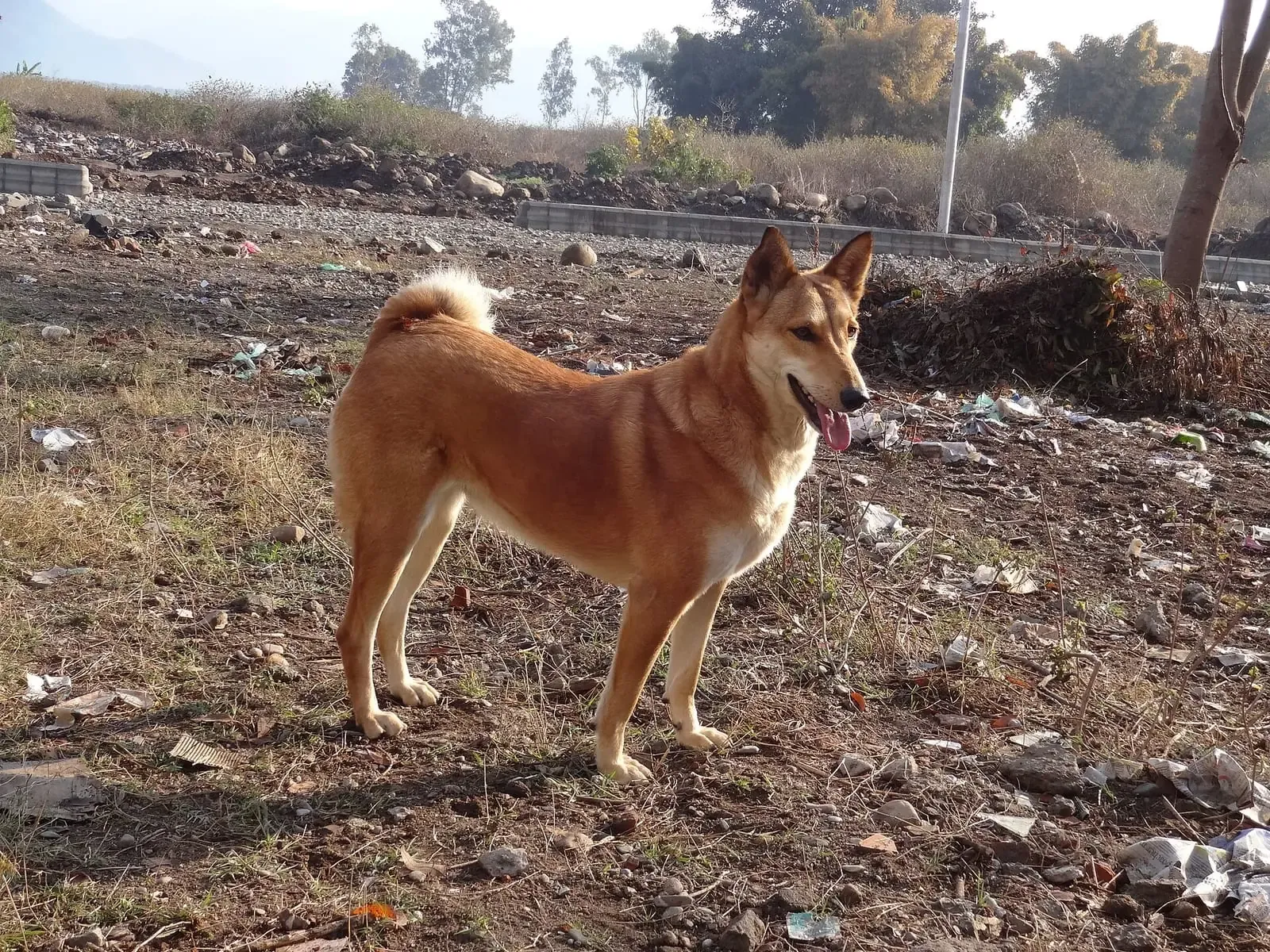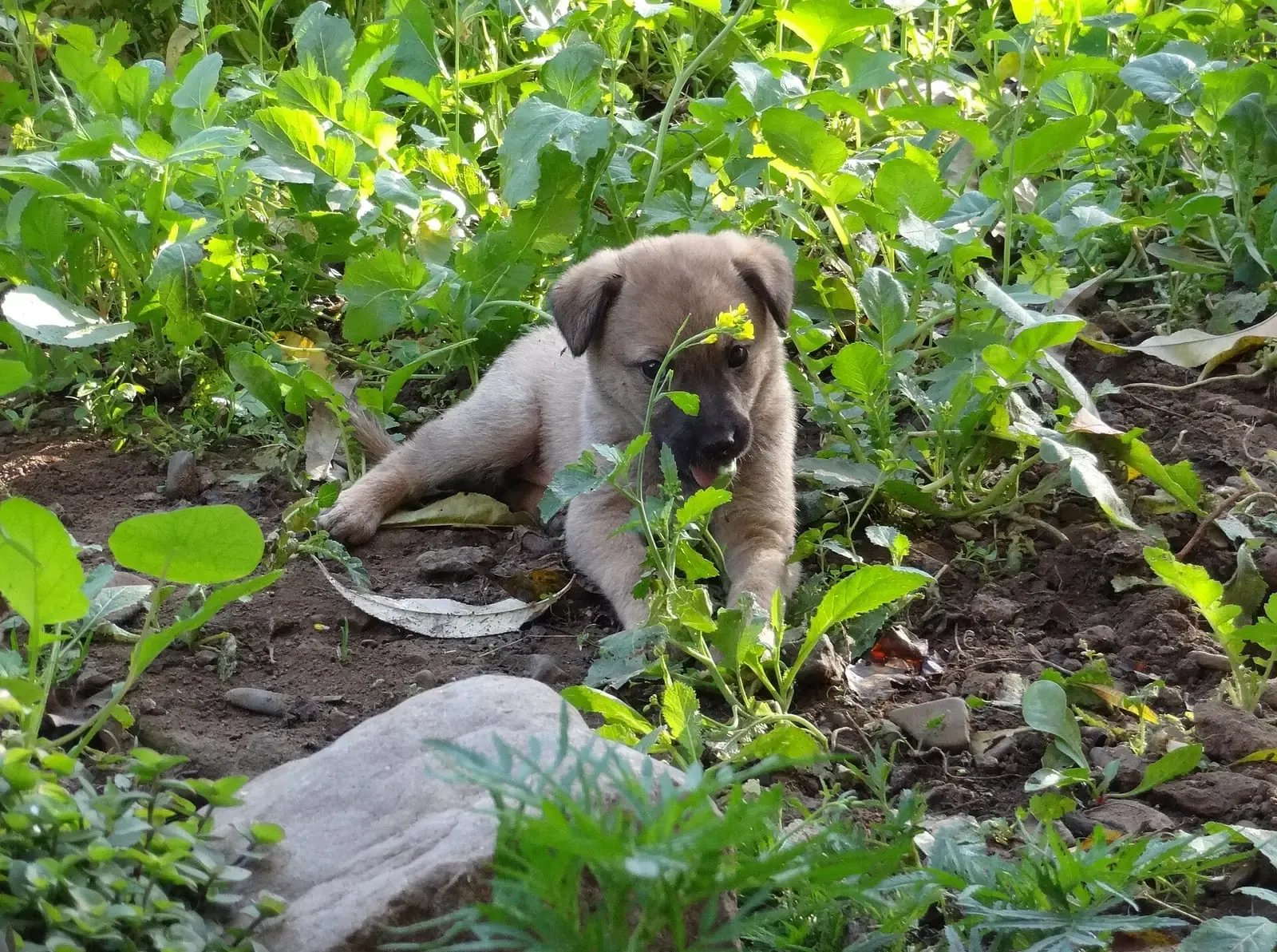
Bring home a puppy from an Indian street and you often get no vaccine card, no birth date and no history at all. That is not a reason to panic. It is a reason to get the timing right, because the schedule for vaccines and deworming rests on a few numbers (weeks, gaps between doses) that are easy to muddle when every clinic, breeder and neighbour quotes a slightly different version.
This article lays out what the published veterinary guidelines say, what Indian clinics commonly do, and the handful of places where the two disagree.
Read this first. This article is general information, not veterinary advice. The right vaccination and deworming plan depends on your puppy’s age, weight, health, prior exposure and local disease risk. Confirm the plan with a licensed veterinarian before giving anything, and never dose a puppy yourself. See a vet immediately if your puppy is unwell, vomiting, has diarrhoea or is unusually sleepy, and get medical help at once after any bite or scratch. The schedule table below is a discussion aid for your vet visit, not a prescription. Vaccine and deworming timings here are taken from published guidelines (named in the table’s source line); where a point comes only from an Indian manufacturer’s guidance rather than a guideline body, the text says so.
Why the schedule matters for street-born pups
Two reasons stand out, and both are about India specifically.
The first is rabies. The World Health Organization says dog bites and scratches cause 99% of human rabies cases, and that once clinical symptoms appear the disease is fatal in 100% of cases. Its burden page credits India with 35% of deaths globally, though that is an older estimate (more on that below). WHO India reports about 9.1 million animal bites a year, over three-quarters of them from dogs. A vaccinated dog is the cheapest firebreak there is; WHO calls mass dog vaccination the most cost-effective way to prevent human rabies.
The second is worms. Roundworm (Toxocara canis) larvae can cross the placenta or pass through the milk, so a puppy can be infected before it is a week old, according to the Merck Veterinary Manual. And the eggs are a human problem too: swallowed by people, they can cause visceral larva migrans, a condition with fever and an enlarged liver.
The schedule at a glance
Start with the table, then read the sections that explain each row. Ages are in weeks from birth. If you do not know your puppy’s age, that is the first thing to ask your vet to estimate.
| Age | What to discuss with your vet | Note |
|---|---|---|
| From about 2 weeks | First deworming; repeat every 2 weeks | Applies to pups you have from birth or very early. Dosing is by weight and the vet’s call. |
| 6 to 8 weeks | First dose of the core combination vaccine (distemper, adenovirus/hepatitis, parvovirus) | WSAVA says start no earlier than 6 weeks. In India this is usually a DHPPi or DHPPiL shot. |
| Every 2 to 4 weeks after that | Repeat core combination doses | Repeats continue until the puppy is at least 16 weeks old. |
| 8 weeks or older | Leptospirosis vaccine, two doses 2 to 4 weeks apart | Where it is endemic. WSAVA says from 8 weeks; AAHA suggests 12 weeks or later. Often already inside a DHPPiL shot. |
| 12 weeks (3 months) | First anti-rabies vaccine | Guidelines describe one dose plus a 1-year booster. Some Indian clinics give a second dose at 14 to 16 weeks. |
| 16 weeks or older | Last dose of the core series | Continue to about 20 weeks in high-risk areas. This is the dose that counts most. |
| 26 weeks (about 6 months) | Core booster (WSAVA) | AAHA says a booster within 1 year of the puppy series. |
| Monthly, to 6 months | Deworming continues | Fortnightly at first, then monthly. |
| 1 year | Rabies booster | Then follow the vaccine’s licence and local rules. |
| Adult dogs | Core boosters no more often than every 3 years | Rabies interval depends on the vaccine used and the law. |
Sources: WSAVA 2024 vaccination guidelines and WSAVA core and non-core table for pet dogs; 2022 AAHA Canine Vaccination Guidelines; Virbac India puppy vaccination guide (manufacturer, for Indian practice); deworming rows from ESCCAP Guideline 1, CAPC and the Merck Veterinary Manual.
What is actually in the shot
WSAVA, the global small-animal vets’ body, defines core vaccines as the ones every dog should get. For dogs anywhere in the world that means distemper (CDV), canine adenovirus (CAV, which causes infectious hepatitis) and parvovirus (CPV), per its 2024 guidelines. Where rabies is endemic, WSAVA calls rabies vaccination essential even if no law requires it. Leptospirosis is treated as core where it is endemic, where the local strains are known and where a suitable vaccine exists.
The alphabet soup on Indian vaccine cards is just those antigens bundled together. A DHPPiL shot covers distemper, hepatitis, parvovirus, parainfluenza and leptospira, as Virbac India describes it. Parainfluenza is a non-core vaccine in WSAVA’s table, useful in some situations but not one every dog needs. The “5-in-1” or “6-in-1” label depends on the brand, so ask your vet to read out what is in the vial rather than going by the number.
Why the last dose is at 16 weeks or later
This is the point people most often get wrong, and it is worth slowing down for.
Puppies carry antibodies from their mother’s milk, and those antibodies block the vaccine. WSAVA’s guidelines put it plainly: maternal antibodies “interfere substantially” with core vaccines, and because the level varies from litter to litter, no one can tell in advance which shot will be the one that finally takes. Hence the repeated doses every 2 to 4 weeks, with the final one at 16 weeks or older. The Merck Veterinary Manual makes the same point: the precise time maternal immunity is lost cannot be predicted.
AAHA, the American Animal Hospital Association, agrees on the shape of it: begin at 6 to 8 weeks, repeat at 2 to 4 week intervals until past 16 weeks. For parvovirus it notes maternal antibodies can persist for 13 to 15 weeks or longer, and says 18 to 20 weeks may be preferred where disease risk is high. WSAVA likewise says high-risk situations may continue to 20 weeks, with doses every 2 to 3 weeks.
The practical upshot: a puppy who got one shot at 6 weeks and nothing since is not “vaccinated”. It is at the start of a series.
Rabies: where the guidelines and Indian clinics meet
For rabies, the guideline bodies and Indian practice mostly agree on the age and split on the number of doses.
The age first. WSAVA’s table says to follow local laws and the product leaflet, and that in some countries the first dose is generally not given before 12 weeks. AAHA notes that all licensed rabies vaccines for dogs in the US are labelled for puppies 3 months and older. Indian clinics say the same: Virbac India gives 12 weeks for the first dose.
Now the difference. Both WSAVA and AAHA describe an initial dose followed by a booster at 1 year. AAHA says the booster is meant to immunise any dog that failed to respond to the first dose, and that it applies regardless of the age at the first shot. Virbac India, by contrast, lists the first dose at 12 weeks, another at 14 to 16 weeks, then one at 12 months. That is a clinic-and-manufacturer schedule rather than a guideline body’s, so I would not treat the extra dose as either wrong or required. Ask your vet which the local vaccine’s label follows and why.
After that, WSAVA says boosters follow the licensed duration of immunity (1-year and 3-year rabies vaccines both exist), and that in some places the law sets the interval. Virbac India lists a dose at 12 months, so check what your vaccine label and your municipality expect.
Anyone who wants the big picture can look at coverage, not just individual dogs. A 2025 review in the Indian Journal of Medical Research gives at least 70% of dogs vaccinated as the threshold needed to interrupt transmission, and notes India has up to 62 million street dogs. A vaccinated pet, and a vaccinated street dog, both count toward that number.
Deworming
Three independent guidelines agree on the start and roughly on the rhythm.
ESCCAP, the European parasite council (this is its older 2010 edition; a newer one exists that I could not read in full), advises treating puppies from 2 weeks of age, then fortnightly until two weeks after weaning, then monthly to six months. It adds that nursing mothers should be treated at the same time as the litter. The Merck Veterinary Manual’s roundworm page says treatment should begin 2 weeks after birth and repeat at 2-week intervals to 3 months, then monthly to 6 months. CAPC, the US parasite council, says to start at 2 weeks and repeat every 2 weeks until a regular broad-spectrum parasite control programme begins. Its alternative, where year-round control is not available, is every 2 weeks until 2 months, monthly until 6 months, and quarterly after that.
Notice the small mismatch: ESCCAP stops fortnightly dosing at weaning, Merck carries on to 3 months. Weaning in a street litter is not a date on a calendar. That is one more reason the vet, who can look at the puppy, should set the exact dates and pick the product. Dosing is weight-based, which is exactly why it is the vet’s call, and why no drug names or doses appear in this article.
The Merck owner guide adds that your vet will likely check stool for worms every 2 to 4 weeks until there are two negative tests in a row. On ticks and fleas, CAPC recommends year-round broad-spectrum parasite control covering them; which product suits a young puppy is, again, the vet’s call.
Rescued pups of unknown age
Most street-born pups arrive without a birth date, a mother’s history or a vaccine card. Three things follow from the guidelines.
First, the schedule hangs on age, so ask your vet to estimate it before anything is given. Second, if the puppy is already past 16 weeks, WSAVA’s table says two doses 2 to 4 weeks apart are recommended by some manufacturers, though a single dose of a modified live or recombinant vaccine will likely protect most dogs. Third, WSAVA says that in situations where a puppy can only receive one vaccination, for example because of cost, it should be the core vaccine at 16 weeks or older. I find that last one reassuring for rescuers on a tight budget: a single well-timed shot beats three badly timed ones.
WSAVA also supports blood testing from 20 weeks to confirm the vaccine took, as an alternative to revaccinating, and says careful socialisation can begin before the puppy’s vaccine series is finished. Ask your vet what is safe where you live.
Where the authorities disagree
None of these is a scandal. They are the honest differences you will hear from two vets who are both right.
- Leptospirosis start age. WSAVA’s table says the first dose is usually from 8 weeks. AAHA suggests the first dose at or after 12 weeks, because it says adverse reactions are more likely in smaller, younger dogs.
- First booster. WSAVA advises revaccinating at or after 26 weeks rather than waiting for 12 to 16 months. AAHA says a booster within 1 year of the puppy series. Virbac India lists 6 and 12 months.
- Rabies doses. WSAVA and AAHA describe one puppy dose plus a 1-year booster; Virbac India lists 12 weeks, 14 to 16 weeks and 12 months.
- Adult core boosters. WSAVA says no more often than every 3 years, and AAHA recommends interval boosters every 3 years. Ask your vet what the vaccine you are given is licensed for.
- India’s rabies toll. WHO’s burden page says India accounts for 35% of global deaths. WHO India cites 2024 research putting human rabies deaths at 5,726 a year, and the 2025 IJMR review says fewer than 6,000, well below the roughly 20,000 quoted a couple of decades ago. Newer figures are lower; older WHO material still carries the higher share.
If a bite or scratch happens
Wash the wound with soap and water for at least 15 minutes and get medical attention, per WHO. Do not wait to see whether the dog “seems fine”. This is a human-medicine question, so go to a doctor or hospital, not a dog vet.
Common questions
When should a desi puppy get its first vaccine?
Between 6 and 8 weeks, with the combination (core) vaccine, then repeats every 2 to 4 weeks until the puppy is at least 16 weeks old. WSAVA says not before 6 weeks. See The schedule at a glance.
At what age does a puppy get the anti-rabies vaccine in India?
WSAVA says follow local laws and the product leaflet, and that some countries do not give it before 12 weeks. AAHA notes licensed products are labelled for 3 months and older, and Indian clinics generally start at 12 weeks. Guidelines add a 1-year booster; some Indian clinics add a second dose at 14 to 16 weeks. See Rabies: where the guidelines and Indian clinics meet.
Why does a puppy need so many vaccine doses?
Antibodies from the mother’s milk block the vaccine, and nobody can predict when they fade. Repeating the shot every 2 to 4 weeks, with the last at 16 weeks or older, catches the puppy once they have. See Why the last dose is at 16 weeks or later.
How often should a puppy be dewormed?
Guidelines start at 2 weeks of age and repeat every 2 weeks (ESCCAP until two weeks after weaning, Merck to 3 months), then monthly to 6 months. Your vet chooses the product and the weight-based dose. See Deworming.
Can I vaccinate a rescued street puppy if I don’t know its age?
Yes, but ask a vet to estimate the age first. For a puppy past 16 weeks, WSAVA says two doses 2 to 4 weeks apart are recommended by some manufacturers, though a single dose will likely protect most dogs. See Rescued pups of unknown age.
Reminder. This article is general information, not veterinary advice. Schedules vary with your puppy’s age, weight, health, prior exposure and local disease risk. Confirm the vaccination and deworming plan with a licensed veterinarian before giving anything. Seek a vet immediately for illness, vomiting, diarrhoea, lethargy, or any bite or scratch exposure. The table is a discussion aid, not a prescription. Guideline-based points come from WSAVA, AAHA, ESCCAP, CAPC and the Merck Veterinary Manual; Indian practice points come from a vaccine manufacturer’s guide and may differ from what your vet recommends.
Sources
- 2024 Guidelines for the Vaccination of Dogs and Cats — WSAVA Vaccination Guidelines Group
- Core and Non-Core Vaccines for Pet Dogs (non-shelter), 2024 guidelines — WSAVA
- 2022 AAHA Canine Vaccination Guidelines — American Animal Hospital Association
- Rabies fact sheet — World Health Organization
- Global burden of dog-transmitted human rabies — World Health Organization
- Rabies in India — WHO India
- Rabies elimination in India: Pathways from vision to reality — Indian Journal of Medical Research (PMC)
- Roundworms in Small Animals — Merck Veterinary Manual
- Administration of Vaccines in Animals — Merck Veterinary Manual
- Puppy Care — Merck Veterinary Manual (Dog Owners)
- General Guidelines for Dogs and Cats — Companion Animal Parasite Council (CAPC)
- Worm Control in Dogs and Cats, Guideline 1 (2010 edition) — ESCCAP
- Dog Vaccination Schedule & Guide for Pet Owners — Virbac India