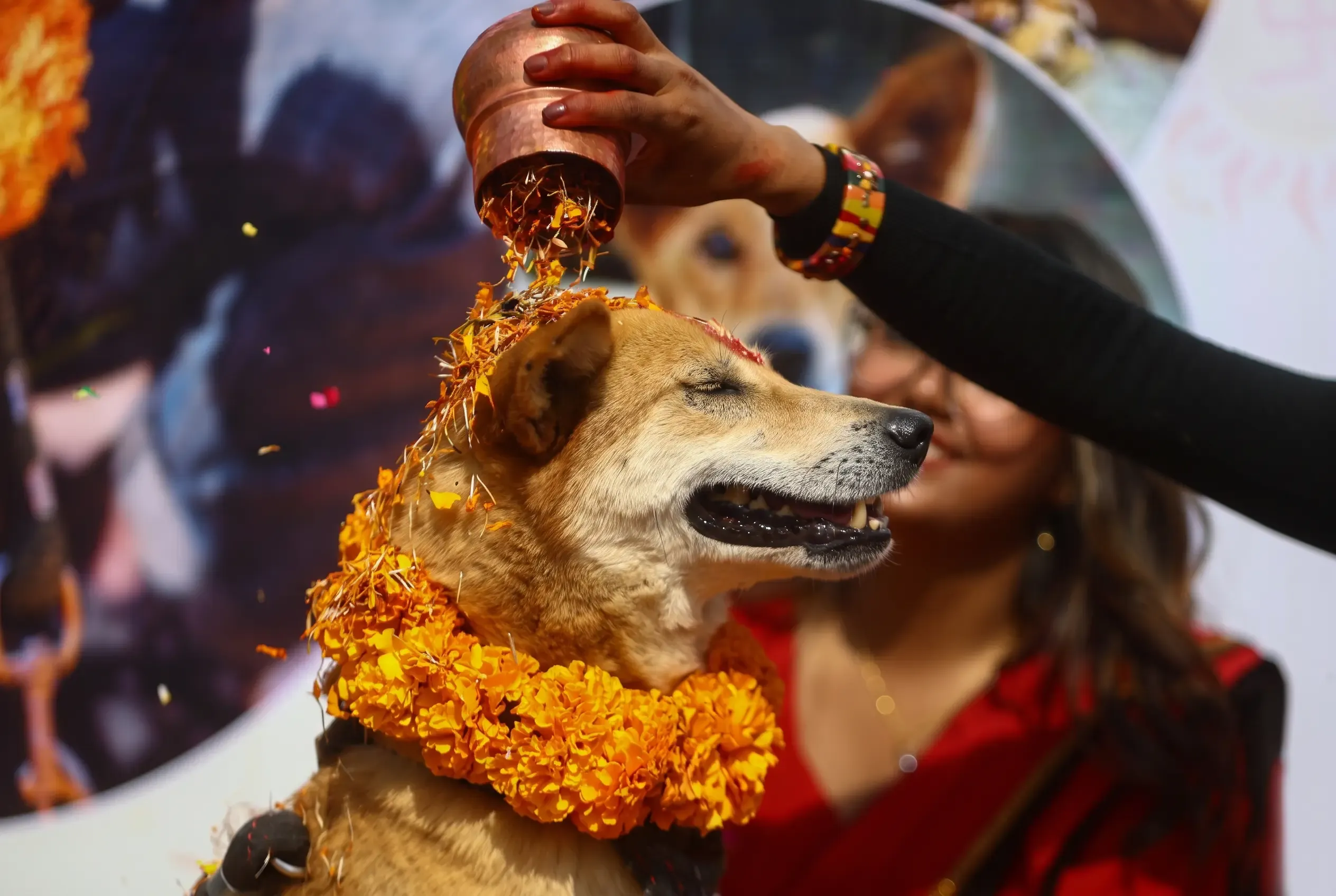
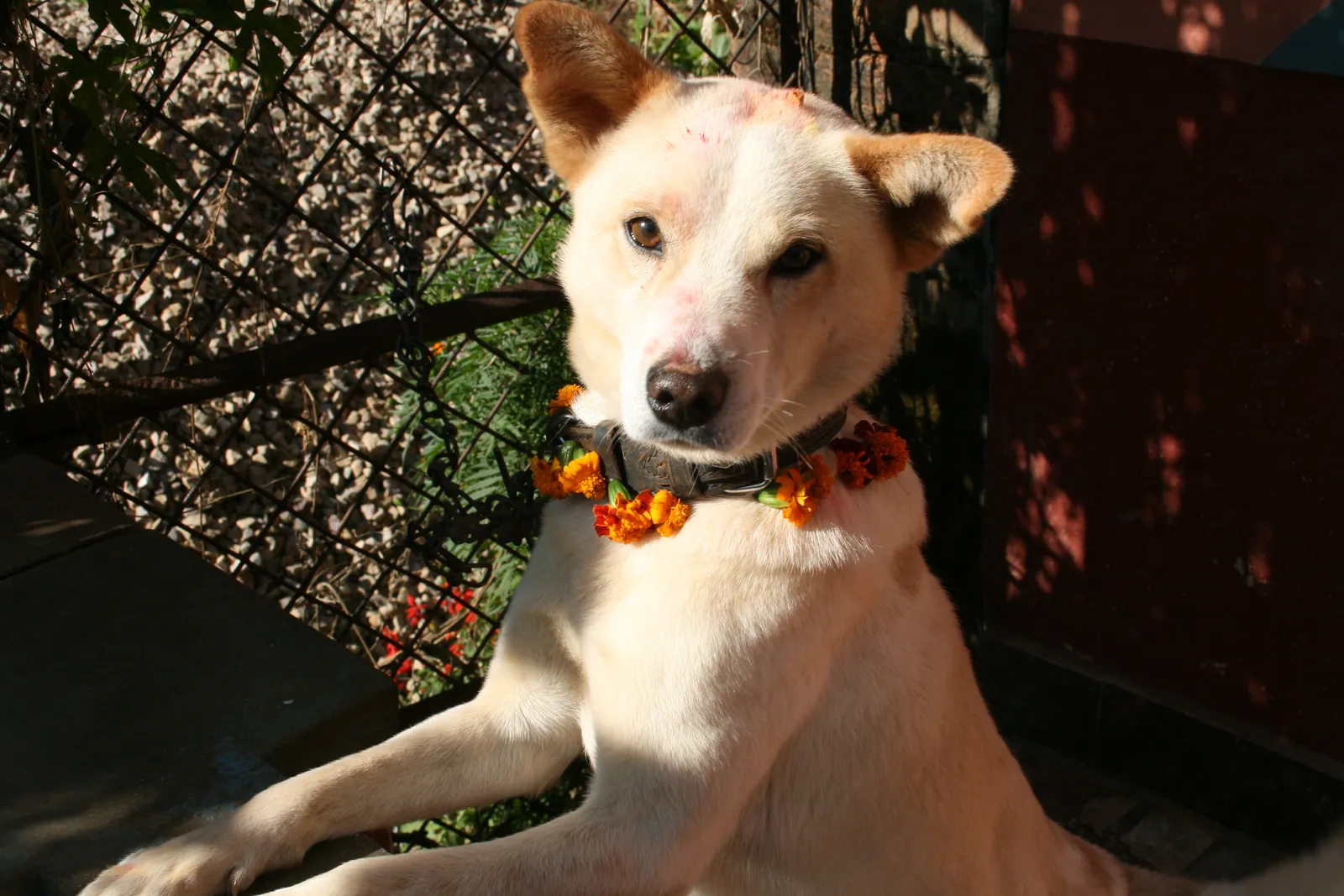
Once a year, in Nepal, the dog napping outside the tea shop gets a bright red dot of blessing on its forehead (a tika), a marigold garland around its neck and a plate of food fit for a guest of honor. Nobody asks whose dog it is. Everybody’s, that’s the whole idea.
Kukur Tihar is the day of Nepal’s Tihar festival on which dogs are worshipped, garlanded and fed, and in 2026 it falls on or around 8 November. Kukur is Nepali for “dog,” and Tihar is Nepal’s five-day festival of lights, a bit like Diwali in India, with oil lamps, flower garlands and a lot of sweets. Each day honors a different animal or family bond, and day two belongs to the dogs. Pet, police dog and street dog all get the same royal treatment, and honestly, it’s one of the happiest things you’ll read about all year. Grab a marigold and let’s dig in.
What is Kukur Tihar? The dog day of Tihar
Tihar is a five-day Hindu festival, Nepal’s second largest after Dashain, and it falls in October or November. It overlaps with Diwali. Kukur Tihar is day two, on the 14th day of the moon’s cycle in the Nepali month of Kartik, as the waning moon shrinks, per Wikipedia’s Kukur Tihar entry. Because that is a lunar date, the Gregorian date moves. Nepal marked it on 31 October in 2024 and on 20 October in 2025. For 2026, most Nepali calendars place Tihar between 7 and 11 November, with Kukur Tihar on 8 November, the same day as Lakshmi Puja that year. Calendars can differ by a day, so confirm against a current Nepali calendar (a panchang, the traditional Hindu almanac that lists festival dates).
| Day | Name | Who is honoured |
|---|---|---|
| 1 | Kaag Tihar | Crows |
| 2 | Kukur Tihar | Dogs |
| 3 | Gai Tihar and Lakshmi Puja | Cows, and the goddess Lakshmi |
| 4 | Goru Puja | Oxen |
| 5 | Bhai Tika | Brothers and sisters |
Source: Nepal Tourism Board and Wikipedia’s Tihar entry. Names for the days vary by region and community.
Why Nepalis worship dogs: Yama’s four-eyed dogs
The story starts with Yama, the Hindu god of death. He has two dogs, Shyama and Sharvara (sometimes called Sabala), who guard the gate to the underworld. That might sound grim, but the Nepali take on it is the opposite: honor the dogs, keep Yama happy, and remember that a dog is believed to walk beside you on your last journey too. Not a bad thing to have on your side (Wikipedia; Free Press Journal).
Ram Narayan KC, who works with the canine division of Nepal’s Armed Police Force, told NBC News that dogs “are not just loyal friends of humans but also messengers of Yamaraj… to make Yamaraj happy, we all do the Kukur Puja (dog worship) on this special day of the year.” Yamaraj is simply another name for Yama, and puja means a prayer or worship ritual.
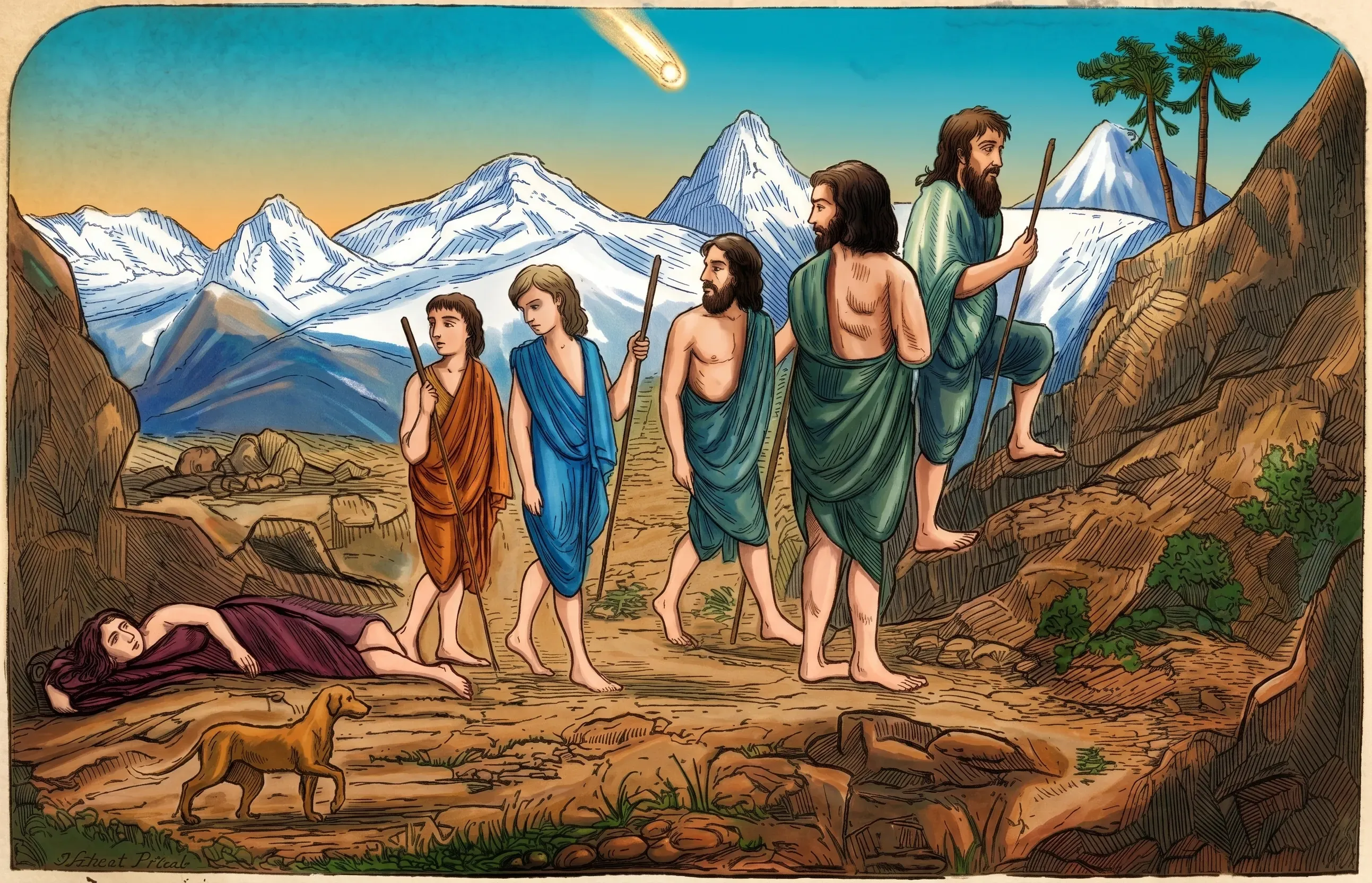
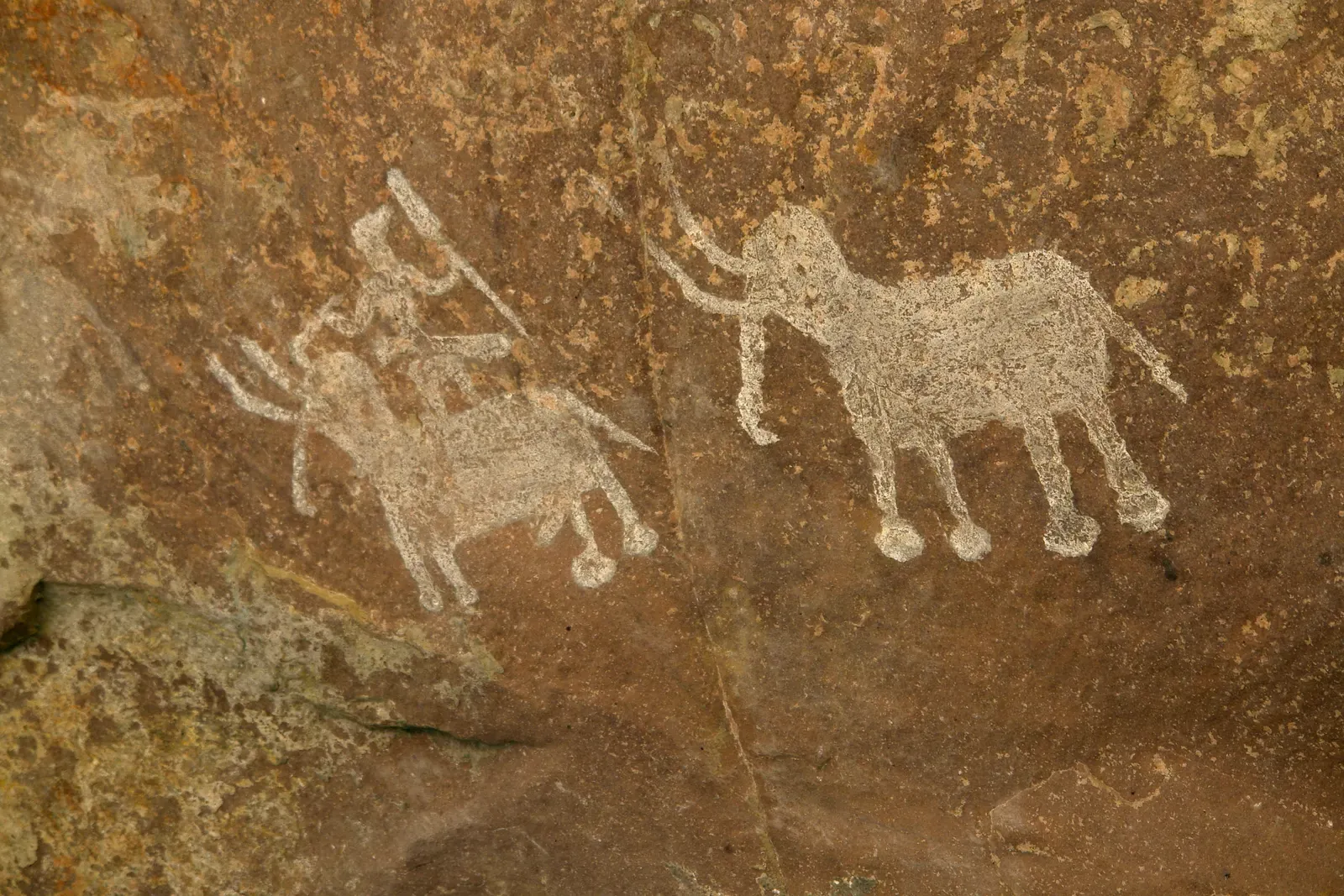
These dogs are ancient. According to Wikipedia’s Sarama entry, the Rig Veda, one of the oldest Hindu scriptures, tells of Sarama, a heavenly hound who tracks down stolen cattle for the god Indra. She is the mother of all dogs, and of Yama’s two four-eyed, brindled guardians, who carry messages for Yama and watch over the path to heaven. So when Nepalis honor a dog today, they are honoring a family line that goes back thousands of years.
The other myth people reach for is the one at the very end of the Mahabharata: Yudhishthira reaches the gate of heaven and refuses to go in without the dog that walked the whole way with him. The dog turns out to be Yama. The Nepal Tourism Board uses it to explain the festival. We wrote about that story, and the one at the epic’s start, in The Mahabharata Starts With a Dog.
Bhairava and the dog that keeps showing up
There’s a second story, and it’s just as fun. Bhairava, a fierce form of the god Shiva, travels with a dog as his ride. In Sanskrit the word for dog is shvan, and one of Bhairava’s names, Shvashva, means “he whose vehicle is a dog.” Wikipedia’s Bhairava entry even shows a 13th-century carving of him riding one. The Nepali Times says that for the festival, dogs are “considered as the representation of Hindu God Bhairav”, so they get decorated and fed like divine guests.
Yama’s gatekeepers and Bhairava’s companion don’t compete. Most tellings blend them, and it’s easy to see why: in both, a dog stands at the doorway between this world and the next. Either way, the dog gets the garland.
How Kukur Tihar is celebrated: tika, garlands and food
It’s simple, which is part of the charm. The dog is often washed. Then comes the tika, a mark of red powder (kumkum or abir) mixed with rice and yogurt, put on the forehead. Then a garland, usually marigold, around the neck. Then food: meat, milk, eggs, dog food, and traditional dishes like sel roti (Wikipedia). Being rude to a dog on this day is considered sinful.
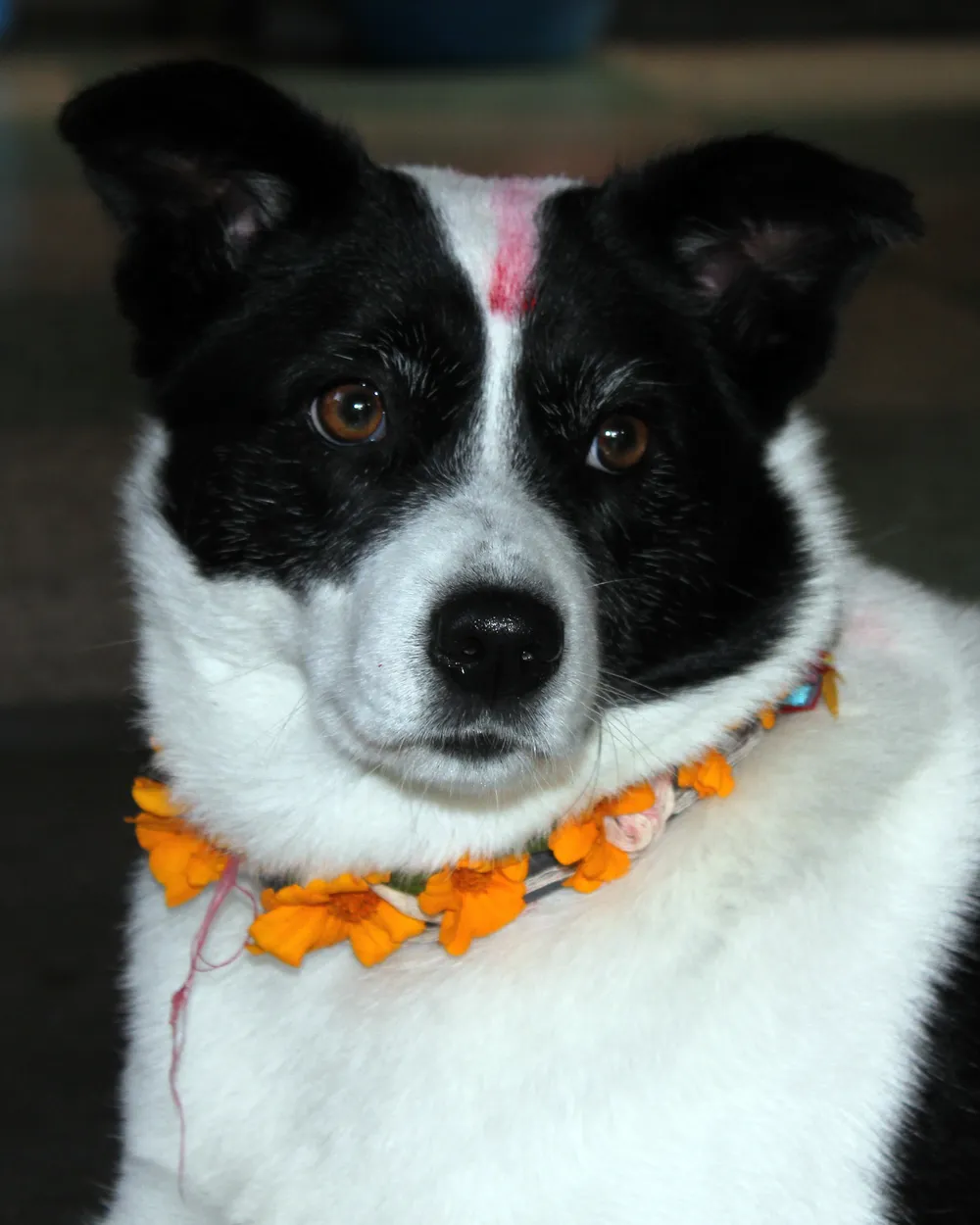
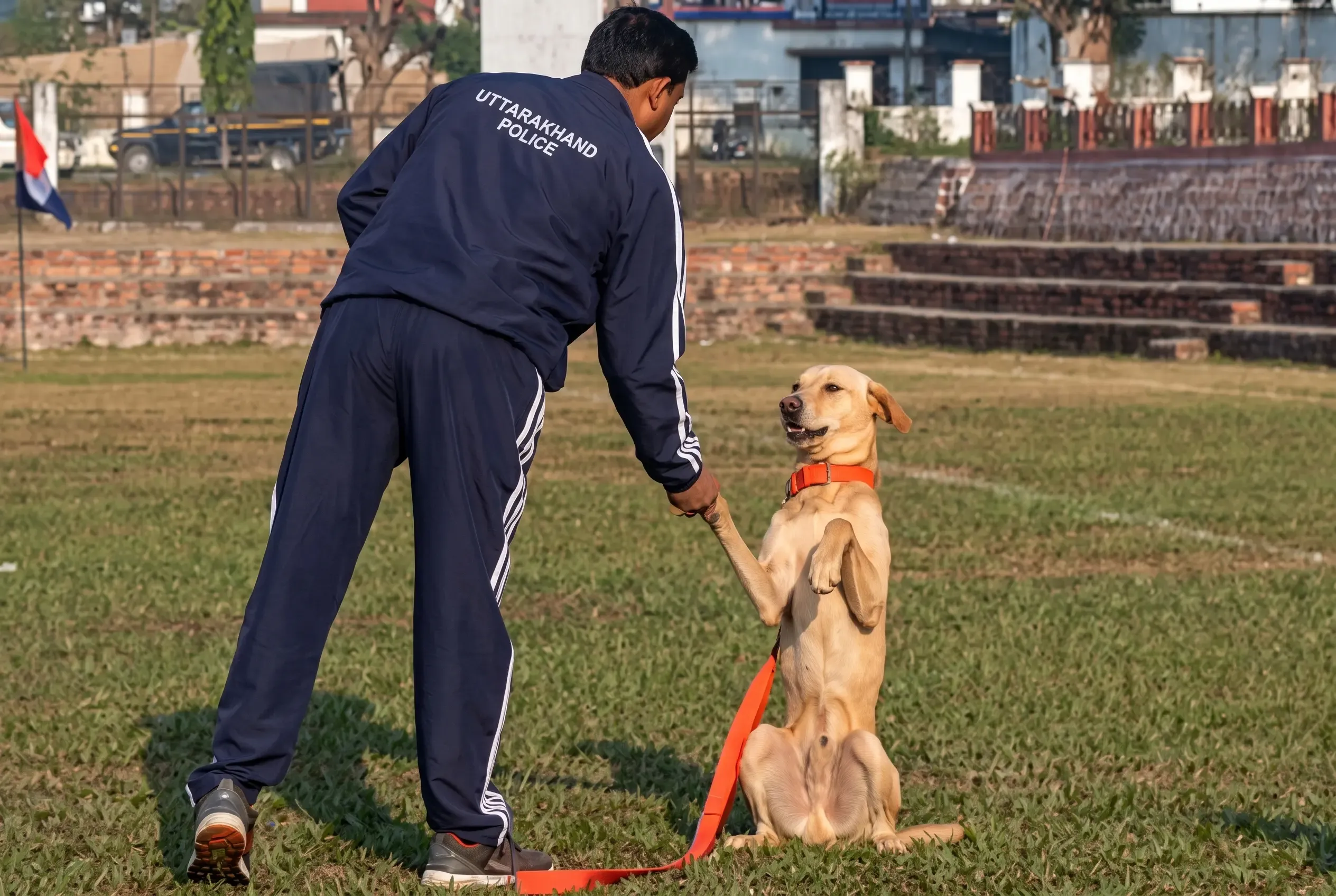
It isn’t only households. At the Armed Police Force canine centre in Kathmandu, service dogs got vermilion marks, garlands and snacks, according to NBC News. Animal welfare groups use the day for feeding drives and adoption events, per Outlook India. Indian police units have their own famous canine story too: Thenga, the Dehradun street dog who became Uttarakhand Police’s first K9.
Trying this at home? Ask your vet before putting powders on a dog’s skin or feeding it festival food. Dogs aren’t the people the recipes were written for.
Is Kukur Tihar celebrated in India? Sikkim and Darjeeling
Kukur Tihar is not a pan-Indian festival. It belongs to Nepali-speaking communities. Wikipedia says that in Sikkim, Darjeeling and parts of Northeast India the festival is simply called Tihar, and a tourism blog, Footprint Holiday (commercial, so weigh it accordingly), says the same about Darjeeling and Kalimpong, adding that on the second day all dogs, “pets or strays,” get a tika and marigolds.
Detailed reporting on how street dogs are treated during Tihar in Gangtok, Darjeeling or Kalimpong is scarce, so this part of the story is still waiting to be told. If you live in the hills and have seen it, we’d love to hear what it looks like. For the wider South Asian picture, our guides to the Indian pariah dog and its ancient history cover the free-roaming dogs of the subcontinent.
Kukur Tihar and street dogs: keeping the spirit going all year
Even the people who love the festival most have a wish: that the kindness lasts past the last marigold. Sneha Shrestha, who runs Sneha’s Care in Lalitpur with around 170 rescue dogs, put it neatly to Global Voices: “We worship dogs in the morning and frighten them at night.” Tihar evenings come with firecrackers, and she says some dogs bolt and never find their way home, so a quiet corner for your own dog that night goes a long way. The same report mentions city culls and a trend of families choosing imported breeds over local dogs.
Animal Nepal’s 2016 appeal sums up the hope in a few words: do the right thing for them all year round.
And there’s real good news. In 2016 Kathmandu Metropolitan City teamed up with Humane Society International and the Jane Goodall Institute Nepal on humane dog population management, and an international assessment found the city’s dogs “generally healthy and accepted by the community,” per Wikipedia. One festival can’t fix everything, but a culture with a day built in for being kind to street dogs starts miles ahead. Imagine if every day got a garland.
Common questions
When is Kukur Tihar in 2026?
Most Nepali calendars put Kukur Tihar on 8 November 2026, day two of Tihar (7 to 11 November), the same day as Lakshmi Puja. It was 31 October in 2024 and 20 October in 2025. Check a current Nepali panchang, since calendars can differ by a day. See What is Kukur Tihar?.
What is Kukur Tihar?
Kukur Tihar (“dog Tihar”) is the second day of Nepal’s five-day Tihar festival, when dogs are given a tika, a flower garland and special food. Pets, strays and working dogs are all included. See What is Kukur Tihar?.
Why do Nepalis worship dogs on Kukur Tihar?
Because dogs are linked to Yama, the god of death, as his messengers and guardians, and to Bhairava, whose vehicle is a dog. Honouring them pleases Yama and softens the idea of death. See Why Nepalis worship dogs.
Is Kukur Tihar celebrated in India?
Among Nepali-speaking communities, yes. Wikipedia names Sikkim and Darjeeling as places where Tihar is observed, and a travel source adds Kalimpong. It is not a pan-Indian festival, and detailed reporting on how street dogs are treated there is scarce. See Is Kukur Tihar celebrated in India?.
What do people give dogs on Kukur Tihar?
A red tika, a marigold garland, and food such as meat, milk, eggs, dog food or sel roti. Check with a vet before applying anything to a dog’s skin or changing its diet. See How Kukur Tihar is celebrated.
Does Kukur Tihar help street dogs the rest of the year?
Not by itself. Shelter founders say firecrackers frighten dogs the same evening, and city culls and breed preferences continue. Welfare groups use the day to push adoption and year-round care. See Kukur Tihar and street dogs.
Sources
- Kukur Tihar — Wikipedia
- Tihar (festival) — Wikipedia
- Sarama — Wikipedia
- Bhairava — Wikipedia
- Kukur Tihar: Nepal’s Festival Honoring Dogs — Nepal Tourism Board
- In Nepal, all good dogs are worshipped — NBC News
- Kukur Tihar — Nepali Times
- Kathmandu’s street smart dogs worshipped for a day — Global Voices
- What Is Kukur Tihar? Nepali Tradition That Worships Dogs — Free Press Journal
- Nepal’s Kukur Tihar festival honors dogs’ loyalty — All India Radio News
- Dogs Celebrated, Loyalties Honoured: Nepal’s Kukur Tihar Festival — Outlook India
- Embrace The Tihar Festival In The Hills — Footprint Holiday (commercial)